
Most fresh or light tyre marks come off with soapy water and a stiff brush. If the mark has baked into the surface over weeks or months, you’ll need a concrete-safe degreaser or a controlled pressure wash instead. On new, sealed or decorative concrete, always patch test first. Skip the harsh chemicals until you know how the surface reacts.
TL;DR:
- Fresh tire marks are easiest to remove with soap, water, and scrubbing within a few weeks of occurrence, while older marks require stronger chemicals.
- Applying a concrete-safe degreaser or controlled hot-water pressure wash is recommended for baked-in stains, but avoid aggressive acids or wire brushes on delicate surfaces.
- Sealing the concrete with film-forming coatings provides better resistance to tire marks than penetrating sealers, especially if applied after full curing.
- Repeated turning, immediate tire cooling, prompt leak repairs, and regular cleaning help prevent future tire marks regardless of surface treatment.
- Professional cleaning is advisable for large, stubborn, or delicate surfaces that resist DIY methods or for recurring stains in commercial or high-traffic areas.
Table of Contents
- What causes tire marks on concrete and why they stay put
- Quick DIY methods for fresh or light tire marks
- Removing stubborn tyre marks without damaging the concrete
- How to prevent tyre marks on your driveway
- When should you call a professional for tire mark removal?
- How professionals like Sydney Sweep and Scrub handle tire marks safely
- Book a professional clean when DIY has done all it can
- Sources
What causes tire marks on concrete and why they stay put
Tyre marks aren’t just dirt. They’re a thin film of rubber, road grime and plasticisers that transfers off the tyre and physically wets into the tiny pores of the concrete. Heat is the accelerant here. When a hot tyre sits on concrete or turns sharply, that heat softens the rubber compound and pushes it deeper into the surface texture, a process cleaning specialists call hot-tire pickup. The result is a stain that looks superficial but has actually bonded with the concrete’s own micro-texture.
This matters for how you clean it. Concrete’s porosity and alkalinity interact with the rubber’s resins and carbon black to create a stronger bond the longer the mark sits, which is exactly why a fresh streak from this morning wipes away easily while a mark from last summer might laugh at soap and water. Age and heat exposure are the two biggest variables in how hard a job you’re facing.
Quick DIY methods for fresh or light tire marks
Before reaching for anything stronger, work out what you’re dealing with. A fresh mark usually looks like a solid dark streak with a slight sheen. An older one fades to a greyish “ghost” shadow that’s harder to lift because the plasticisers have had time to migrate deeper. Either way, test any product on a small, hidden patch of concrete first and wait a few minutes to check for discolouration.
- Sweep the area clear of grit and debris so you’re not grinding dirt into the surface while scrubbing.
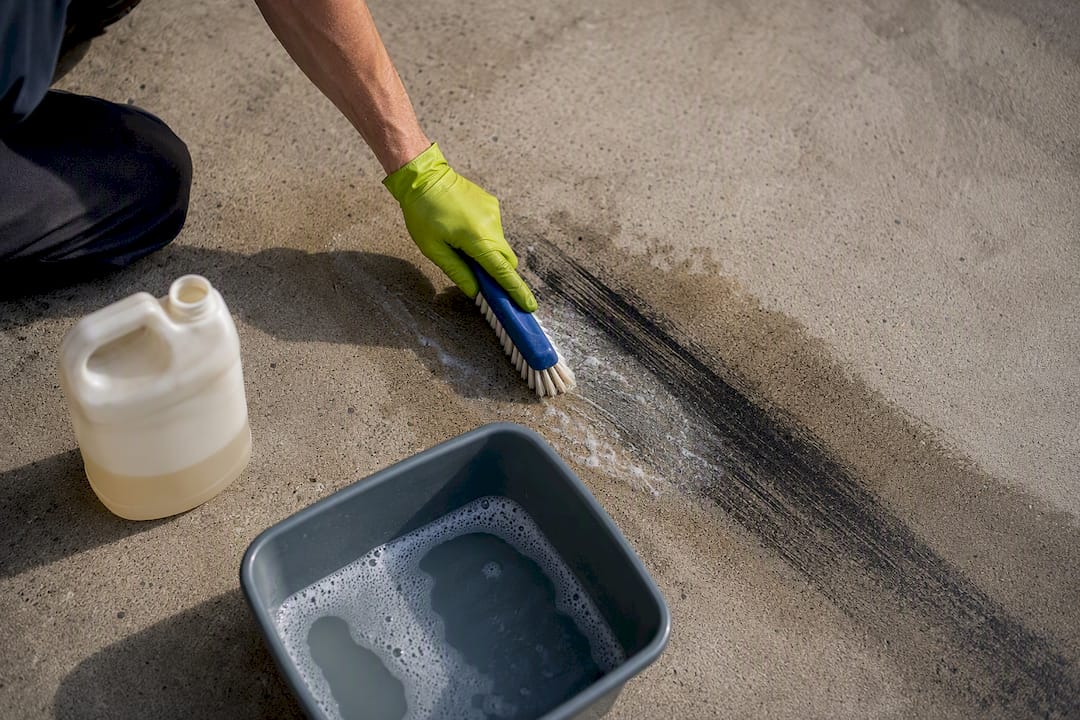
- Wet the mark thoroughly with warm water, then apply a pH-neutral cleaner or ordinary dish soap.
- Scrub with a stiff synthetic-bristle brush, working in small circular motions rather than long straight strokes.
- Rinse thoroughly with clean water and let it dry to check how much rubber lifted.
- For marks that don’t fully clear, apply a concrete-safe degreaser, let it dwell for the time stated on the label (usually 5 to 15 minutes), agitate again, then rinse.
If you’re finishing with a pressure washer, start with soapy water and scrubbing before you introduce any equipment or stronger chemistry, and treat the pressure washer as a rinsing tool rather than the main event. Keep the nozzle moving, hold it around 300 to 400mm from older, uncoated concrete, and use a fan pattern rather than a pinpoint jet that can etch the surface.
A few safety basics matter here too:
- Wear gloves and eye protection when handling degreasers, even “mild” ones.
- Check local council rules on runoff. Many areas require you to contain wash water rather than let it flow into garden beds or stormwater drains.
- Never mix cleaning chemicals, even ones that seem compatible.
Pro Tip: Do a five-minute soap-and-brush test before you buy anything else. If the mark lightens noticeably, you’ve saved yourself a trip to the hardware store and a stronger chemical you didn’t need.
Removing stubborn tyre marks without damaging the concrete
A mark is genuinely baked in when soap and a brush make little visible difference after two or three honest attempts. At that point the rubber and plasticisers have worked into the pore structure deeply enough that surface-level cleaning won’t shift them. This is where people often reach for the wrong tool and make things worse.
Citrus-based cleaners and purpose-built rubber-release chemistries are the next step up. These are formulated to break the bond between rubber and concrete without attacking the cement paste itself, and they typically need a longer dwell time (often 10 to 20 minutes) plus firmer mechanical agitation with a stiff brush or a rotary scrubbing pad.
What you should avoid entirely: muriatic acid, strong solvents and wire brushes, especially on decorative, stamped or newer concrete. These can etch the surface, bleach the colour, or strip away the fine cement “cream” layer that gives decorative concrete its finish. Newer and sealed surfaces are at particular risk from aggressive cleaning, because that top layer hasn’t fully hardened or is protected by a coating that solvents can dissolve.
Some DIY forums suggest wire brushes or acid for stubborn curb stains, but trade sources consistently warn that acids and mechanical aggression risk permanent damage on anything but plain, cured, unsealed concrete. If you’re not certain what you’re standing on, assume it’s sensitive.
For new or sealed concrete, a low-pressure hot-water approach beats high pressure every time. Keep pressure washers under roughly 3,000 PSI on older uncoated slabs, and drop well below that on anything sealed or decorative. If you’ve made two or three genuine attempts with the right chemistry and the mark hasn’t budged, avoiding further pressure-washing mistakes matters more than pushing harder. That’s the point to stop and call someone.
Pro Tip: If a cleaner’s label doesn’t mention concrete or masonry specifically, don’t guess. Cross-check it against the surface type before you pour it on decorative or stamped work.
How to prevent tyre marks on your driveway
Sealing your concrete is the single biggest lever for reducing future marking, but not all sealers do the same job. Penetrating sealers soak into the concrete and protect against moisture and staining from within, while film-forming sealers (polyurethane, polyaspartic or epoxy coatings) sit on top and create a physical barrier.
Film-forming coatings generally resist hot-tire pickup better than penetrating sealers because they stop plasticisers from migrating into the pores in the first place. The trade-off is cost, a more involved application process, and the coating can wear visibly in high-turn areas like where you swing into a garage.
Whichever sealer you choose, respect the cure window. Parking on a sealer before it’s fully cured can undo the whole job, so follow the manufacturer’s timeframe rather than guessing.
A handful of habits reduce marking regardless of sealer:
- Let tyres cool for a few minutes before parking, especially after a long highway drive.
- Avoid sharp, tight turns in the same spot repeatedly.
- Rotate where you park across a wider driveway or bay if you can.
- Fix oil or coolant leaks promptly. They combine with rubber residue and make stains worse.
- Sweep and rinse the surface on a regular schedule so grime doesn’t build to the point of bonding.
Sealed concrete is also far easier to clean when marks do appear, since the film stops rubber from penetrating as deep in the first place.
When should you call a professional for tire mark removal?
DIY methods handle most driveways and curbs, but a few situations tip the scales toward calling in a specialist.
- The area is large, such as a full driveway, car park or multiple bays, where DIY scrubbing simply doesn’t scale.
- The marks are old and baked in despite repeated degreaser and scrubbing attempts.
- You’re dealing with decorative, stamped or newly poured concrete where a mistake is expensive to fix.
DIY works well for light marks, but a persistent stain on a valuable or delicate surface is often cheaper to hand to a professional than to risk permanent damage chasing it yourself. Before booking anyone, ask about their experience with your specific surface, whether they carry insurance, how they handle waste-water containment, and whether they’ll run a patch test first. Pricing generally scales with area, surface type and site access, and a realistic pro will tell you upfront whether they expect full restoration or just a significant reduction in visibility.
How professionals like Sydney Sweep and Scrub handle tire marks safely
Sweepandscrub built its process around avoiding exactly the mistakes DIY attempts sometimes make. Rubber transfer bonds through heat and pressure. So, the safe order of operations matters: check the substrate, patch test, apply specialist release chemistry with a controlled dwell time, then flush with a controlled hot-water pressure wash rather than blasting at full force.
That approach is particularly relevant for:
- Commercial car parks and loading areas with repeated, heavy tyre marking.
- Sealed or decorative concrete where a wrong chemical choice is costly.
- Sites needing eco-friendly, carbon-neutral cleaning that manages waste water responsibly rather than letting it run into stormwater.
Book a professional clean when DIY has done all it can
If you’ve worked through the gentle methods and the stains are still there, or you’re managing a car park, warehouse or public space where tyre marks keep coming back, that’s where Sweepandscrub earns its keep over a weekend of scrubbing. Rather than another round of degreaser and elbow grease, hot-water pressure washing lifts baked-in rubber without the guesswork of matching chemistry to your specific surface, and it’s backed by carbon-neutral operations if sustainable practices matter for your site or strata reporting. Property managers dealing with recurring marking across car parks or shared driveways can also set up scheduled cleans so the problem doesn’t build up between visits. Book a quote online and get a straight answer on what your surface actually needs before any work starts.
Sources
- Why tyre marks stick: the science of rubber transfer on concrete – The Graffiti Eaters and The Stain Eaters
- How to get tire marks off concrete 2026 – HomeSpotHQ
- Engineerskill