
A fast stadium turnaround comes from a plan made weeks before the event. It splits the work into pre-event, event-day and post-event phases. It sequences machines ahead of people where it can. It settles waste streams and handover standards in writing. The time a turnaround takes depends on the venue, the crowd and the next booking, so any quoted number is only a guide. What you can control is the order of work and the people and machines doing it. Sydney Sweep and Scrub provides mechanical sweeping, mechanical scrubbing, pressure washing and rubbish removal for stadiums and event venues, and this guide sets out how that work fits together.
TL;DR
- Plan a turnaround as three phases (pre-event, during-event, post-event) with one written scope, not as a single clean after the final siren.
- Time depends on crowd size, food and beverage mix, weather, surfaces and the next fixture, so work backwards from the handover time you have to meet.
- Get waste right first: separate streams, enough bins in the right places and a clear removal plan stop the rest of the clean from stalling.
- Machines do the heavy floor work on concourses and car parks, so crews can spend their hours on seating, amenities and detail.
- Agree the cleaning plan, rosters and approvals with the venue early. Some venues require them weeks before your licence period.
Table of Contents
- What a turnaround actually is
- How long does a turnaround take?
- The three phases that make the time
- Waste decides whether the turnaround runs on time
- Check the venue’s rules before you plan
- What to put in a turnaround scope
- Back-to-back events: scheduling crews and machines
- Car parks and external areas
- Where we fit
- FAQ
- Sources
What a turnaround actually is
A turnaround is the window between the crowd leaving and the venue being ready for its next use. That next use may be a cleaner-looking morning for staff, a training session, or another fixture the following day. The window is fixed by the calendar. The scope inside it is what you can shape.
Procurement documents show how large venues think about it. The 2026 tender listing for People First Stadium and Cbus Super Stadium divides cleaning into day-to-day, event, function and additional maintenance components, and the event component is itself split into pre-event, event-day and post-event work. The same listing notes that event service times vary with each event and that work may fall on weekdays, weekends, public holidays and outside business hours.
The NSW government notice for the SCG and Sydney Football Stadium agreement describes the same structure: pre-event, during-event and post-event cleaning, variable waste management and additional cleaning services. If you run a smaller venue, a showground, a council oval or a pop-up event site, the same three-phase logic applies at your scale.
How long does a turnaround take?
There is no honest single figure. Providers publish ranges, but those depend on seating capacity, how many zones are in scope and how many people are on the job. What decides your number is:
- Crowd size and behaviour. More people means more litter in the bowl and on the concourses, and more load on amenities.
- Food and beverage. Spilt drinks and food waste on concourse floors need scrubbing, not just sweeping.
- Weather. Rain carries mud and grit into concourses and makes floors slippery, so floor work grows.
- Surfaces. Sealed concrete, tiles, turf surrounds and carpark decks each need different methods.
- Waste volume and access. If bins cannot be reached by vehicles quickly, the clean waits on the removal.
- The handover standard. A visual sweep and an inspection-ready clean are different jobs.
- The next event. Back-to-back fixtures compress everything and leave no room for a second pass.
The practical method is to work backwards. Take the time the venue must be ready, subtract inspection and handover, then allocate the remaining hours across zones. If the numbers do not fit, the answer is more machines and a split of zones across crews, not asking people to hurry.
The three phases that make the time
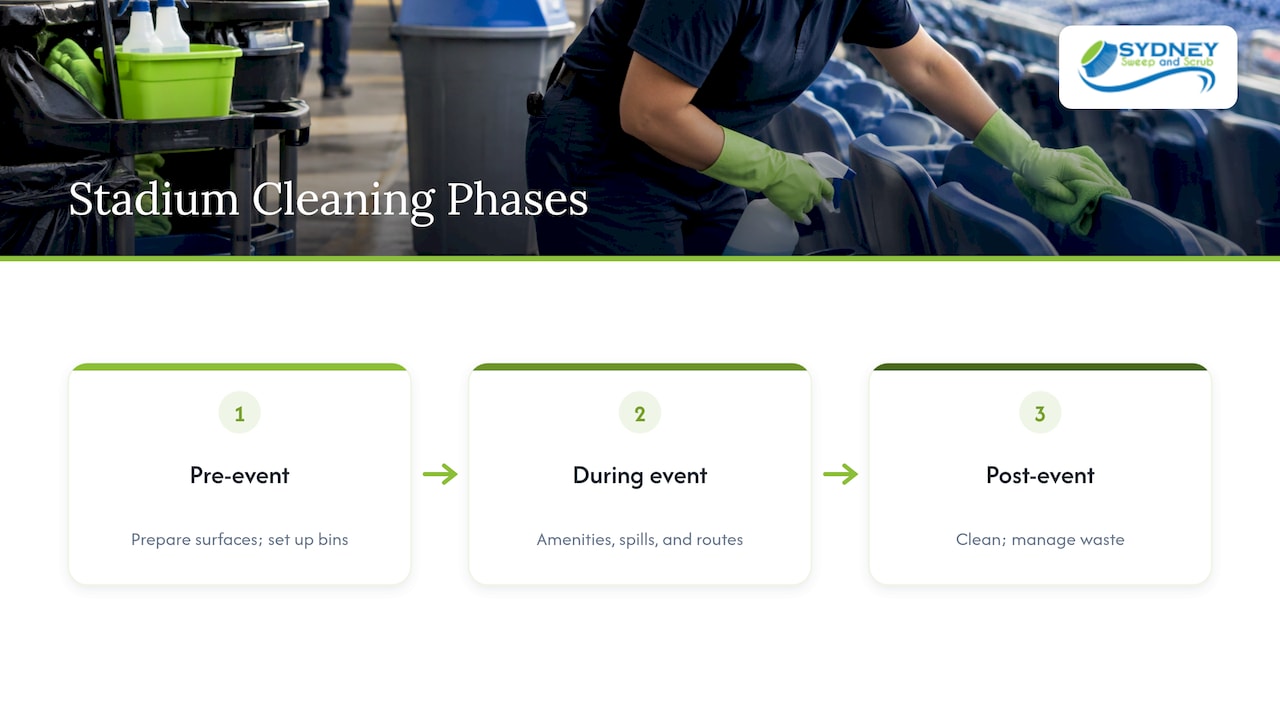
Pre-event: reduce what has to be cleaned later
The cheapest hour in a turnaround is one before the gates open. Pre-event work covers sweeping and scrubbing concourses and approaches so the surface starts clean, checking amenities, placing bins and signage, and confirming access for waste vehicles. Starting clean also helps you see where spills and stains land during the event.
The South Australian government’s 2026 guidance on event waste recommends planning bin numbers for the event’s size and scale, locating them strategically and separating front-of-house and back-of-house waste, with signage that matches the local waste system. Doing this before gates open means less sorting after the crowd leaves.
During the event: keep the venue safe
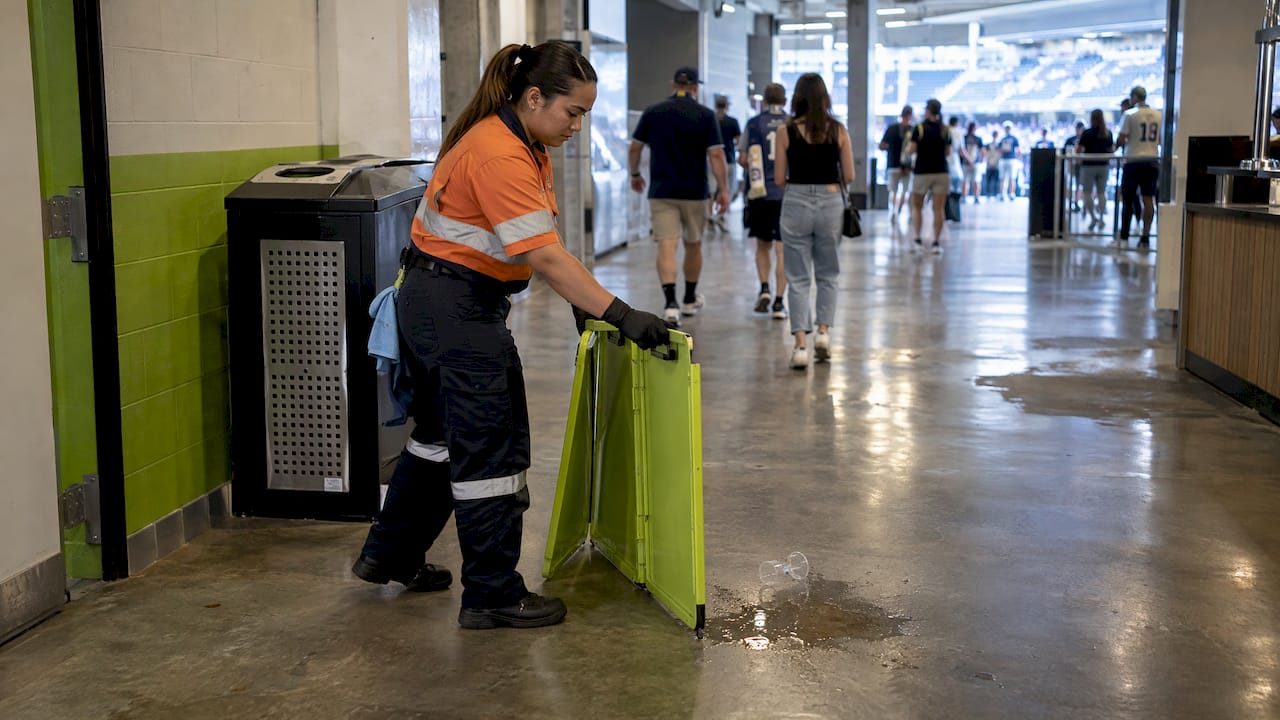
During-event crews keep amenities serviceable, respond to spills and keep exits and walkways clear. Stadiums Queensland’s facilities and operations manager describes cleaning, waste, hygiene, security and workplace health and safety as operational responsibilities that sit together at a major venue. A spill on a concourse is a slip risk, so it belongs in the safety plan as well as the cleaning plan.
Post-event: the sequence that saves hours
The order matters more than the headcount. A sound sequence looks like this:
- Crowd exit. Reset amenities and clear main egress routes while people leave, and keep waste moving to the collection point.
- Bulk waste and litter. Clear the seating bowl and concourses of litter and rubbish so machines can run unobstructed.
- Mechanical sweeping. Sweep concourses, ramps, forecourts and car parks to lift grit, packaging and fine debris. Machines cover large areas faster than hand crews.
- Scrubbing and pressure washing. Remove sticky spills, food residue and staining from concourse floors and external paving.
- Amenities and detail. Restrooms, bars, kiosks and touchpoints.
- Inspection and handover. Walk each zone against the agreed standard and log what is signed off.
Sweeping before scrubbing is what lets scrubbers do their job. A scrubber pushed through loose litter clogs, slows and leaves streaks. That is why mechanical sweeping sits early in the sequence, and why a machine scrub planned for your stadium goes better when the surface is prepared first.
Waste decides whether the turnaround runs on time
When a turnaround falls behind, the cause is often waste, not floors. Full bins, mixed streams and blocked access slow everything else.
Two points from venue rules are worth building into your plan:
- Contamination. The Sydney Opera House event guide says general waste must be kept separate from recycling to avoid contamination, and that contaminated recycling can end up in landfill. The same guide says its co-mingled recycling is collected without liners and that black plastic bags are not to be used for that stream because the collector will not take it as recycling. Bag colour and liner rules are small details that cost real time if they are missed on the night.
- Who removes what. Sydney Showground’s 2026 regulations say the venue manages waste infrastructure and site waste removal, while licensees must separate waste as agreed and remove event materials, pallets and gas bottles before the licence expires. Pallets and gas bottles are easy to forget and slow a handover.
When you brief a contractor, write down the streams, the bag rules, the collection points and the time the last load must leave. Our rubbish removal and related services cover the removal side, so rubbish does not hold up the sweeping and scrubbing behind it.
Check the venue’s rules before you plan
The venue may set the terms of your cleaning before you do. Sydney Showground’s 2026 operational regulations require a cleaning management plan, including staff rosters, at least two weeks before the licence period. Where alternative providers are permitted, they must be approved at least four weeks beforehand. The same document says mechanical sweeping and scrubbing is carried out by the venue and charged to the licensee.
That is one venue, and others differ. The point is general: read your licence or hire agreement for who cleans what, what approvals are needed and what is charged back. Do this before you book a contractor, because it decides which parts of the turnaround are yours to commission.
What to put in a turnaround scope
The NSW procurement notice for the SCG and Sydney Football Stadium shows what large buyers weigh together: staffing capacity, cleaning methods and standards, chemicals and equipment, waste movement and off-site collections, quality auditing and resource-recovery reporting. Treat those as the headings of your own scope, scaled to your venue.
| Scope item | What to write down |
|---|---|
| Zones | Seating, concourses, amenities, kiosks, forecourts, car parks, loading areas |
| Phases | What happens pre-event, during the event and post-event |
| Methods and machines | Sweeping, scrubbing, pressure washing, hot water where grease or gum is the problem |
| Waste | Streams, bin numbers and positions, bag rules, collection times |
| Staffing | Crew numbers per phase, supervisors, roster supplied to the venue |
| Safety | Slip control on wet floors, traffic management for machines and trucks, site induction |
| Standard and sign-off | What a clean zone looks like, who inspects, how it is recorded |
| Timing | Start, finish and handover times, and what happens if the event runs over |
Our own event venue cleaning checklist sets out a three-stage approach you can adapt, and the stadium concourse cleaning playbook goes deeper on the concourse, which is usually where the largest floor area sits.
Back-to-back events: scheduling crews and machines
When events follow each other closely, you cannot clean everything to the same depth each time. Plan two levels of clean:
- Turnaround clean. Litter, waste, amenities, spills and a mechanical sweep. This keeps the venue safe and presentable for the next event.
- Deep clean. Scrubbing and pressure washing of concourses, hot water for grease and gum, car park and external areas. Schedule these in the gaps between fixture runs.
Some practical rules for tight schedules:
- Split the venue into zones and run zones in parallel, rather than one crew moving through the whole venue.
- Put machines on the largest continuous floor areas and hand crews on stairs, seating and edges.
- Keep a reserve crew or machine for the unexpected spill or breakdown.
- Share the roster and plan with the venue early, as the Showground example shows.
- Hold a short briefing before each phase so everyone knows zones, waste rules and the handover time.
Car parks and external areas
The turnaround is not just the bowl. Forecourts, ramps and car parks collect bottles, food packaging and oil. They are also where the next crowd arrives. Mechanical sweeping and pressure washing handle these areas well, and our carpark cleaning service covers them for venues with large parking structures.
Where we fit
Sydney Sweep and Scrub is a family-owned Sydney business doing mechanical sweeping, mechanical scrubbing, pressure washing, hot water cleaning and rubbish removal for stadiums, event venues, car parks and public spaces. We use industrial-grade, eco-friendly equipment, and we operate carbon-neutral, with optional waste offset initiatives for clients who want to take part. Bookings and quotes can be made online, and large facilities can set up recurring maintenance. For a venue manager, the benefit is that the heavy floor work in your turnaround is handled by machines and a team set up for it, so your own staff can focus on seating, amenities and handover. Start with our commercial cleaning page or request a quote through the site.
For more on the practical side after an event, see our post-event cleaning tips.
FAQ
How long does it take to clean a stadium after an event?
It depends on capacity, crowd, weather, scope and crew and machine numbers, so the useful question is how long you have. Work backwards from the handover time, then divide the zones and machines to fit. Event times can also run into nights, weekends and public holidays, as large venue tenders note.
How are stadiums cleaned after games?
Crews reset amenities and clear exits as the crowd leaves, then clear litter and waste from the bowl and concourses. Machines then sweep and scrub the floors, and amenities and detail follow. Each zone is inspected and signed off at handover.
What should a stadium cleaning plan include?
Zones, phases, methods, waste streams, staffing, safety controls, handover standard and timing. Large venue procurement weighs staffing, methods, equipment, waste logistics and auditing together, so your plan should too.
Do I need to submit a cleaning plan to the venue?
Often you do. Sydney Showground, for example, requires a cleaning management plan with rosters at least two weeks before the licence period. Check your own licence or hire agreement for what is required and by when.
Sources
- Tender listing: Cleaning Services at People First Stadium and Cbus Super Stadium (2026)
- buy.nsw: Integrated Cleaning and Waste Management Services notice
- Waste and recycling at events and venues (2026), South Australia
- FM Media: Stadiums Queensland facilities and operations manager interview
- Information for Presenting Events at the Sydney Opera House (2023)
- Sydney Showground Operational Regulations 2026