
Choose pressure washing for routine dirt, algae, and grease. Choose abrasive blasting (or a hydro/dustless variant) when you need to strip paint, remove rust, or create a mechanical profile for new coatings. The catch is silica risk and substrate damage, so sensitive surfaces and anything requiring containment should go to a professional before you touch a trigger.
TL;DR:
- Pressure washing is ideal for routine cleaning of dirt, algae, and grease without damaging soft or sensitive surfaces.
- Abrasive blasting creates a mechanical profile necessary for coating adhesion but risks substrate damage and silica exposure.
- Hot water pressure washing effectively removes oil and grease, especially on concrete floors, while hydroblasting minimizes dust in urban areas.
- Silica-free media such as baking soda, glass beads, or garnet significantly reduce health risks associated with traditional sandblasting.
- Proper containment, runoff capture, and testing are essential to ensure environmental compliance and prevent surface damage during cleaning.
Table of Contents
- Sandblasting vs pressure washing: how do they actually work?
- Which method suits your job? A decision checklist
- What safety and environmental risks come with each method?
- What does the job actually cost, and how do you plan it?
- How does a professional decide which method to use?
- Prefer to hand the decision to a pro?
- Sources
Sandblasting vs pressure washing: how do they actually work?
Pressure washing (also called hydro cleaning) uses pressurized water through a nozzle at sufficient force for typical commercial machines, stripping loose dirt, algae, and grime off a surface through sheer hydraulic force. Hot water units add thermal energy that breaks down grease and oil far faster than cold water alone, which is why workshops and loading docks lean on heated systems rather than standard cold-water rigs.
Abrasive blasting, commonly called sandblasting even though sand is rarely the media anymore, works on a completely different principle. Compressed air or a pressure pot fires abrasive particles at the surface at high velocity, physically knocking off coatings, rust, and scale while creating a mechanical “tooth” or profile that lets primers and paints grip properly. Water can’t do that. It cleans, but it doesn’t cut.
Then there’s the middle ground: hydroblasting, sometimes called wet or dustless blasting. This method injects abrasive media into a water stream, which cushions the impact and knocks dust down dramatically compared to dry blasting.
A few things worth knowing before you buy or hire gear:
- Pressure washing removes what’s sitting on a surface; abrasive blasting removes what’s bonded to it.
- Hot water pressure washing cuts through oil and grease loads that cold water barely touches.
- Consumer sandblasting attachments for domestic pressure washers exist, but they lack the air volume and media throughput of a proper blast pot, so results on anything beyond light rust are usually disappointing.
- Hydroblasting reduces airborne dust but still produces wastewater that needs capturing.
Which method suits your job? A decision checklist
Work through three questions before picking up any equipment: what end state do you need (clean, strip, or profile), how sensitive is the substrate, and what are the site constraints around dust, runoff, and nearby assets?
Pro Tip: If you’re not sure whether a surface needs cleaning or stripping, run a test patch in an inconspicuous corner first. It costs you five minutes and saves you from turning a $2,000 job into a $20,000 repair.
Here’s how that plays out across common scenarios:
- Timber decking with mould and grime — pressure washing, low to moderate psi. Blasting will chew up soft timber fibres.
- Painted steel with flaking rust — abrasive blasting. You need the coating gone and a profile left behind for the new primer to bite.
- Concrete carpark floor with oil staining — hot water pressure washing first; escalate to light abrasive or hydro treatment only if staining has penetrated deep into the pores.
- Historic stone or masonry facades — extreme caution. Conservators recommend testing and the gentlest method available, and that’s usually low-pressure water, never dry abrasive blasting.
- Graffiti on brick or render — depends on the substrate age and porosity; a specialist should assess before blasting, since brick faces can spall.
- Oily commercial carpark bays — hot water pressure washing with degreasing detergent, escalating to abrasive prep only where coating adhesion is the actual goal.
- Steel structure needing a new protective coating — abrasive blasting is non-negotiable here, since pressure washing leaves no profile for paint to key into.
- Dense urban site with neighbours close by — hydroblasting, because dry blasting’s dust cloud will generate complaints and possible fines before lunch.
That last scenario is where hydroblasting earns its keep. When you need a profile but can’t tolerate a dust plume drifting over the street or a loading dock, wet abrasive methods split the difference between cleaning power and neighbourhood tolerance.
What safety and environmental risks come with each method?
The single biggest hazard in this whole comparison is crystalline silica. Traditional sand contains it, and breathing silica dust causes silicosis, an irreversible lung disease. That’s why “sandblasting” is a misleading name these days. Nobody should be blasting with actual sand.
Safer media alternatives include:
- Sodium bicarbonate (soda blasting), gentle on most substrates
- Crushed glass beads
- Garnet, for aggressive rust and scale removal
- Silicon carbide, for hard industrial surfaces
- Crushed walnut shells, for delicate cleanup work
Even silica-free media generates airborne particulate, so respirators, eye protection, and proper ventilation stay mandatory regardless of which abrasive you choose. Dry blasting produces enough dust that containment barriers and HEPA vacuum cleanup are standard practice on any job near occupied buildings or public footpaths.
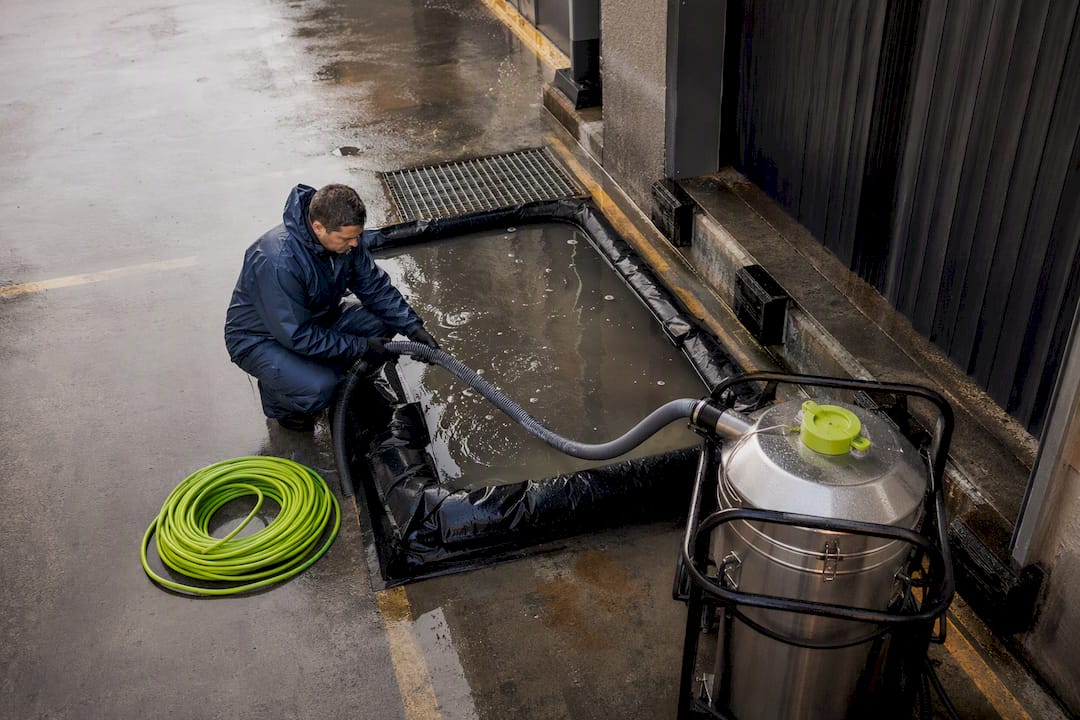
Pressure washing carries its own environmental obligation: wastewater loaded with detergent, oil, and heavy metals from old paint can’t simply run into a stormwater drain. Local councils increasingly require capture and disposal, and for larger commercial jobs, that’s a compliance headache best left to a licensed operator with the right containment gear on hand.
What does the job actually cost, and how do you plan it?
Cost differences between the two methods are significant, and they’re driven by more than just labour hours. Media consumption, equipment hire, waste disposal, and traffic management all stack up differently depending on the method.
Pressure washing typically runs cheaper than abrasive blasting, largely because it needs less specialised media, generates simpler waste streams, and requires less containment infrastructure. Abrasive blasting demands blast pot hire or a specialist contractor, consumable media that gets used up fast, and dust or slurry disposal that often falls under specific waste regulations.
Before booking either job, walk through this checklist:
- Protect adjacent surfaces, glazing, and vehicles from overspray or dust drift.
- Isolate and capture runoff, particularly on sites near stormwater drains.
- Run a test patch to confirm the method and pressure setting before committing to the full area.
- Notify neighbours or the relevant authority where dust or noise disruption is likely, especially for multi-day abrasive work.
How does a professional decide which method to use?
At Sydney Sweep and Scrub, the assessment always starts with the least intrusive option first. That means examining the substrate, running a test patch, and only escalating to something more aggressive once we’re confident lighter methods won’t hit the required end state.
Most carpark, warehouse, and public space jobs get resolved with mechanical sweeping combined with hot water pressure washing, which handles oil residue, tyre marks, and general grime without any risk of surface damage. We escalate to hydro-assisted preparation only when a coating job genuinely needs a profile, and even then we assess site constraints, runoff capture, and neighbouring assets before mobilising gear. Our eco-friendly, carbon-neutral approach to water and waste handling means clients get compliant outcomes without the guesswork, backed by an online booking system that gets an assessment on the calendar fast.
Prefer to hand the decision to a pro?
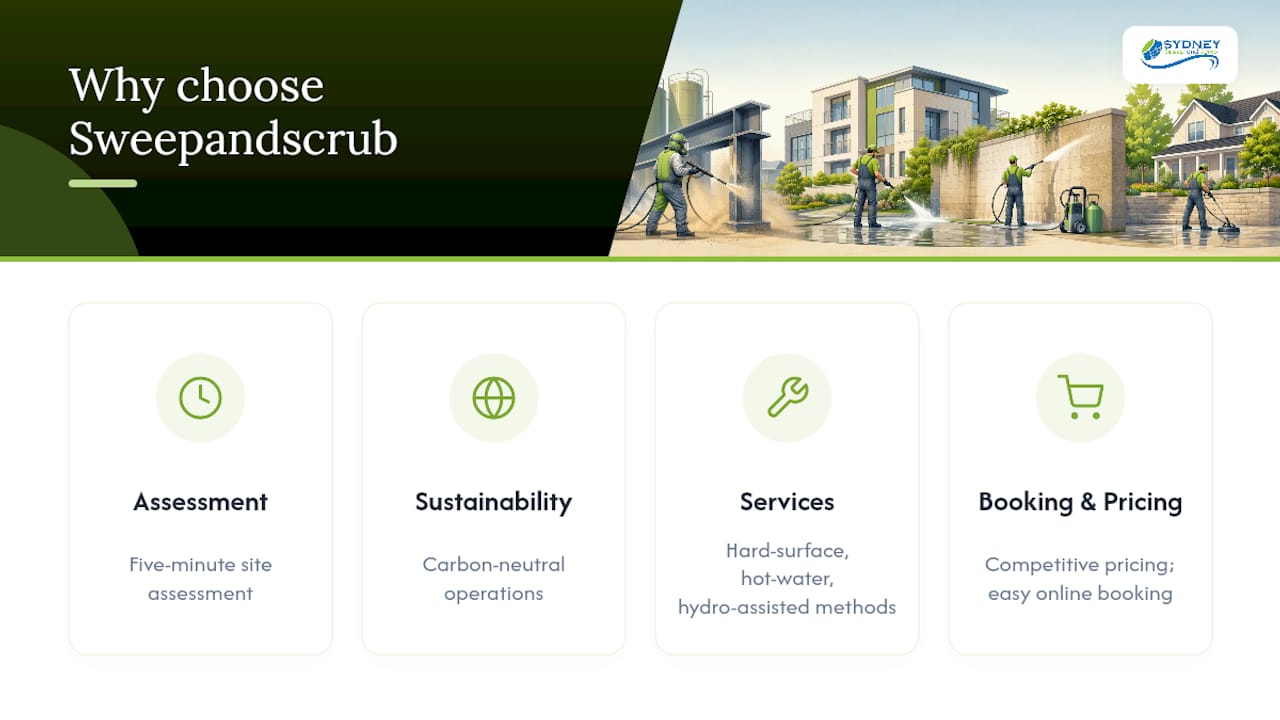
If reading through decision trees and silica warnings isn’t how you want to spend your afternoon, that’s exactly the gap Sweepandscrub fills. Sweepandscrub already owns the industrial-grade gear that turns “should I sandblast or pressure wash this?” into a five-minute site assessment instead of a weekend research project, and every job runs on carbon-neutral operations that let facility managers tick their own sustainability boxes at the same time.
Our range covers the scenarios this article just walked through: hard surface cleaning for carparks and warehouse floors, hot water pressure washing for grease-heavy loading docks, and hydro-assisted preparation for surfaces that need a profile without the dust plume of dry blasting. Property managers and strata operators get competitive pricing and an easy online booking flow, so there’s no back-and-forth quoting process eating into your week.
If you’re staring down a carpark, warehouse floor, or public space that needs more than a garden hose can manage, book a hard surface cleaning assessment and let us tell you exactly which method your surface actually needs.
Sources
- CCOHS: Abrasive blasting (sandblasting)
- Pro Air Tools: Don’t sandblast with sand: silicosis risk + safer alternatives
- ProjectEssastre: Sandblasting or pressure washing — which to choose
- InspectAPedia: Dangers of abrasive cleaning to historic buildings