
Fresh grease on pavement comes out best when you act within minutes. Soak it up with a dry absorbent, scrub with a degreaser that suits the surface, and capture the washwater instead of hosing it into the gutter. Old, deep stains on concrete and asphalt usually need hot water and wastewater recovery. On a commercial site, that is a job for a professional crew.
This guide covers what separates a stain you can lift from one that stays, how to treat concrete, asphalt and pavers, and why the washwater matters as much as the stain. It is written for property managers, strata committees and warehouse occupiers, though the basics apply to a home driveway too.
TL;DR
- Cover fresh grease with a dry absorbent straight away. The longer it sits, the deeper it goes.
- Never wash grease towards a stormwater drain. Only clean rainwater belongs there, and contaminated washwater needs capturing.
- Match the method to the surface. Concrete, asphalt and pavers each react differently to solvents and heat.
- Rinse out all cleaner residue. A cleaned patch that stays soapy can be more slippery than the stain was.
- On car parks, loading docks and warehouse floors, grease is a liability issue. Call a professional when the stain is old, large or in a trafficked area.
Table of Contents
- Why grease stains on pavement are more than a cosmetic problem
- First response: the first 10 minutes
- Match the method to the surface
- Which cleaner works best?
- The part people skip: washwater
- Finish properly: rinse, dry, test
- Old stains: can they be removed?
- When to call a professional
- How Sydney Sweep and Scrub can help
- Preventing the next stain
- FAQ
- Sources
Why grease stains on pavement are more than a cosmetic problem
Grease and oil form a film that cuts the grip between a shoe or tyre and the ground. SafeWork NSW lists slips, trips and falls among the leading causes of serious workplace injury in the state, and slippery surfaces, including those made slippery by cleaning, are part of the risk it describes. For anyone who controls a premises, a visible oil patch near a pedestrian route is a hazard you already know about.
Safe Work Australia explains that slips happen when there is not enough friction between the foot and the walking surface. Greasy contaminants are on its list of causes. The practical lesson is that cleanliness is part of your safety system. Programmed inspections and a fast response to spills do more than a deep clean once a year.
There is a surface-damage angle too. Hydrocarbons soften asphalt binder, and research from Queensland University of Technology notes that spill clean-up affects pavement maintenance, particularly on asphalt. A leaking sump on a bitumen car park bay can leave a soft, pitted patch if it is left alone, not just a dark mark.
First response: the first 10 minutes
What you do straight after a leak decides whether the stain is a ten-minute job or a permanent mark.
- Stop the source. Park the leaking vehicle over a drip tray, close the valve, or move the equipment.
- Block the drain. If the spill is near a stormwater pit, put a drain cover or absorbent sock around it before you do anything else.
- Cover with dry absorbent. Use clay-based granules, a spill mat or a pillow. Do not wet the area first, because water spreads grease and drives it into the pores.
- Let it work. Leave granules to draw the oil up. For a fresh spill, 15 to 30 minutes is a reasonable start. Longer is better on porous concrete.
- Sweep and bag. Collect the used absorbent as contaminated waste, not general rubbish.
Absorbent choice matters more than most people think. QUT research found that non-woven cotton mats picked up hydrocarbons faster than the commercial benchmark sorbents, with a response time of about 2 minutes against 30. Researchers at UTS also found that recycled dog fur and human hair products performed comparably to synthetic fabrics on crude oil. You do not need either for a driveway, but they show that a good mat beats a handful of sand.
We cover the same steps for managers in more detail in our guide to the four immediate oil spill response steps for car parks.
Match the method to the surface
Concrete
Concrete is porous, so grease soaks in and sits below the surface. Once the absorbent has done its work:
- Apply a degreaser formulated for concrete and keep it wet for the dwell time on the label.
- Scrub with a stiff nylon broom or a floor scrubber. A pressure wash alone often removes the top layer and leaves a shadow behind.
- Rinse thoroughly and capture the washwater.
If a stain survives two rounds, hot water usually shifts what cold water cannot, because heat thins the oil and helps the degreaser lift it. That is the idea behind hot water pressure washing on greasy concrete. Our page on oil stain removal from concrete carparks walks through the options in more depth.
Asphalt and bitumen
Asphalt is the hardest surface to treat, because the same hydrocarbons that make the stain can dissolve the binder that holds the surface together. Avoid petrol, kerosene and strong solvents. Use a degreaser suitable for asphalt, keep pressure low and avoid scouring the same spot repeatedly. The QUT thesis notes that diesel and other fuels can attack bitumen, so speed counts. If the surface is already soft, cleaning will not restore it, and patching or resurfacing is the real fix.
Pavers, natural stone and sealed surfaces
Pavers vary widely. Sealed pavers resist staining until the sealer wears, and unsealed ones drink oil. Natural stone and porcelain can etch with the wrong chemical, so test a hidden corner first. If you are weighing surfaces for a new driveway or repair, a driveway advice blog from a UK paving specialist compares block paving, resin-bound, tarmac and natural stone. It is written for British conditions, but the notes on how each surface behaves are useful.
Epoxy-coated floors
Warehouse floors are often coated, and coatings tolerate grease better than bare concrete but not harsh solvents. Use granular absorbent first, then a neutral or coating-safe degreaser. Our warehouse team’s tips on removing grease and oil in your warehouse cover this in practice.
Which cleaner works best?
| Approach | Suits | Limits |
|---|---|---|
| Dry absorbent (clay, mats) | Fresh spills on any surface | Does not remove old, set-in staining |
| Alkaline degreaser and scrub | Concrete, sealed pavers | Needs dwell time and thorough rinsing |
| Biological or enzyme cleaners | Light, repeated staining | Slow, and weather dependent outdoors |
| Hot water pressure cleaning | Deep or old stains on concrete | Needs wastewater capture and the right equipment |
| Poultice (powder and solvent paste) | Small stains on stone or pavers | Labour-intensive, not for large areas |
Home remedies, such as baking soda or dish soap, may help with a light, fresh stain on a driveway. For anything old or deep, they tend to leave a faint shadow.
The type of degreaser also matters for what happens next. The QUT research indicates that the choice of cleaning materials affects how well oil is removed, and some emulsifiers keep oil suspended. That makes the washwater harder and costlier to dispose of. On commercial sites a quick-break degreaser, which lets oil separate from water in a recovery system, is usually the better choice.
The part people skip: washwater
Hosing a degreased patch towards the kerb is the most common mistake, and it is a pollution risk. Stormwater is not treated. The EPA’s “drain is just for rain” guidance says only clean rainwater should enter the stormwater drain on or near your premises. Councils apply the same logic. For example, Tablelands Regional Council explains that pressure cleaning wastewater is a water contaminant that must not enter roadside gutters or stormwater systems under Queensland rules. Rules differ by state, so check your own EPA or council.
In practice, that means:
- Plug or cover nearby drains before you start.
- Contain the cleaning area with a bund, berm or wet-vac boundary.
- Recover the washwater with a vacuum and dispose of it through an authorised liquid waste contractor if it carries oil or detergent.
- Keep records for the site file.
We have laid out the checks in pressure washing wastewater: five checks for Australian businesses and the containment steps in our guide to parking garage oil cleanup.
Finish properly: rinse, dry, test
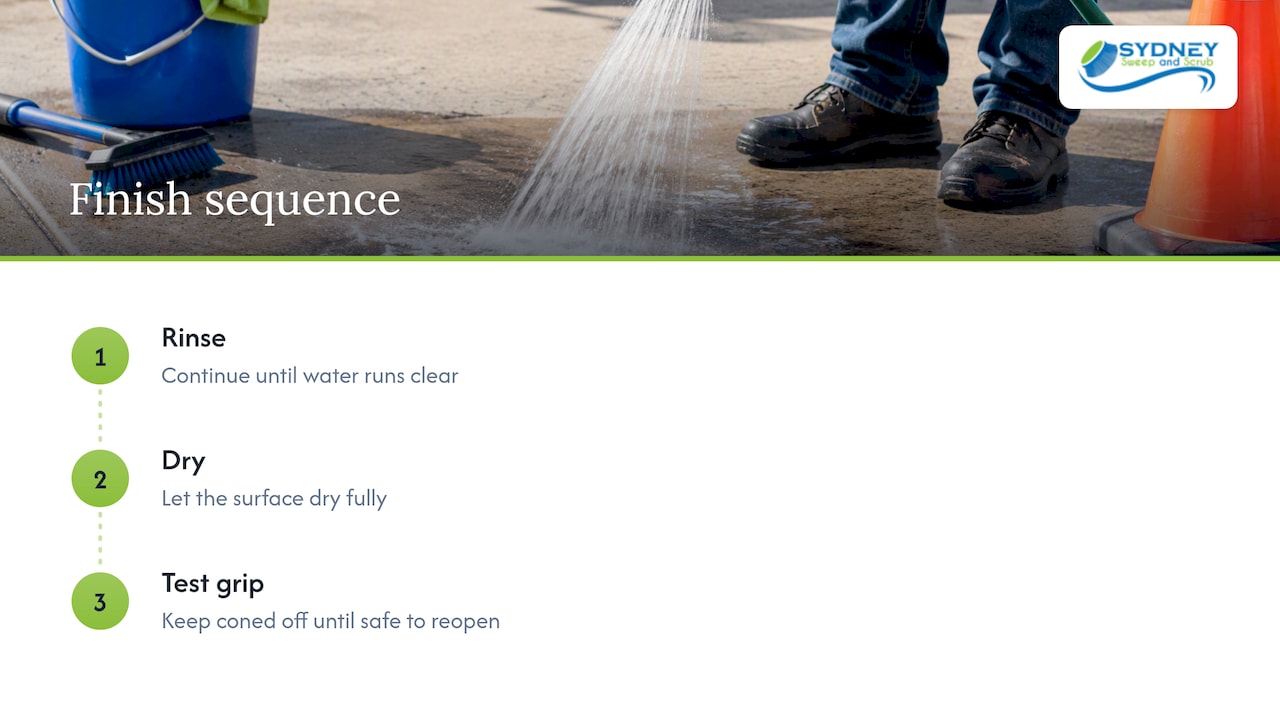
A clean patch can end up more slippery than before if cleaner is left behind. SafeWork NSW lists slippery floors resulting from cleaning among the common sources of risk. Rinse until the water runs clear, let the surface dry fully, then check the grip underfoot before you reopen the area. On busy sites, keep the area coned off until you are satisfied. If you are unsure about a ramp or a loading bay, ask a qualified person to assess the slip resistance.
Old stains: can they be removed?
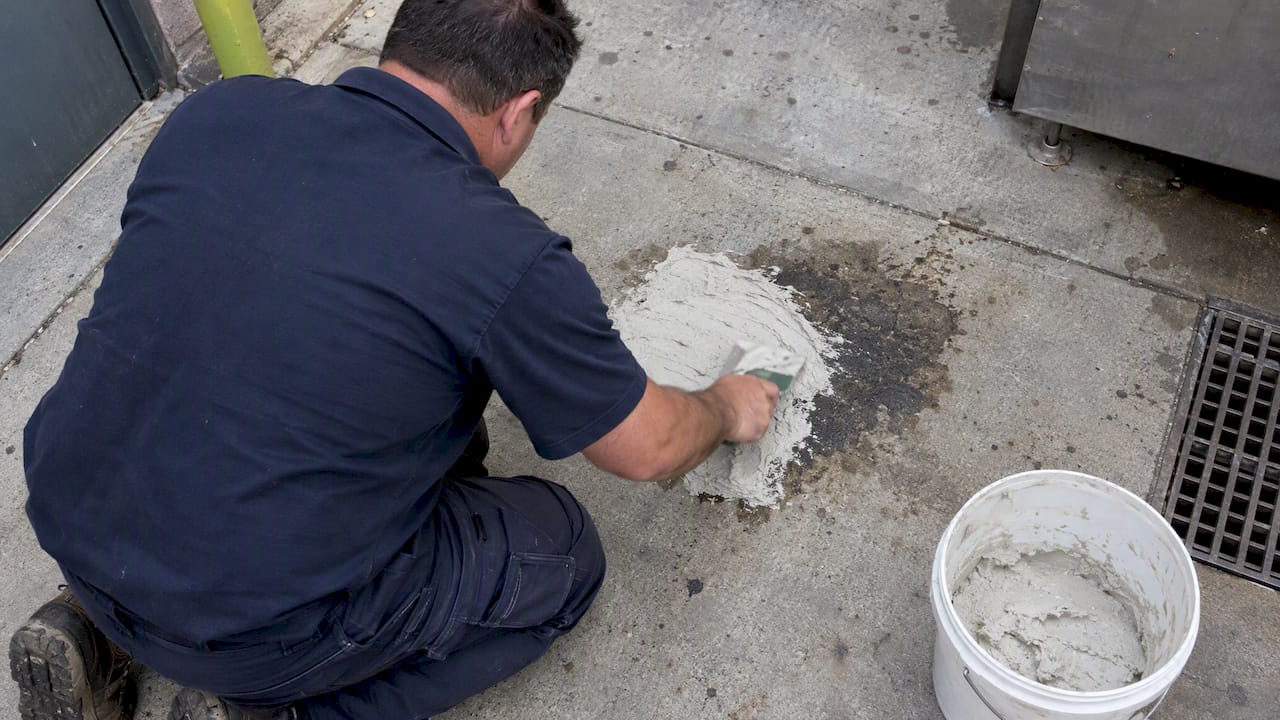
Sometimes, but not always. Oil that has had months to migrate into concrete may need repeated hot water cleaning, or a poultice. Occasionally a faint ghost remains, and the only option is grinding or resurfacing the top layer. Set expectations early: the aim is to remove the hazard and the worst of the discolouration, and the mark may not vanish completely. On asphalt, patches that have softened need repair rather than cleaning.
When to call a professional
A homeowner can usually handle a single fresh drip. On a commercial site, call a professional when:
- The stain is old, large or covers several bays.
- It sits on a pedestrian route, loading dock, ramp or entry.
- Cleaning requires water, because you need wastewater capture and legal disposal.
- The site is strata or shared, and you carry duty-of-care obligations.
- You need documentation for an insurer, auditor or incoming tenant, for example at the end of a lease.
Our page on footpath stain removal in Australia explains what works and when a specialist makes sense.
How Sydney Sweep and Scrub can help
We are a family-owned Sydney business providing mechanical sweeping and scrubbing, pressure washing, hot water cleaning and rubbish removal for car parks, warehouses, construction sites and public spaces. For grease on pavement, that means getting loose debris and absorbent off the surface first, then treating the stain and cleaning it up properly. See our carpark cleaning and warehouse cleaning services, or look at our pressure washing page. If you need a quote, you can request one through our site. Grease and oil removal at the end of a lease is covered by our end of lease commercial cleaning.
Preventing the next stain
- Drip trays and bunded storage under parked equipment, compressors and bins.
- Regular sweeping. Dust and grit mix with oil to make a paste that sticks. Scheduled mechanical sweeping keeps surfaces clean enough to spot new leaks.
- Spill kits at loading docks and near bin areas, with staff who know where they are.
- Inspection routines. Walk the site weekly and log fresh stains so they can be traced to a vehicle or tenant.
- Sealing. A suitable sealer on concrete or pavers slows penetration, which gives you time to respond.
For larger sites, a recurring schedule often costs less than repeated deep cleans. Our guide to cleaning paved car parks and industrial areas explains how that works.
FAQ
How do I remove grease spots from asphalt?
Cover fresh grease with dry absorbent, sweep it up, then use a degreaser suited to asphalt at low pressure. Avoid petrol and strong solvents, which can soften the binder. If the surface has gone soft or pitted, cleaning will not fix it and it needs patching.
Can old oil stains be removed?
Often the worst of them can, especially on concrete, using a degreaser, scrubbing and hot water. A faint shadow may stay on porous surfaces. Deep, long-standing stains may need repeated treatments or surface grinding.
How do I degrease my driveway?
Absorb what you can, apply a concrete degreaser, scrub it in and rinse. Keep the washwater on your own property and away from the gutter, because it must not enter the stormwater system. Use a drain cover or wet-vac if you have a slope towards the street.
What is the best oil stain remover for concrete?
For fresh spills, a clay absorbent or spill mat is the best first step. For set-in stains, an alkaline degreaser with scrubbing and, on commercial sites, hot water cleaning works best. Check the product label for surface compatibility and test a small patch first.
Sources
- Slips, trips and falls: on the same level, SafeWork NSW
- Slips, trips and falls, Safe Work Australia
- Guidance for stormwater management: the drain is just for rain, NSW EPA
- Water Pressure Cleaning, Tablelands Regional Council
- Development and Evaluation of Hydrocarbon Sorbent Materials with the Aid of Chemometrics, QUT
- Oil spill clean-up gets ‘doggone’ hairy, UTS