
A sacrificial coating is a thin layer that comes off with the graffiti and is then reapplied. A permanent coating is a harder film that stays on the wall while the graffiti is cleaned off it. Sacrificial suits small, easy-to-reach surfaces and porous masonry. Permanent suits large, repeatedly hit walls where you want to clean without recoating. Whichever you choose, the removal method is half the decision, because the wrong cleaning approach can destroy either system. That is why we look at the coating and the cleaning crew together.
TL;DR
- Sacrificial: removed with the graffiti, usually by hot water, then reapplied. Cheaper per square metre, but recoating follows most clean-ups.
- Permanent: stays in place through repeated cleans using the maker’s graffiti remover. Dearer upfront, built for walls that are hit often.
- Rough Australian cost guide for 2026: about $15 to $30 per square metre for sacrificial and $35 to $70 for permanent, per a 2026 cost guide.
- Surface decides a lot: porous brick, concrete and sandstone, large walls, murals and heritage items each point to different systems.
- Match the remover to the coating: a solvent that is right for one system can wreck the other.
Table of Contents
- What each coating does
- How graffiti comes off each system
- Matching the coating to the surface
- What it costs over a year
- Application conditions that make or break the result
- Heritage and sensitive sites
- A maintenance routine that protects the investment
- Where we fit in
- FAQ
- Sources
What each coating does
No coating stops someone tagging a wall. The term “anti-graffiti” refers to coatings that let graffiti be removed quickly and efficiently, which discourages repeat attacks. Dulux’s technical paper is clear that complete removal cannot be guaranteed in every case, given the range of paints, markers and surfaces.
Both types seal the surface so paint and ink cannot soak in. Woollahra Council describes the split this way: a sacrificial coating is removed along with the graffiti when the surface is cleaned, while a non-sacrificial (permanent) coating is meant to stay for a considerable period and through repeated removals.
Four product families, not two
The same Dulux paper breaks the market into four groups, and knowing them helps when a supplier quotes you:
- Sacrificial: clear, thin-film emulsions or solutions. A hot water blast removes them completely, and they are reapplied straight away.
- Semi-sacrificial: high-build acrylics that shed a few microns with each scrub and are recoated after several cleans.
- Non-sacrificial surface treatments: no visible film. They lower the surface tension of the substrate so graffiti can be removed with medium to high pressure hot water.
- Permanent two-pack coatings: a hard film, clear or pigmented, cleaned with graffiti removal solvents that dissolve everything except the coating.
When a bid says only “anti-graffiti coating”, ask which of these four it is. The maintenance, the cleaning method and the long-term cost all follow from the answer.
How graffiti comes off each system
This is the part that catches property managers out, because the removal method is not interchangeable.
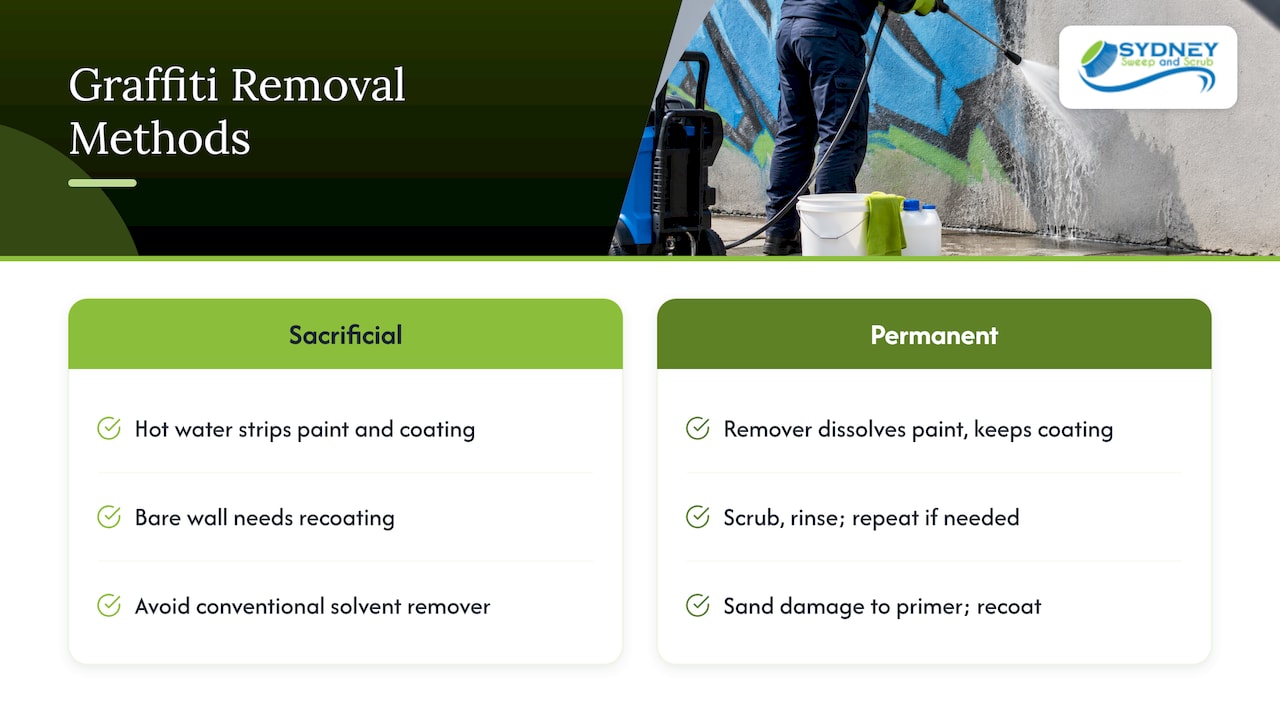
Sacrificial: hot water under pressure strips the coating and the paint together. The wall is then left bare, so it needs recoating before the next hit. Dulux warns that using a conventional solvent remover on a sacrificial-coated asset can defeat the system.
Permanent: a graffiti remover dissolves the paint but leaves the coating. One Australian maker’s guide sets out a typical routine: spray on a citrus-based remover, leave it about a minute, scrub with a rag or scouring pad (a water blaster on large areas), repeat if needed, then rinse the residue. Rags and waste are disposed of under local regulations. Damaged patches are sanded back to primer and recoated, as set out in A & I Coatings’ guide.
Woollahra Council also cautions that some solvents can do more damage than the graffiti itself. So the coating choice is also a choice about which removal chemistry and equipment will touch your wall for the next decade.
Speed matters too. A 2026 technical article notes that graffiti removed within 24 to 48 hours is significantly easier to clean than aged, hardened paint. Either coating works best when someone is actually on call to clean.
Matching the coating to the surface
Dulux’s December 2023 tech note ties the choice to three things: the look you want, how porous the surface is and how you plan to maintain it. Its guidance is summarised below.
| Situation | Usually points to |
|---|---|
| Surface must keep its natural look | Non-sacrificial surface treatment |
| Colour change is acceptable | Two-pack finish |
| Porous surface (unpainted concrete, brick, stone) | Continuous sacrificial or permanent coating |
| Small, easy-to-reach surface | Sacrificial |
| Large or hard-to-access surface | Non-sacrificial or permanent |
Porous concrete, brick and stone
Unpainted concrete, stone, brick and timber are very porous, so paint and marker ink sink into the pores. Dulux notes that repeated ultra-high pressure washing, abrasive blasting or wire brushing is destructive, and chemical strippers can drive stains deeper. Clear two-pack coatings can also darken concrete or bluestone with a “wet look” if you coat only part of a wall. For a carpark stairwell or a loading dock wall, coat a full panel or elevation so you do not leave a visible tide line.
Murals and delicate surfaces
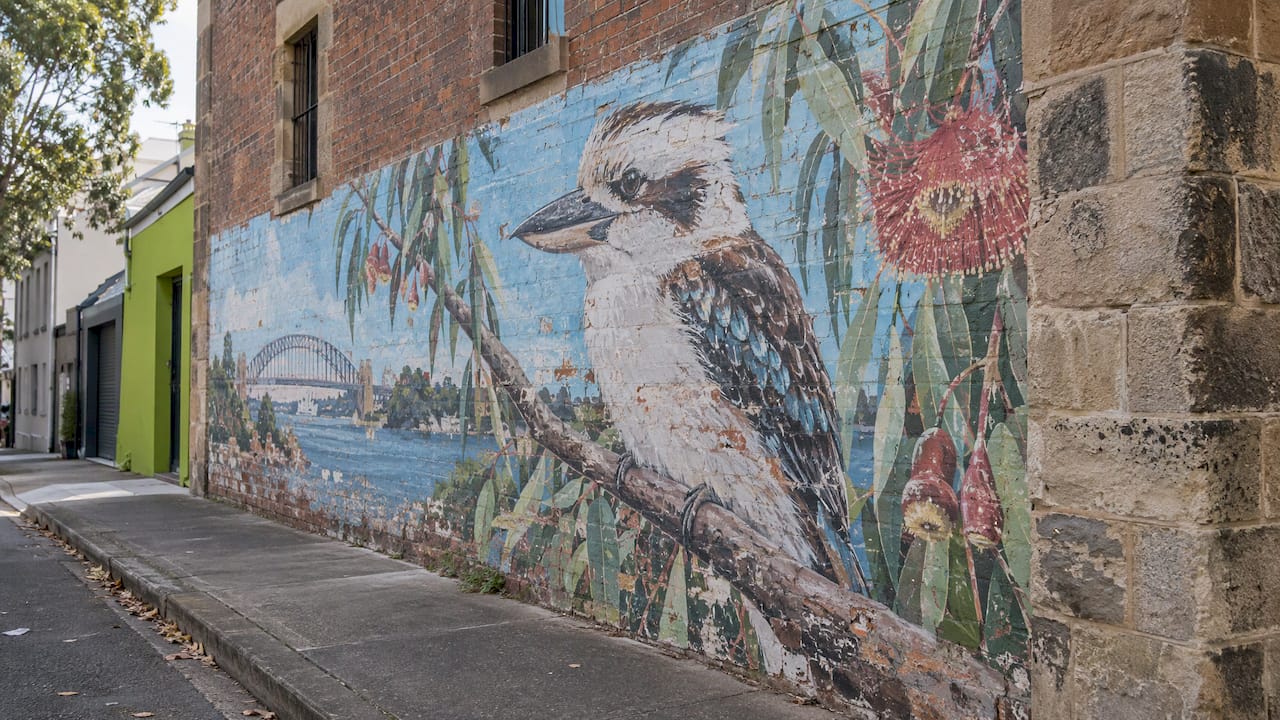
Breathable sacrificial products exist for public art. KEIM Australia describes its PSS 20 as a breathable, reversible, virtually invisible protection for masonry, concrete and stone, suitable for delicate or historic surfaces and murals, and removed with hot water only. A film that cannot breathe can trap moisture in older masonry, so breathability belongs on your bidder checklist.
Carparks and warehouses
Typical risk sites for our clients are perimeter walls, ramp walls, stair cores, roller doors, loading docks and electrical kiosks. Where an easy-to-reach panel is tagged now and then, sacrificial is a sensible match. Where a long, exposed boundary wall is hit several times a year, a permanent or non-sacrificial system is usually easier to live with.
What it costs over a year
Costs depend on the surface, access and product, so treat figures as a guide for budgeting and get written quotes. The 2026 Going Rate guide puts sacrificial coatings at roughly $15 to $30 per square metre applied and permanent coatings at $35 to $70 per square metre, lasting five to ten years with repeated cleaning and no recoating. It says either option pays back quickly on a wall tagged three or four times a year.
A worked example
Take a 100 square metre boundary wall:
- Sacrificial: about $1,500 to $3,000 to coat. One maker says its sacrificial systems need reapplying after one to three hit-and-removal cycles, so a wall hit four times a year may be recoated two to four times in that year.
- Permanent: about $3,500 to $7,000 to coat. The same maker states its non-sacrificial systems typically withstand up to 12 hit-and-removal cycles before a maintenance coat is needed.
The lower price per square metre of sacrificial is real, but so is the repeat spend. On a rarely hit wall the sacrificial route stays cheaper. On a wall hit monthly, the permanent route generally wins within a year or two. Always add the cost of each clean-up itself, since a clean-up is needed in both cases.
Application conditions that make or break the result
Both systems need a clean, sound, dry surface to bond to. That is why the coating goes on after the first professional removal, not over an existing stain. Going Rate also advises a test patch before treating a whole elevation, checked dry and in daylight. Fresh concrete should cure for at least 28 days first, according to the same guide.
Permanent two-pack products are the less forgiving of the two. Global Formulation’s technical article gives the conditions for two-pack polyurethane topcoats: substrate at least 3 °C above the dew point, relative humidity below 85% during application and the first four hours of cure, and a pot life of typically 2 to 4 hours at 20 °C. Sydney’s humid summer mornings can miss those numbers, so scheduling matters.
Sacrificial coatings have their own quirk. Woollahra Council notes they are often water-based and easy to apply, but may soften and pick up dirt in very hot climates. Plan on periodic washing of sacrificial-coated walls in full summer sun.
Heritage and sensitive sites
If the wall is a heritage item, or sits in a conservation area, check before you coat or clean. In NSW, a statement of heritage impact must accompany works to State Heritage Register items, and councils may require one for other heritage items. The NSW guidelines say assessors consider whether a paint type is chemically compatible with the existing material and whether it affects breathability.
For maintenance of State Heritage Register items managed by Place Management NSW, the standard exemptions allow graffiti removal using low-pressure water and neutral detergents, at no more than 500 kPa (72 psi) unless a qualified heritage professional advises otherwise in writing. Protective coatings may only go on surfaces that previously had them.
On soft surfaces such as sandstone, brick or render, KEIM’s instructions for its product call for hot water only at 60 to 70 °C and pressure under 20 bar, and note that treated surfaces can be slippery when wet. Woollahra Council adds that permanent coatings may not be a wise choice on heritage sandstone. Councils and strata committees with older masonry should get a heritage professional’s written advice before choosing a system.
A maintenance routine that protects the investment
A coating is only as good as the routine behind it. A & I Coatings’ maintenance guide links long coating life to regular inspection, periodic cleaning to stop grime building up, and local repair of mechanically damaged areas back to primer before recoating. Global Formulation adds that high-value assets should have a documented protocol naming the approved remover, the cleaning procedure and the inspection criteria.
For a property manager, that translates into a short written plan:
- Record the system: product name, type (sacrificial, semi-sacrificial, non-sacrificial or permanent), date applied and the approved remover.
- Inspect on a schedule: walk the walls with each routine clean, and check for damaged patches and early tags.
- Clean fast: aim to remove graffiti within a day or two of discovery.
- Use only the approved method: hot water for sacrificial, the maker’s remover for permanent.
- Repair and recoat: sacrificial walls straight after each removal, permanent walls at damaged patches.
Our carpark cleaning and graffiti page and our post on why graffiti in a Sydney carpark must be removed cover why quick action matters for safety and presentation.
Where we fit in
Sydney Sweep and Scrub is a family-owned business doing mechanical cleaning and pressure washing across Sydney for property managers, strata companies, warehouse operators and councils. Hot water pressure cleaning is one of our services, and it is the method a sacrificial system is designed around. We also run regular carpark cleaning and pressure washing programs, so the same team that keeps your site clean can be the one that cleans a tagged wall promptly. If you are weighing coatings for a carpark or warehouse, tell us the surface and how often it is hit, and we can quote the cleaning side of the plan.
FAQ
Is a permanent graffiti coating better than a sacrificial one?
Neither is better in every case. Permanent coatings suit large walls that are hit often, because they survive repeated cleans. Sacrificial coatings suit small, easy-to-reach surfaces and porous masonry, and are cheaper to apply but need reapplying after most removals.
How long does an anti-graffiti coating last?
Going Rate’s 2026 guide puts permanent coatings at five to ten years with repeated cleaning. Sacrificial coatings last until the next removal. One Australian maker says its sacrificial systems need reapplication after one to three cycles, while its non-sacrificial systems withstand up to 12.
Can I use any graffiti remover on a coated wall?
No. A conventional solvent remover can defeat a sacrificial coating, and a permanent coating needs the maker’s approved remover. Check the product’s removal instructions before any clean-up, and keep them on file for whoever cleans the wall.
Do I need approval to coat or clean a heritage wall?
Possibly. In NSW, works to State Heritage Register items usually need a statement of heritage impact, and councils may ask for one for other heritage items. Confirm with your council or a qualified heritage professional before choosing a coating or cleaning method.
Sources
- Protective coatings against graffiti, Woollahra Municipal Council
- Anti-Graffiti Coatings, Dulux Protective Coatings (February 2019)
- Anti-Graffiti Coatings tech note, Dulux Protective Coatings (December 2023)
- Anti-Graffiti Coatings Guide, A & I Coatings
- PSS 20, KEIM Australia
- Graffiti Removal Cost (Australia 2026), Going Rate
- Anti-Graffiti Coatings: Technology & Formulation, Global Formulation
- Guidelines for preparing a statement of heritage impact, NSW Government
- Standard Exemptions, Place Management NSW