
To remove detergent residue from clothes, rewash the item with less detergent and an extra rinse, and don’t add fabric softener. To clear it from a washing machine, run an empty hot cycle and scrub the dispenser. The same cause sits behind soap film on concrete floors: too much product and too little rinsing. This guide covers all three, in the order most readers need them.
TL;DR
- Residue is detergent that didn’t dissolve or rinse out. Overloading, too much detergent, fabric softener and hard water all contribute.
- For clothes: rewash with less detergent, add a rinse, skip softener. A white vinegar soak helps with powder streaks.
- For machines: run an empty hot cycle, scrub the dispenser, and clean monthly.
- Skip “laundry stripping”. A detergent-free rinse and spin is gentler on fabric.
- On warehouse and carpark floors, the fix is the same idea: correct dosing, then a proper rinse and pick-up.
Table of Contents
- Why detergent leaves residue behind
- How to remove detergent residue from clothes
- How to remove detergent buildup from a washing machine
- How to stop residue coming back
- When the residue is on a floor
- Floor residue checklist for facility managers
- Get the floors in your building sorted
- FAQ
- Sources
Why detergent leaves residue behind
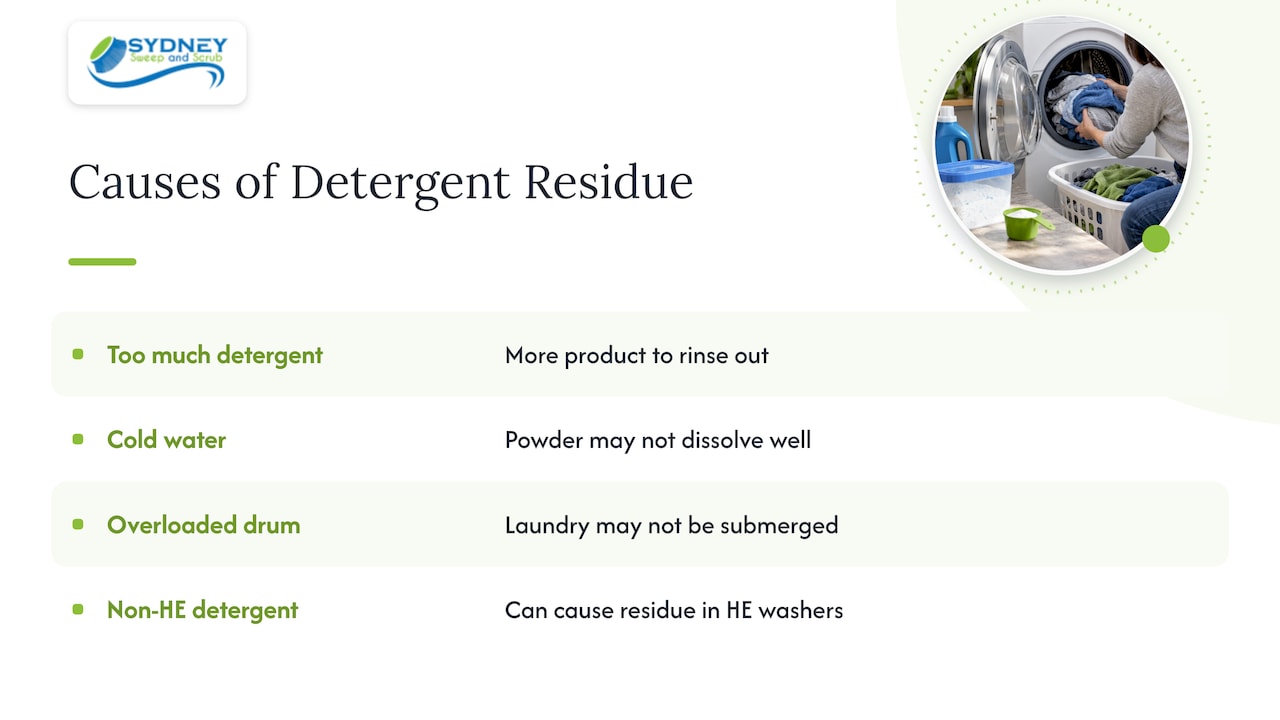
Residue forms when the insoluble parts of a detergent aren’t washed out. CHOICE says overloading the drum, using too much detergent or fabric softener, clumpy powder and particularly hard water can all contribute, and the result can look like blotchy white marks on dark clothes.
Manufacturers describe the same pattern. LG’s support guidance says residue can appear when bulky laundry isn’t fully submerged, when too much detergent is used, when detergent is poured straight onto clothes, or when cold water stops it dissolving well. Maytag adds two more: using a non-HE detergent in a high-efficiency washer, and interactions between body soils and detergent.
The common thread is simple. More detergent is not more clean. It is more to rinse out.
How to remove detergent residue from clothes
Work from the gentlest fix to the strongest, and stop when the marks are gone.
Step 1: Rewash with less detergent
CHOICE’s advice is to rewash the garment using less detergent, avoid overloading and leave out fabric softener. For cold washes, dissolve powder in a little warm water first, or switch to liquid detergent. CHOICE expert Matthew Steen has said that one-third of the recommended amount can still give good results, so there is plenty of room to cut back.
Step 2: Add an extra rinse
When residue is visible on clothes or building up in the machine, CHOICE recommends an additional rinse cycle. Short and delicate cycles are the usual culprits, because they use less water. LG also suggests extra rinses for these cycles.
Step 3: Try a white vinegar soak for powder streaks
For powder residue or streaks, the American Cleaning Institute suggests soaking the item in a plastic container with one cup (240 ml) of white vinegar in one gallon (3.8 L) of warm water, then rinsing. Check the care label first, and never mix vinegar with other cleaning products. The Victorian Country Fire Authority’s laundry safety factsheet advises keeping chemicals in their original packaging, following the manufacturer’s instructions and never mixing chemicals.
Step 4: Run a detergent-free rinse and spin
If a load is stiff or smells of soap, run it again with no detergent. Consumer Reports attributes buildup to concentrated detergent or softener, incomplete rinsing, overloading and hard water, and recommends a detergent-free rinse and spin or a deep-soak cycle rather than stripping the clothes in a bathtub.
Step 5: A short tumble for stubborn flecks
CHOICE notes that about five minutes in the dryer on an air-dry setting might help knock off dry flecks. Brush the garment afterwards, then check it before you wear it.
A note on laundry stripping
Stripping means soaking laundry in hot water with borax, washing soda and detergent. Consumer Reports warns it can remove dye, damage fabrics that are sensitive to heat or high pH, and expose you to caustic washing soda. If you do try it, wear gloves and a mask. For most households, a rinse and spin is the better first move.
How to remove detergent buildup from a washing machine
Residue in the machine feeds residue on the clothes, so clean both. The CHOICE method is to run an empty cycle on the hottest setting with a little detergent, or use the machine’s own cleaning cycle. Wipe away the scum with hot soapy water and a sponge. Once a year, scrub detergent out of the dispenser and other recesses with a toothbrush.
If your machine has an automatic dispenser, follow the manufacturer’s steps. Samsung’s guidance says to switch off and unplug the machine before cleaning, rinse hardened detergent with lukewarm water, use a bottle brush in the drawer recess, dry the recess afterwards and avoid spraying water into it because of the risk of electric shock or fire.
A quick routine:
- Unplug the machine if you are cleaning a dispenser or pump area.
- Pull out the drawer and soak it in warm water.
- Scrub the recess with a bottle brush or toothbrush, then dry it.
- Wipe the door seal and any visible scum.
- Run an empty hot or tub-clean cycle.
- Leave the door ajar so the drum dries out.
If you look after rental or serviced apartments, add this to your apartment maintenance checklist so machines in turnover units don’t develop a soapy film between guests.
How to stop residue coming back
Most prevention comes down to dose, load and water.
| Habit | What to do | Why it helps |
|---|---|---|
| Dose | Use less detergent than you think you need | Less product left to rinse |
| Load | Leave space for clothes to move | Water reaches every item |
| Softener | Leave it out or use it sparingly | Softeners coat fabrics and build up in machines |
| Powder in cold water | Pre-dissolve in warm water, or use liquid | Powder clumps in cold water |
| Detergent type | Match it to your washer type | Wrong type can clump or dissolve poorly |
| Machine care | Clean monthly, leave the door ajar | Stops scum building up |
CHOICE also recommends storing detergent in an airtight container, which keeps powder from clumping. LG says detergent designed for top-load washers is the right choice there, and that natural detergents such as soap may dissolve poorly and contaminate the tub. For blankets, LG suggests liquid detergent.
When you shop for a machine, rinse performance is worth checking. CHOICE’s testing treats it as separate from cleaning performance: machines differ in how well they remove detergent from laundry. If you have sensitive skin, CHOICE also advises using less detergent.
When the residue is on a floor
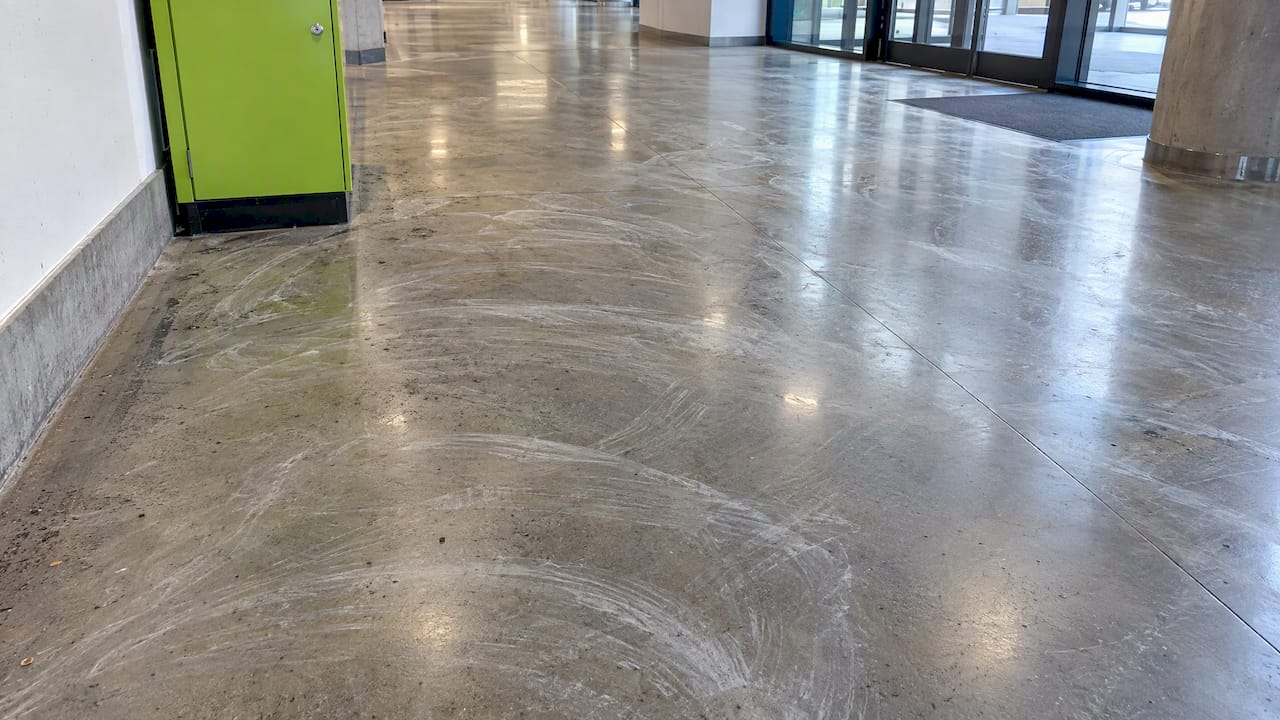
The same physics apply on a commercial floor, only the scale changes. A scrubber or pressure washer that is over-dosed with detergent, or that doesn’t pick up and rinse properly, can leave a film. In our experience on Sydney sites, that film is where most complaints about “sticky” or “streaky” floors start. A film on bare concrete can also hold onto dust, which then dulls the surface you just cleaned.
These are the situations where we see it most.
Warehouses
Warehouse floors get a mix of dust, tyre marks and oil. It is tempting to add more chemical to a stubborn patch, but that is the same mistake as adding more detergent to a laundry load. The better approach is to match the product to the soil, dose it as the manufacturer directs, give it time to work, and then recover the solution with the machine. Our article on floor scrubber detergents for facility managers sets out a simple default to start from. If you are weighing up equipment, commercial floor scrubbing machines for warehouses explains what a scrubber does that a mop and bucket can’t.
If the site is live, you don’t have to stop trading to get a clean floor. We explain the approach in cleaning a warehouse during operations.
Carparks
Carpark floors collect oil drips, brake dust and general grime. We use pressure washing, with hot water where the soil calls for it, and recover the dirty water rather than leaving it to dry on the slab. Pre-treatment matters here: giving the product the right dwell time lets it do the work so you don’t need to overdose. Our guide to pressure washing pre-treatment dwell times covers the detail. Hot water on its own often lifts grease with less chemical, which is why we offer pressure washing with hot water.
End of lease
Tenants often find detergent film, oil stains and dust on warehouse floors only when the makegood inspection arrives. Cleaning that restores the floor to a lease-ready state, without leaving residue behind, is part of warehouse makegood cleaning. Check your lease for the exact condition required.
Water use
Rinsing properly doesn’t have to mean wasting water. Machines that scrub and recover in one pass use water carefully, and we cover the thinking in saving water in industrial cleaning.
Floor residue checklist for facility managers
If you manage a site, here is a short list you can use with your own staff or a contractor.
- Identify the soil. Dust, oil, tannin from leaves and food spills all need different treatment. Our page on tannin stains on concrete shows how one stain type differs from general grime.
- Dose to the label. Never top up “just in case”, and never mix chemicals. The CFA’s laundry guidance on not mixing chemicals applies to every cleaning cupboard.
- Sweep first. Removing loose dust before wet cleaning means less product and less slurry.
- Allow dwell time, then recover. Let the product work, then pick up the solution before it dries.
- Rinse where the surface calls for it. Rinse and recover until the floor no longer feels tacky underfoot.
- Check the floor when dry. A film often shows as dull patches or streaks only once the floor has dried.
- Record what worked. Note product, dilution and method so the next clean is consistent.
Buying a machine is one route, but many sites find contracting the job simpler. We set out the case in why hire a contractor instead of buying a machine.
Get the floors in your building sorted
If the residue you are fighting is on a warehouse, carpark or commercial floor in Sydney, we can help. Sydney Sweep and Scrub is a family-owned business offering mechanical sweeping and scrubbing, pressure washing and hot water cleaning for warehouses, carparks and public spaces. Have a look at our warehouse cleaning and carpark cleaning services, or request a quote through our site.
FAQ
How do you get detergent residue out of clothes?
Rewash the item with less detergent and an extra rinse, and leave out fabric softener. For powder streaks, a soak in white vinegar and warm water, followed by a rinse, can help. Check the care label first.
How can I remove detergent buildup from my washing machine?
Run an empty cycle on the hottest setting with a little detergent, or use the machine’s cleaning cycle. Scrub the dispenser and recesses with a toothbrush and wipe away scum with hot soapy water. Doing this monthly keeps buildup from returning.
Why does detergent leave white marks on clothes?
The insoluble parts of detergent haven’t been rinsed out. Overloading, too much detergent, clumpy powder, cold water and hard water are the usual causes. Using less detergent and adding a rinse addresses most cases.
What neutralises laundry detergent?
A diluted white vinegar soak is the commonly recommended option for powder residue, followed by a thorough rinse. A detergent-free rinse and spin also flushes out leftover product. Never mix vinegar with other cleaning chemicals.
Can detergent residue be removed from warehouse or carpark floors?
Yes. It generally comes down to correct dosing, suitable dwell time and recovering the solution with a scrubber or pressure washer. We clean warehouse and carpark floors across Sydney, so get in touch if you have a floor that feels tacky or looks streaky.
Sources
- How to clean your washing machine, CHOICE
- How to buy a great laundry detergent, CHOICE
- Are you wasting money on these laundry products?, CHOICE
- Is Laundry Stripping Worth the Trouble?, Consumer Reports
- How to clean the detergent auto dispenser and pump, Samsung
- Clothing has White Residue, Maytag
- Laundering Problems and Solutions, American Cleaning Institute
- Laundry Safety factsheet, Country Fire Authority