
High-pressure cleaning can cause serious injuries and material damage, so treat it as a high-risk job and set up controls before you start. Safe Work Australia’s water jetting guidance expects a risk assessment first. Never blast suspected asbestos-containing materials, and wear PPE, because dust and silica can become airborne.
TL;DR:
- Treat any injection wound as an emergency: go to the hospital and tell clinicians it came from high pressure water, even if the puncture looks minor.
- Never use high pressure water on asbestos roofs, fences, or walls; if a building predates 1990 or asbestos is suspected, stop and arrange testing.
- For silica dust, avoid high pressure water and compressed air; use wet sweeping, an M class or H class vacuum, or water suppression instead.
- Use engineering and site controls before relying on PPE, including guards, dead man switches, exclusion zones, operator training, and eye, hearing, hand, and foot protection.
Table of Contents
- What injuries can high pressure jets cause?
- Which surfaces can a pressure washer ruin?
- Why are asbestos and silica the biggest hazards?
- How do you manage the risk before and during the job?
- What should your safe operating checklist include?
- What should you do if someone is hurt?
- Where can we help with higher-risk jobs?
- FAQ
- Sources
What injuries can high pressure jets cause?
The most dangerous injury is also the easiest to underestimate. A jet can force water through the skin, leaving a small wound that looks harmless while the tissue underneath is badly damaged. WorkSafe Victoria warns that these wounds can lead to acute compartment syndrome, a medical emergency that needs urgent surgery. Healthdirect describes how swelling inside a closed muscle compartment can cause permanent disability if it is not treated quickly.
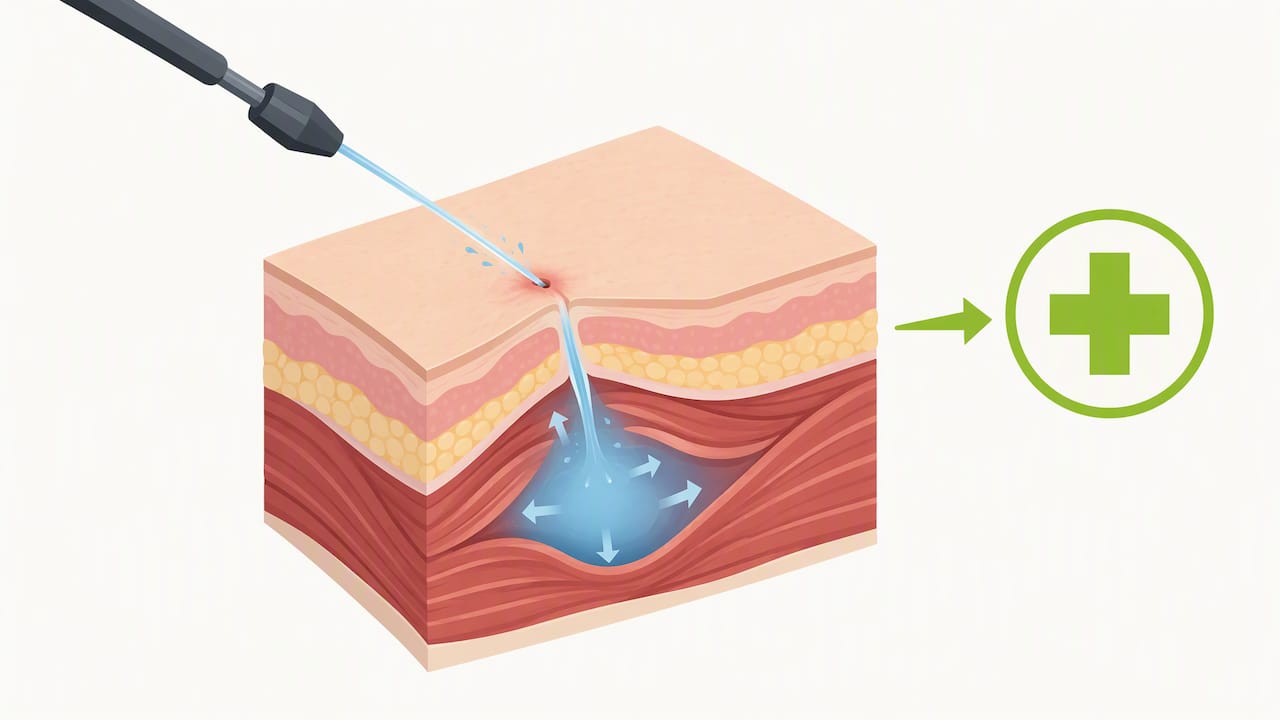
Penetrating jet wounds can progress to acute compartment syndrome, which needs urgent surgery. A tiny puncture is no reason to wait and see.
Other injuries are more familiar, but they add up:
- Lacerations from the jet itself or from debris it throws.
- Eye injuries from flying grit, paint chips and chemical splash.
- Hearing damage from sustained noise at the wand and the pump.
- Slips and falls on wet, slimy surfaces, including ladders and roofs.
- Sprains and strains from wand recoil and awkward posture.
Equipment can fail too. Hoses blow out, worn fittings let go, and a poorly seated nozzle can eject under pressure. A damaged hose whipping around is a hazard to everyone nearby, which is why daily inspection matters as much as operator skill.
Which surfaces can a pressure washer ruin?
Pressure alone does not make a job safe. The wrong setting on the wrong material causes damage that costs more than the cleaning ever saved. The surfaces we see harmed most often are:
- Painted timber, where the jet strips paint and raises the grain.
- Render and older masonry, which can crumble or let water in behind the surface.
- Soft pavers and aged concrete, which etch and pit, leaving stripes.
- Glass seals, window frames and sealants, where forced water bypasses the seal.
The usual failure modes are paint stripping, etching, pitting, loss of sealant and water driven into joints, where it can cause damp and rot later. Test a small hidden patch first, and keep the nozzle at a sensible distance.
Often a gentler method does the job. Our comparison of pressure washing vs soft washing helps you choose for delicate surfaces, and hot water can lift grease at lower pressure. If you are dealing with slabs, our notes on pressure washing concrete cover what to specify.
Why are asbestos and silica the biggest hazards?
High-pressure spray breaks up asbestos-containing material and sends fibres into the air and onto neighbouring properties. Under Australian work health and safety laws, it is illegal to use high-pressure water on asbestos roofs, fences or walls. WorkSafe Queensland reports that clean-up after illegal cleaning can exceed $18,000, before any fines for breaching the Work Health and Safety Act 2011.
Clean-up after illegally cleaning an asbestos roof can exceed $18,000, plus fines. The same regulator’s incident alerts show prosecutions and notices following jobs like this, and a later alert describes contaminated dust spreading to neighbouring properties.
Silica is the second trap. SafeWork NSW says using high-pressure water or compressed air to clean dusty floors or equipment is a dangerous practice because it aerosolises respirable crystalline silica. The recommended alternatives are:
- Wet sweeping.
- M-class or H-class vacuum cleaners.
- Water suppression systems.
Here is the decisive rule. If the building predates 1990, or you suspect asbestos or heavy silica dust, stop and arrange testing. Removal or controlled cleaning should be done by competent people. If you need a specialist, this guide to asbestos roof tile triage explains the paperwork. Our background piece on silica dust as a hazard is worth reading too.
How do you manage the risk before and during the job?
Work down the hierarchy of controls: remove the hazard first and rely on PPE last. In practice, this is the order we follow:
- Eliminate or substitute: skip the jet where a brush, vacuum or low-pressure method does the job.
- Engineering controls: fit gun guards, dead-man switches and anti-withdrawal devices, choose a suitable lance length, and filter the water supply.
- Administrative controls: complete a job risk assessment, set exclusion zones, train operators and inspect equipment on a schedule.
- Incident reporting: record near misses as well as injuries, so fixes happen before someone is hurt.
- PPE: use it as the last layer, never in place of the earlier ones.
Equipment controls are not optional extras. The Queensland abrasive blasting code points to isolation, exclusion zones and dead-man controls, and notes that particles can cause eye damage and penetrating injuries. On PPE, expect eye and face protection, hearing protection, waterproof gloves and non-slip boots as a baseline. Respirators move from optional to essential when dust or silica is possible. We cover the kit in pressure washing PPE for operators.
Pro Tip: Run the trigger test with the lance pointed at the ground before every job: if the dead-man switch does not stop the flow instantly, the machine stays out of service.
What should your safe operating checklist include?
Before the job:
- Identify the surface and check for any sign of asbestos or silica.
- Inspect the hose, fittings and nozzle for wear or cracks.
- Test pressure and nozzle on a small hidden area.
During the job:
- Keep a safe distance and a sensible wand angle.
- Avoid using an aggressive nozzle on fragile material.
- Isolate the area and control runoff so slurry stays contained.
Afterwards:
- Flush the system, inspect the surface for damage, and dispose of contaminated slurry as regulations require.
Most injuries trace back to a few repeat mistakes, which we list in common mistakes to avoid when pressure washing.
What should you do if someone is hurt?
Act fast and keep it simple:
- Press firmly on the wound to stop bleeding, rinse with clean water and cover with a non-stick dressing, as Healthdirect advises.
- Do not try to remove anything embedded in the wound.
- Treat any injection wound as an emergency: go to hospital and tell clinicians it was caused by high-pressure water.
- At work, notify your supervisor, report the incident and follow your workers’ compensation process.
Where can we help with higher-risk jobs?
If a job involves a large site, a carpark or warehouse floor, or surfaces you would rather not test yourself, our team can take the risk off your hands. We use industrial equipment and plan each job around the controls above. See our pressure washing service, or send us the site details and we will tell you what the job needs and arrange a quote.
FAQ
What PPE is essential for high pressure jetting?
Eye and face protection, hearing protection, waterproof gloves and non-slip footwear are the baseline. Add a respirator whenever dust, silica or contaminated spray is possible. The Safe Work Australia abrasive blasting code lists airline respirators, protective suits, gloves and hearing protection for blasting work.
Is it safe to pressure wash a house?
It can be, once you have confirmed the cladding and roof contain no asbestos and chosen a suitable pressure for each material. Test a hidden patch first and keep forced water out of joints and seals. If the house predates 1990 and you are unsure, stop and arrange testing.
How much psi will cut skin?
There is no single safe or unsafe pressure figure we can give you, and the danger depends on the jet, the distance and the part of the body. Treat every high-pressure jet as capable of penetrating skin, and never point it at a person or your own hand or foot.
What is high pressure cleaning?
High pressure cleaning uses a pump to push water through a narrow nozzle at force, lifting dirt, grease and coatings from hard surfaces. Safe Work Australia defines water jetting by equipment pressure and lists the hazards that follow, including cutting forces, debris and noise.
Sources
- Worksafe
- Use of high-pressure water spray equipment on asbestos roofs
- Safework
- Guide for managing risks from high pressure water jetting | Safe Work Australia