
For most tactile paving, a low-pressure water wash with a non-ionic detergent, applied after a small-area trial, is a gentle starting point. This combination lifts routine dirt without stripping colour or softening adhesives. Some materials, particularly polyurethane pads and heritage stone, are more sensitive and may need specialist products. Heavy grease, suspected adhesive failure or unidentified substrates are good reasons to bring in a professional before you touch the surface.
TL;DR:
- Use warm water and mild detergent on ceramic, soft brushes on polyurethane, and conservative pressure on concrete to protect texture, contrast, and adhesive edges.
- Keep pressure below roughly 200 psi on sensitive stone or historic masonry, avoid hydrofluoric acid entirely, and direct chemical runoff away from storm drains.
- Test an inconspicuous patch first, then check for color or texture changes; inspect busy sites monthly and fully clean exposed outdoor paving quarterly.
- Ask contractors to document TGSI experience, use locked adjustable pressure controls, test a patch, explain damage procedures, and contain runoff.
Table of Contents
- Three safe cleaning methods and when to use each
- How to clean by TGSI material: polyurethane, ceramic, concrete pavers and metal studs
- Safe pressure washing, steam and chemical guidance
- Testing, inspecting and scheduling maintenance
- When to hire a professional contractor and what to ask them
- How professional pressure washing protects your tactile paving
- FAQ
- Sources
Three safe cleaning methods and when to use each
Most tactile ground surface indicators (TGSIs) only need routine attention, and matching the method to the soiling saves time and avoids damage.
- Loose dirt and dust: a low-pressure mains water wash paired with a soft brush or mechanical sweeping clears grit before it grinds into the surface texture.
- Industrial grime or light grease: a non-ionic detergent or a mild alkaline cleaner, chosen to suit the material, emulsifies oil so it rinses away rather than smearing.
- Stubborn oil or tar: hot-water pressure washing or steam can shift it, but only where the material and the adhesive beneath it are rated for that heat and force.
Water remains the simplest and generally safest method for cleaning masonry, with stronger detergents or chemicals reserved for cases where plain water will not shift the soiling. That same principle applies to tactile paving: start gentle, escalate only as needed, and test before you commit to a full run. For general paved areas beyond the tactile strip itself, our guide to paver cleaning methods covers the broader DIY-versus-professional decision in more detail.
How to clean by TGSI material: polyurethane, ceramic, concrete pavers and metal studs
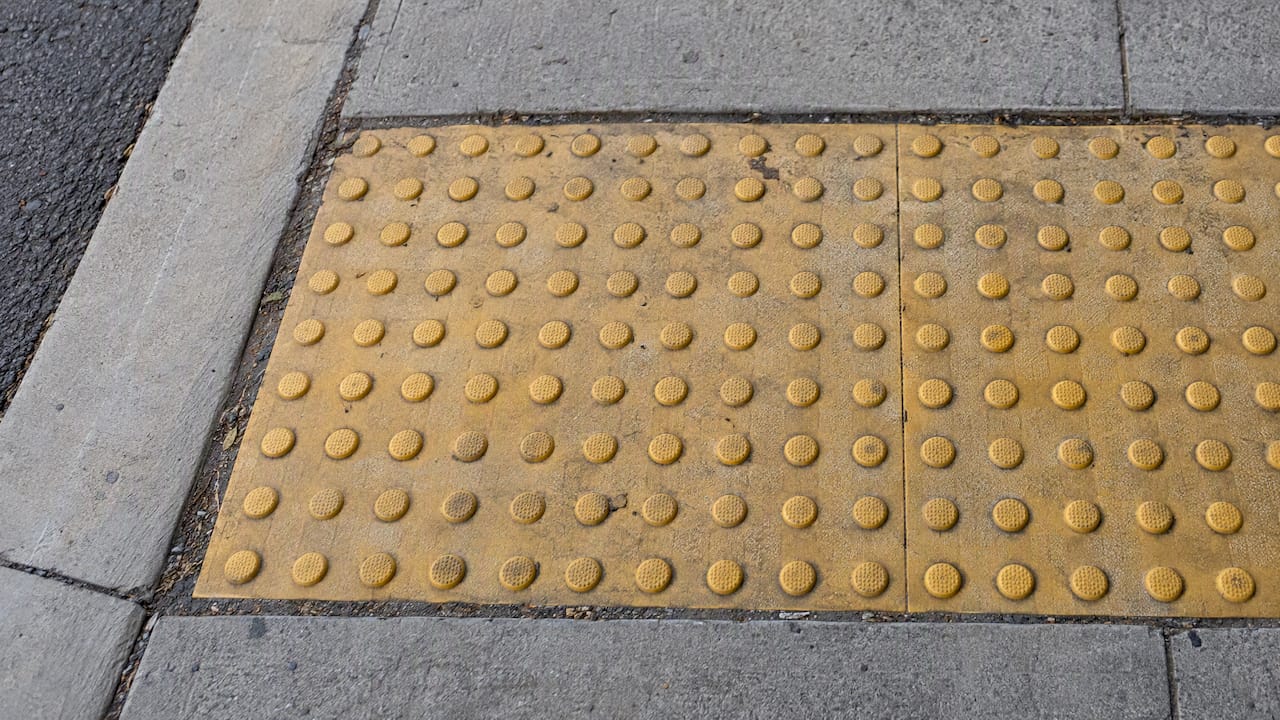
Tactile indicators come in several materials, and each one fails differently when cleaned the wrong way. Durability and the right cleaning method vary by material, and polyurethane pads in high-traffic areas are prone to peeling while ceramic units can crack on flexible substrates, so matching the method to the surface matters more than finding one universal process.
- Polyurethane pads: keep pressure jets away from the edges, use a soft brush and a manufacturer-approved cleaner, and check regularly for lifting at the perimeter.
- Ceramic or porcelain tiles: warm water with a non-ionic detergent handles most grime; avoid strong acids and anything that delivers a hard impact, since both can crack the tile body.
- Concrete pavers and plain concrete: pressure washing is often effective, but set conservative pressures so you do not strip the surface paste, expose aggregate or dull the luminance contrast.
- Metal tactile studs: before any re-bonding work, degrease with a solvent such as acetone, as manufacturer guidance for metal TGSIs specifies thorough cleaning with a suitable agent like acetone prior to installation and adhesive that matches the manufacturer’s recommendation, and avoid abrasive masonry chemicals that can undermine that bond.
Pro Tip: Keep a small card near your maintenance kit listing which cleaner suits each TGSI material on site, so whoever is rostered on does not have to guess.
If you are unsure what a stud or pad is made from, treat it as the most sensitive category until you confirm otherwise. A wrong guess about the material can cause avoidable damage during routine cleaning.
Safe pressure washing, steam and chemical guidance
Getting the settings right matters more than the equipment itself. Follow a sequence rather than reaching straight for maximum pressure.
- Fit a pressure regulator and a locking gauge so the operator cannot drift above the agreed setting mid-job.
- Start at the lowest pressure likely to shift the soiling and increase only if the surface clearly tolerates it.
- Use non-ionic detergents for everyday grime and keep strong acids or caustics for specialist jobs run under expert direction.
- Never use hydrofluoric acid on tactile paving or surrounding masonry.
- Contain and direct runoff away from stormwater drains, especially when detergents or biocides are in use.
For sensitive stone and masonry work, keep pressure below roughly 200 psi (1,379 kPa), reserving higher pressures for hard, sound stone under controlled conditions. This threshold comes from heritage masonry cleaning guidance and gives a useful benchmark for any tactile surface bonded to historic or soft substrate, even though TGSI manufacturers may set their own lower limits. Where a job sits near heritage-listed masonry, the cleaning approach also needs to respect the protections set out in relevant heritage legislation before any chemical or high-pressure method is used. Our note on pressure washing concrete breaks down procurement-level pressure specifications if you are writing a contractor brief.
Testing, inspecting and scheduling maintenance
A small-area trial in an inconspicuous spot, documented with photos and notes, should happen before any new method runs across the whole installation. Check the trial patch for colour change, texture loss or lifting before scaling up.
- Inspect for dome wear, edge lifting, adhesive failure and cracking each time you clean, not just during scheduled audits.
- Check luminance contrast visually and flag any patch that looks washed out or patchy against the surrounding path.
- Photograph and log findings against a date and location so a pattern of wear becomes visible over time.
- Set a cadence: monthly visual checks in high-traffic areas, quarterly full cleaning for exposed outdoor sites, and more frequent attention where soiling or weather is heavier.
- Escalate to formal testing when contrast looks doubtful or the surface feels slippery; slip resistance and contrast both tie back to requirements in AS/NZS 1428.4, which governs TGSI product and installation standards.
Keeping a simple maintenance log, even a spreadsheet with date, method, pressure and outcome, makes it far easier to spot when a particular TGSI material is wearing faster than expected.
When to hire a professional contractor and what to ask them
Some situations are better handed to a specialist than tackled in-house.
- Heavy oil, tar or adhesive residue that a standard wash will not shift.
- Visible edge lifting, cracked tiles or suspected adhesive failure, where the wrong cleaner could finish the damage.
- Unknown material, since guessing wrong risks permanent discolouration or loss of grip.
Before booking anyone, ask about their experience cleaning TGSIs specifically, whether their equipment has adjustable, locked pressure settings, and whether they will run a documented trial patch first. Ask how they would remediate accidental damage, and what containment and runoff controls they use on site. A contractor who cannot answer these clearly is not the right fit for tactile surfaces, whatever their general paving experience. For a sense of the service standards worth expecting from any commercial cleaning provider, this overview of cleaning service standards for facility managers is a useful reference point.
How professional pressure washing protects your tactile paving
When tactile paving carries heavy soiling, suspected adhesive lifting or a material you cannot confidently identify, bringing in a specialist crew removes the guesswork. We run pressure washing and mechanical scrubbing jobs across car parks, footpaths and public spaces.
- Pressure washing and mechanical scrubbing suited to the cleaning job.
- Material-aware cleaning to help protect the surface.
- A professional cleaning service for tactile paving that needs more than a routine hose-down.
If you are managing a site with tactile paving that needs more than a routine hose-down, our pressure washing service covers exactly this kind of job. Request a quote or a site inspection and we will tell you upfront whether a standard clean or a more specialist approach suits your paving.
FAQ
How do I clean rough surface tiles without damaging the texture?
Use a soft brush or low-pressure water wash with a non-ionic detergent, working in the direction of the texture rather than scrubbing across it. Avoid wire brushes or abrasive pads, which wear down raised profiles faster than normal foot traffic would.
Can I clean patio stones without a pressure washer?
Yes, a stiff outdoor broom, warm water and a non-ionic detergent handle most everyday dirt on patio stones. For ground-in grime, a soaking period before scrubbing often does the job without needing powered equipment at all.
What is the best cleaner for Victorian tiles?
Warm water with a mild, non-ionic detergent is the safest starting point for Victorian encaustic or ceramic tiles, since water-based cleaning is generally the safest approach for masonry and historic surfaces. Avoid strong acids, which can etch glazes and strip colour from older tile bodies.
What is the best way to clean sandstone paving slabs?
A low-pressure water wash, tested on a small area first, suits sandstone because the stone is relatively soft and can wear unevenly under high pressure. Where pressure cleaning is used on sensitive stone, keeping it around 200 psi (1,379 kPa) or below protects the surface, with higher settings reserved for harder, sound stone.
How often should tactile paving be cleaned?
A practical starting point is monthly visual checks in busy areas and a full clean every quarter for sites exposed to weather and heavy foot traffic. Adjust that cadence up or down based on how quickly dirt, grease or biological growth builds up on your specific site.
Sources
- Heritage
- Maintenance Series: Cleaning stone masonry
- Title: TACTILE GROUND SURFACE INDICATORS (TGSIs)
- Dit