
The quickest reliable fix is a substrate-appropriate remover: a heavy solvent blend like GR2 for porous masonry, a dedicated shadow remover such as Shadow Max for stubborn ghosting, or a milder eco formula for painted and sealed surfaces. Always run a test patch first and capture your rinse water before you start. Call a professional when shadows persist, the substrate is heritage-listed, or containment is difficult to manage on site.
TL;DR:
- For porous brick, concrete, or sandstone, wet the surface and allow a remover to dwell; painted or coated panels need a milder, nonstripping formula.
- Shadow Max guidance recommends a 15 to 20 minute dwell on porous masonry, longer in cold weather; repeat with a soft brush rather than raising pressure.
- Capture all rinse water with bunding or vacuum recovery, since discharge into stormwater can trigger prosecution; check each product SDS and use suitable protective equipment.
- Bring in a specialist if a shadow remains after two treatments, the surface is heritage listed, or containment is difficult to manage on site.
Table of Contents
- Quick checklist: which methods and product classes to try first
- How approach changes by surface: masonry, coatings, metal and glass
- Step-by-step removal workflow for stubborn shadows
- Safety, SDS checks and environmental controls
- How to reduce repeat ghosting and make future cleans easier
- Professional perspective: a specialist approach to shadow removal
- How Sydney Sweep and Scrub can help with graffiti shadow removal
- FAQ
- Sources
Quick checklist: which methods and product classes to try first
Before you open a drum of solvent, match the product class to the surface and the shadow type. Porous masonry (brick, concrete, sandstone) usually needs a heavy solvent blend or a specialist shadow remover; painted or non-porous surfaces respond better to milder spray formulas.
- Porous masonry with deep ghosting: a heavy solvent blend like GR2 or a shadow-specific product such as Shadow Max or EzyClean Pink.
- Painted, coated or non-porous surfaces: a spray remover such as the Rust-Oleum / Krud Kutter range.
- Equipment to have ready: a pump or trigger sprayer, soft-bristle brushes, a low-to-medium pressure washer, and vacuum recovery or bunding for the rinse.
- Before you spray anything: inspect the substrate, run a test patch, check the safety data sheet (SDS), and plan containment and PPE.
Pro Tip: Photograph the test patch before and after dwell time; it gives you a quick reference if the full job needs a different dilution or longer contact time.
How approach changes by surface: masonry, coatings, metal and glass
Shadows form differently depending on what the paint is sitting on, so the removal method has to change with the substrate.
- Porous masonry. Pigment migrates into the pores of brick, concrete and sandstone, which is why shadows linger long after the bulk of the paint lifts. Wetting the surface first and giving a solvent like GR2 or a dedicated shadow remover a proper dwell time lets it penetrate before you agitate or rinse.
- Painted or powder-coated panels. These need a low-odour, non-stripping remover; anything too aggressive will lift the coating along with the graffiti and leave a worse mark than the one you started with.
- Metal, glass and tile. Non-abrasive solvents or wipe-on treatments work best here. In spots that get tagged repeatedly, a protective film reduces how deep the next layer of paint can bond.
- Heritage or delicate finishes. Stick to stone-safe, low-impact products, always test first, and get professional advice before treating a sandstone facade or a listed building.
Step-by-step removal workflow for stubborn shadows
A consistent workflow saves product, protects the substrate and keeps the job compliant from start to finish.
- Map the job. Note the substrate type, any known coating history, and pick your product class before you touch the wall.
- Run a test patch. Treat a small, out-of-the-way area, time the dwell, and check for discolouration or etching before committing to the full surface.
- Apply the product. Follow label dilution rates, apply evenly, and let it dwell. Shadow Max guidance recommends a 15 to 20-minute dwell on porous masonry, longer in cold weather.
- Agitate and repeat. Soft brushes lift softened pigment without scouring the surface; stubborn shadows often need a second application rather than extra pressure.
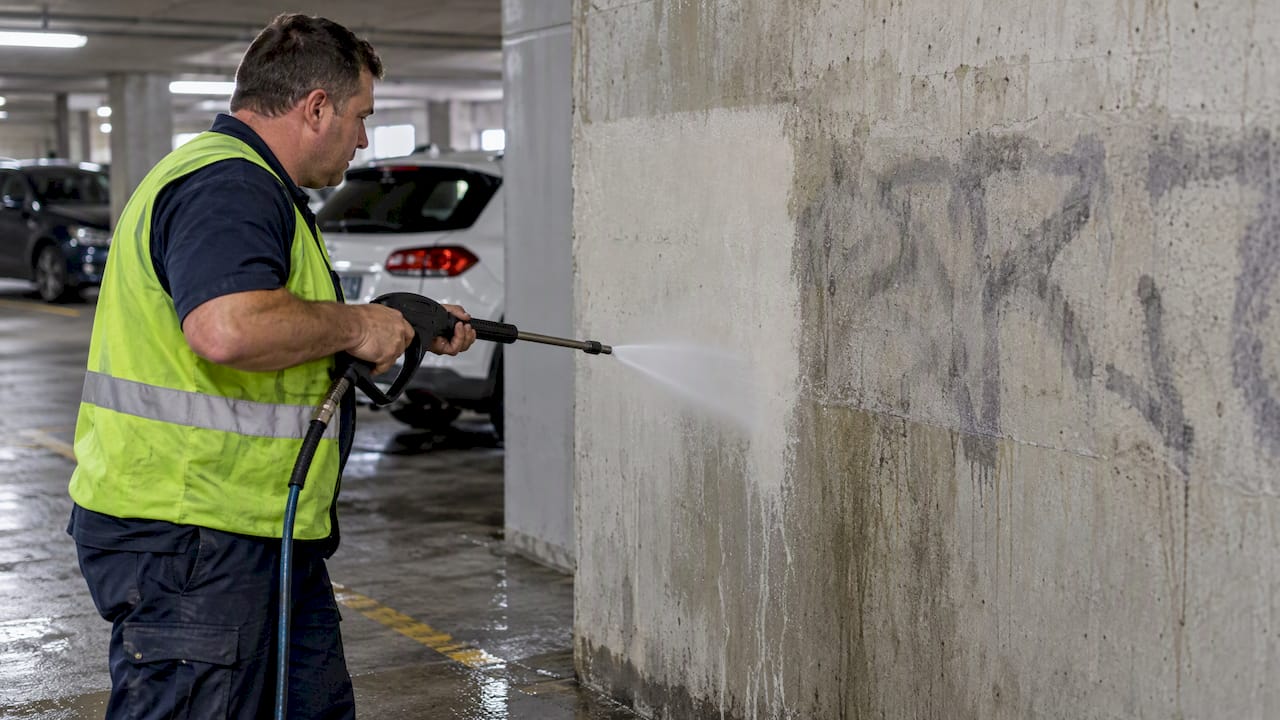
- Rinse and recover. Hot water rinsing speeds removal on masonry, but it also means more wash water to manage: use vacuum recovery or bunded washing rather than letting anything run to a drain. Hot-water pressure washing is worth considering for this stage on larger jobs.
- Verify and escalate. Check the dry surface in good light. If a faint shadow remains after two attempts, that’s the point to bring in a specialist contractor rather than keep adding product.
Pro Tip: Work in smaller sections on large walls so the product doesn’t dry before you’ve had a chance to agitate it.
Safety, SDS checks and environmental controls
Every removal job on commercial or public property carries safety and environmental obligations that sit alongside the cleaning itself.
- Read the SDS for every product before use: check for flammability, corrosivity, volatile organic compounds and aquatic toxicity.
- Contain rinse water with bunding or vacuum recovery; letting wash water reach stormwater drains is a compliance risk in Australia, not just a housekeeping issue.
- Protect workers with appropriate PPE, ventilation in enclosed areas, and caution around confined spaces.
- Keep records of products used, test patch results and disposal of contaminated rinse water to demonstrate due diligence.
Uncontrolled discharge of wash water into stormwater can be a prosecutable offence under environmental protection legislation, which is why documented containment and SDS review are treated as standard practice rather than an optional extra on any graffiti removal job.
How to reduce repeat ghosting and make future cleans easier
Removing a shadow once is only half the job if the same wall gets tagged again within weeks.
- Set an inspection or response cycle: faster removal after each tagging incident reduces the chance of repeat targeting.
- Consider a sacrificial coating, which sheds with the graffiti and is reapplied after each clean, or a permanent anti-graffiti coating for high-value or hard-to-reach surfaces.
- Map hotspots across your site and schedule maintenance cleans there, since the same walls tend to get tagged repeatedly.
- Factor the coating type into future cleaning methods, since a sacrificial film changes which products and pressures are safe to use next time.
Professional perspective: a specialist approach to shadow removal
A contractor working through a graffiti shadow job follows roughly the same sequence every time, scaled up for the site. That starts with a survey of every affected surface, substrate by substrate, then test patches before any product goes near the full area. From there it’s a matter of matching the product to the surface, setting up containment and vacuum recovery for the rinse water, and checking the result once it’s dry.
- Site survey and substrate mapping before any product is chosen.
- Test patching on each distinct surface type, not just one spot for the whole job.
- Containment and vacuum recovery built into the plan from the start, not added afterwards.
- Verification once the surface is dry, with a plan for any shadow that needs a second pass.
For warehouses, car parks and public areas where compliance and asset protection both matter, this is where pressure washing, hot-water cleaning and mechanical scrubbing come together as one job rather than separate tasks.
How Sydney Sweep and Scrub can help with graffiti shadow removal
We handle graffiti shadow removal as part of our wider pressure washing and mechanical scrubbing work across warehouses, car parks and public spaces, using hot and cold water pressure washing matched to the substrate in front of us. Because wash water capture is incorporated, you get a clean result without the stormwater risk of handling it yourself.
If graffiti is a recurring problem on your site, our carpark cleaning service covers shadow removal alongside line marking and routine maintenance, so the surface comes back looking consistent rather than patched. Request a quote through our carpark or pressure washing pages and we’ll scope the job, including containment for the rinse water, before we start.
FAQ
How do you remove graffiti from cement?
Dampen the surface, apply a substrate-appropriate remover such as GR2 for porous concrete, let it dwell as directed, then agitate with a soft brush before rinsing with captured wash water. Repeat on any remaining shadow rather than increasing pressure, which can etch the surface.
How do you treat shadowing left after graffiti removal?
Shadowing on porous masonry usually needs a dedicated shadow remover like Shadow Max or EzyClean Pink, applied with a longer dwell time than the original paint removal step. Treat it as a separate pass rather than expecting the first clean to lift both the paint and the pigment staining underneath it.
What is the most effective product for graffiti shadow removal?
There isn’t one universal answer: heavy solvent blends like GR2 suit deeply penetrated aerosol paint on porous masonry, while specialist shadow removers are formulated specifically for ghosting on brick, mortar and sandstone. For painted or coated surfaces, a milder spray remover such as the Krud Kutter range avoids stripping the coating.
Does rubbing alcohol remove graffiti?
Rubbing alcohol can lift some fresh marker inks from non-porous surfaces, but it’s generally ineffective on baked-on spray paint or on shadows embedded in porous masonry. For anything beyond fresh marker on a hard surface, a purpose-built graffiti remover matched to the substrate gives a far more reliable result.
Can I safely use graffiti removal chemicals on my own property?
You can, provided you check the SDS for flammability, corrosivity and aquatic toxicity, wear appropriate PPE, and contain your rinse water rather than letting it reach stormwater drains. For more detail on handling these products safely, see our guide to safe graffiti removal practices, or for broader chemical handling guidance, Onyx Removals covers practical tips on using cleaning agents safely.
Sources
- GR2™ Paint and Graffiti Remover/Stripper | Works on Concrete, Metal, Stone, and Brick Walls
- Shadow Max product page