
High-use car parks need sweeping weekly, medium-use sites every two to four weeks, and low-use or overflow lots can run on a monthly or quarterly cycle. Those are starting points, not fixed rules: stormwater controls, dust and silica guidance, and site-specific contamination risks can all push the frequency higher. Treat the figures below as a baseline, then adjust using the factors in the next sections.
TL;DR:
- Increase service during autumn leaf fall, and schedule extra sweeps after events or heavy rain, when debris can build up or block drains between visits.
- Log contamination types and locations for three months before fixing a contract schedule, so recurring problems can be distinguished from one off issues requiring an extra visit.
- Use wet methods or certified M or H class vacuums on concrete to control silica dust, and keep wash water out of stormwater drains.
- Compare recurring light sweeps with periodic scrubbing, and budget separately for pressure washing and waste disposal, which may be priced as additional services.
Table of Contents
- Recommended sweeping schedules by car park type
- What changes the baseline frequency at your site
- Safe sweeping methods and your compliance obligations
- What to put in a sweeping contractor’s checklist
- Budgeting and piloting a sweeping programme
- How we help you run this schedule without the guesswork
- FAQ
- Sources
Recommended sweeping schedules by car park type
A workable schedule separates routine sweeping from the deeper work of scrubbing or pressure washing, because mixing the two in one cadence usually means paying for more than the site needs or leaving contamination behind.
- Weekly sweeping suits shopping centre, hospital and CBD car parks with high vehicle turnover, where a mechanical sweep clears loose grit, leaves and litter before it migrates into drains or gets ground into the surface.
- Fortnightly sweeping fits office, residential and mixed-use basements with moderate daily traffic and lower exposure to outdoor debris.
- Monthly sweeping works for low-turnover sites such as small strata lots or secondary staff car parks, provided there is no heavy vegetation or contamination nearby.
- Quarterly deep cleans, combining mechanical scrubbing with the sweep, address built-up tyre residue, oil staining and grime that a sweep alone cannot lift.
A weekly service typically means a mechanical sweep of drive lanes and bays, plus removal of leaves, cigarette butts and general litter. A monthly service often adds a spot degrease on bays with visible oil marks, while a quarterly or annual visit brings in a ride-on or walk-behind scrubber with water and detergent for stains that have set into the concrete.
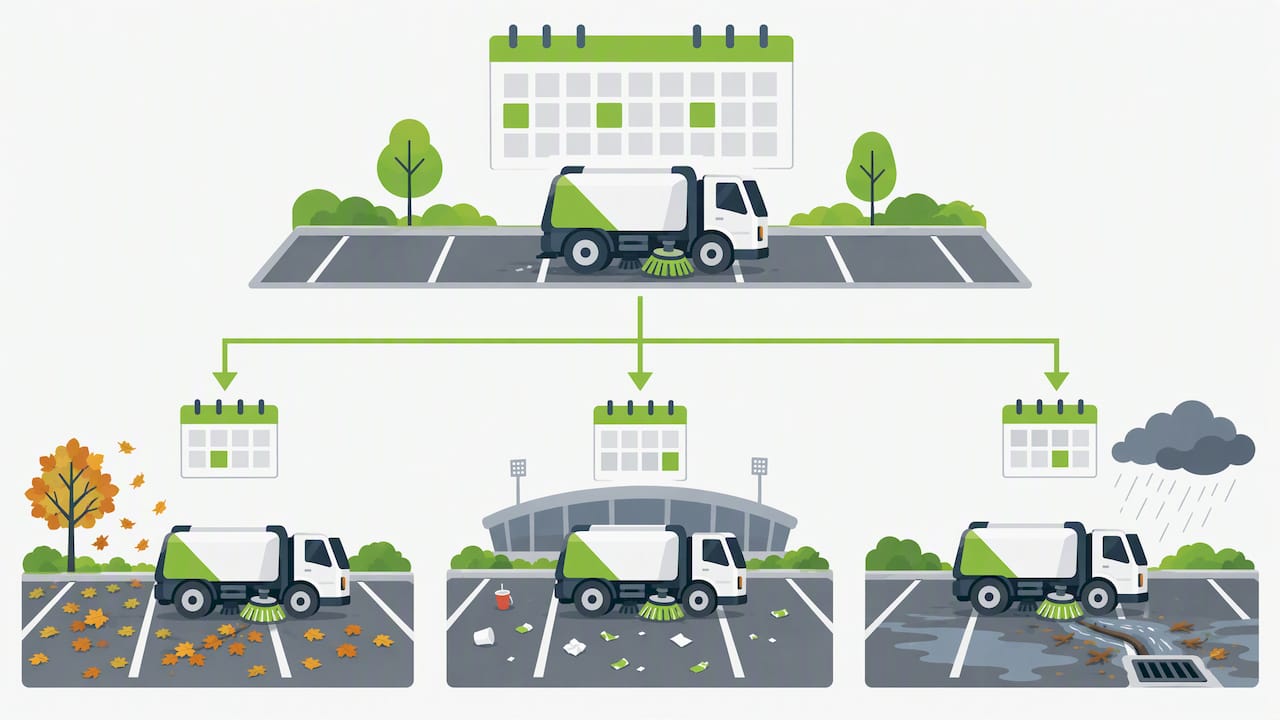
Seasonal peaks change the calculation. Leaf fall in autumn can justify stepping a monthly site up to fortnightly for a few months, and venues hosting markets or events need an extra sweep the morning after, regardless of the standing schedule. Storms bring sediment and debris that can block drains overnight, so a reactive sweep after heavy rain is worth building into the contract rather than waiting for the next scheduled visit. For sites with high turnover, the step up from sweeping to scrubbing is usually a question of stain severity rather than calendar date.
What changes the baseline frequency at your site
The frequencies above assume an average site. A handful of measurable factors push most car parks either side of that baseline.
- Vehicle turnover and heavy-use bays: loading docks, taxi ranks and disabled bays near entrances accumulate debris faster than long-term parking.
- Exposure and location: open-air decks near coastal areas face salt deposits, while sites near trees or food markets deal with organic debris and odour that build up between visits.
- Contamination risk: petrol and diesel drips, food waste bins and nearby construction dust all raise the frequency a site needs to stay compliant.
- Seasonality and events: pollen in spring, wet season runoff and one-off events can spike debris loads well above a site’s normal pattern.
- Access windows: centres with tenant trading hours or shift changes may need night or early-morning sweeps to avoid disrupting operations.
Pro Tip: Log contamination type and location for three months before locking in a contract frequency: a short baseline period shows whether the issue is a constant pattern or a one-off that a single extra visit can fix.
Safe sweeping methods and your compliance obligations
The method matters as much as the frequency. On concrete and masonry surfaces, mechanical sweeping, wet sweeping and M- or H-class vacuums are the preferred options because they control dust at the source rather than scattering it.
- Use wet suppression or certified vacuums, not dry sweeping or compressed-air blowing, which can aerosolise respirable crystalline silica from concrete dust according to Safe Work Australia guidance.
- Contain wash water on site: direct wash bay runoff and sweep-up residue away from stormwater drains, since EPA NSW guidance makes clear that the drain is just for rain and that allowing oil, grease or detergent into it is an offence under environmental protection legislation.
- Keep contamination zoning and traps maintained where fuel or oil risk is present, since forecourt run-off guidance recommends zoning high and low contamination areas and servicing gross pollution traps regularly.
- Keep records: inspection logs, sweep sheets and wastewater disposal dockets give a paper trail if a council or EPA inspector asks how the site manages runoff and dust.
Respirable crystalline silica exposure from dry sweeping concrete is a documented risk that drives the controls in the national silica guide, and it is the reason wet methods and certified vacuums appear in most professional scopes of work rather than as an optional extra.
What to put in a sweeping contractor’s checklist
A tender or audit checklist should cover equipment, evidence and reporting, not just price per visit.
- Equipment and dust control: confirm the contractor uses wet sweeping, mechanical sweepers or M/H-class vacuums rather than dry sweeping or compressed air.
- Insurance and licensing: ask for current public liability cover, waste transport licensing where relevant, and evidence of staff training on silica controls.
- Service inclusions: specify exact areas, frequency, deep clean cycles and a defined response time for spills.
- Reporting: require before and after photos, signed job sheets and an incident reporting process for anything unusual found on site.
- Performance review: set a quarterly audit cadence with clear KPI thresholds, such as maximum debris volume or response time after a reported spill.
Building these items into the scope of work up front avoids disputes later, particularly around whether a job was actually completed to the agreed standard.
Budgeting and piloting a sweeping programme
Cost is driven mostly by site area, frequency and the type of clean rather than by the sweeping itself. A small weekly sweep is cheap per visit but adds up over a year, while a monthly scrub combined with spot degreasing can be more cost-effective than frequent light sweeping where oil and grease build up repeatedly.
- Compare recurring light sweeps against periodic scrubbing before locking in a contract, since the better value option depends on how fast contamination returns.
- Budget for pressure washing and waste disposal separately from routine sweeping, since these are typically priced as additional services.
- Plan access windows around tenant hours, since night or early-morning sweeps may carry a different rate than daytime work.
Pro Tip: Run a short pilot of six to twelve weeks at a conservative frequency with clear KPIs, then adjust down once the data shows contamination is under control rather than committing to a full-year schedule up front.
How we help you run this schedule without the guesswork
We provide sweeping, scrubbing, and pressure washing services so you do not have to manage equipment, compliance paperwork, or seasonal adjustments on your own. The mechanical sweeping and scrubbing crews adhere to wet suppression and containment standards, and flexible booking options are offered rather than rigid annual contracts before site needs are fully assessed.
- Mechanical sweeping and scrubbing for the weekly through quarterly cadences described above.
- Pressure washing for staining and oil residue that sweeping alone cannot shift.
- Scheduled recurring contracts that can scale up for leaf fall, events or storm response without a new tender each time.
- Carbon-neutral operations, so a recurring contract with us also contributes to a site’s own sustainability reporting.
If you are setting up or reviewing a car park maintenance calendar, our car park sweeping and carpark cleaning pages outline the service inclusions and let you book a visit or request a schedule tailored to your site’s turnover and contamination risk.
FAQ
What are the Australian standards for car parks?
There is no single national standard that sets a fixed sweeping frequency for car parks. Instead, obligations come from a mix of stormwater rules, such as EPA NSW’s guidance that pollutants must not enter drains, and workplace health and safety guidance on dust control from Safe Work Australia.
What should a cleaner do in 3 hours?
A three-hour visit typically covers a mechanical sweep of drive lanes and parking bays, litter and leaf removal, and a spot check for oil or fuel staining on a standard-sized car park. Larger or heavily contaminated sites may need that time split across priority zones rather than the whole area, with staining or grease spots flagged for a follow-up scrub.
How often should grease traps be cleaned?
Grease trap and gross pollution trap servicing should follow the zoning and maintenance approach set out in EPA guidance for sites with fuel or food contamination risk, which recommends regular trap maintenance rather than a single fixed interval for every site. The right interval depends on usage volume and contamination load, so check with your local council or state EPA for site-specific requirements.
How often should you really wash your car?
This article covers sweeping and maintenance schedules for shared car park areas, not individual vehicle washing, which sits outside the stormwater and dust control obligations that apply to site owners and managers. For your own vehicle, local council guidance on wash bay use and runoff is the relevant reference if you wash at home.
Sources
- The drain is just for rain | EPA NSW
- National guide: working with crystalline silica-containing products (Safe Work Australia, 2024)
- Practice note: managing run-off from service station forecourts (EPA NSW)