
The fastest way to cut airborne dust today is to stop dry sweeping, bring in HEPA or M/H-class vacuums, and seal off the doors and dock areas letting outside dust drift in. Everything else, from local exhaust ventilation to air monitoring, builds on that foundation over the following weeks.
Do this today:
- Stop dry sweeping and compressed-air blow-downs in every dusty zone immediately.
- Deploy an M or H-class vacuum (HEPA-filtered) on aisles, forklift lanes, and racking edges.
- Seal high-traffic doors, dock levellers, and gaps where outside dust and vehicle traffic push particulates inside.
Once those three are running, audit your dust sources, start a cleaning log, and call in a specialist if you suspect silica, combustible dust, or asbestos contamination.
Key Takeaways
Effective warehouse dust control combines source elimination, engineering capture, and vacuum-first housekeeping, verified through regular air monitoring against the 0.05 mg/m3 silica standard.
| Point | Details |
|---|---|
| Stop dry sweeping today | Switch to M/H-class HEPA vacuums and wet methods to avoid resuspending settled dust. |
| Follow the hierarchy of controls | Prioritise elimination, substitution, and engineering fixes before relying on PPE. |
| Seal and extract at the source | Use LEV, dust collectors, and dock seals at transfer points and open doors. |
| Monitor and log everything | Track filter changes, LEV inspections, and air readings to prove controls work. |
| Outsource complex or hazardous jobs | Sydney Sweep and Scrub provides HEPA vacuuming, high-dusting, and compliant waste handling for warehouses needing specialist equipment. |
Table of Contents
- Why warehouse dust control matters more than it looks
- Where does warehouse dust actually come from?
- Using the hierarchy of controls to pick the right dust measures
- What engineering controls actually cut airborne dust?
- Housekeeping and cleaning: what actually reduces airborne dust
- When do you need air monitoring, and what should maintenance logs cover?
- Rolling it out: a 90-day plan and what it costs
- When to call in a specialist for warehouse dust removal
- Frequently asked questions
- Sources
Why warehouse dust control matters more than it looks
Dust in a warehouse is rarely just a housekeeping annoyance. It’s a respiratory hazard, a fire and explosion risk, a source of equipment wear, and, in food, pharma, or electronics facilities, a contamination pathway that can cost you a batch or a client.
The workplace exposure standard for respirable crystalline silica in Australia sits at 0.05 mg/m3. That figure is a compliance benchmark, not a line between “safe” and “dangerous.” Some workers react to dust exposure well below that threshold, which is why the goal should always be minimising exposure as far as reasonably practicable rather than just staying under the number.
Combustible dust adds another layer entirely. Fine accumulations of certain materials can ignite and deflagrate under the right conditions, and WorkSafe WA’s guidance on hazardous or combustible dusts treats accumulation thresholds as a genuine explosion risk requiring specialised cleaning, not routine tidying.
Beyond safety, dust hits the bottom line:
- Forklifts and conveyors wear faster when grit gets into bearings and hydraulics.
- Poor visibility from airborne particulates slows down pick rates and increases near-miss incidents.
- Regulators can issue improvement notices or fines where exposure controls are found lacking.
Where does warehouse dust actually come from?
Most facility managers are surprised how many entry points contribute. Inbound packaging sheds fibre and residue the moment pallets are broken down. Timber pallets shed splinters and fines with every movement across concrete. Forklift tyres grind against worn floor coatings and kick particulates into the air on every pass through a forklift dust cleanup zone. Conveyor transfer points, cutting or trimming stations, HVAC intakes, and open dock doors all add their share.
Run this rapid risk assessment in a single shift:
- Identify every dust source across receiving, storage, and dispatch.
- Note who’s exposed and for how long, including forklift operators and pickers working nearby.
- Rate severity, factoring in whether the dust might be silica-bearing, combustible, or otherwise hazardous.
- Rate frequency, since a source running constantly outranks one triggered occasionally.
- Rank control priority based on severity multiplied by frequency.
Flag these immediately for specialist assessment rather than routine cleaning:
- Suspected crystalline silica in concrete, sand, or masonry dust.
- Fine combustible dust from wood, plastics, or metal processing.
- Any suspicion of asbestos in older building fabric or ceiling insulation.
Using the hierarchy of controls to pick the right dust measures
Start at the top and work down. Under work health and safety law, a PCBU must eliminate or, where that’s not reasonably practicable, minimise risks from airborne contaminants using the hierarchy of controls: elimination, substitution, isolation, engineering controls, administrative controls, and PPE, in that order of preference.
- Elimination or substitution: switch to lower-dust packaging, pre-cut materials, or coated pallets that shed less.
- Isolation: enclose cutting or decanting processes so dust never reaches the general floor.
- Engineering controls: local exhaust ventilation, wet suppression, and HEPA-filtered extraction at the source.
- Administrative controls: rostered cleaning, signage, restricted access to dusty zones, and training on no dry sweeping.
- PPE: respirators and eye protection as the last layer, never the first response.
| Control level | Typical benefit | Cost and complexity |
|---|---|---|
| Elimination/substitution | Removes the hazard at the source | Low to moderate; often a procurement change |
| Isolation | Stops dust spreading beyond one zone | Moderate; enclosure or barrier work |
| Engineering | Captures dust before it becomes airborne | Moderate to high; installation and upkeep |
| Administrative | Reduces exposure time and frequency | Low; relies on consistent enforcement |
| PPE | Protects the individual worker | Low cost, high ongoing compliance burden |
Pro Tip: Layering controls beats relying on one. Local exhaust ventilation combined with a scheduled HEPA vacuuming roster consistently outperforms either measure running alone, because extraction handles the source while vacuuming mops up what escapes.
What engineering controls actually cut airborne dust?
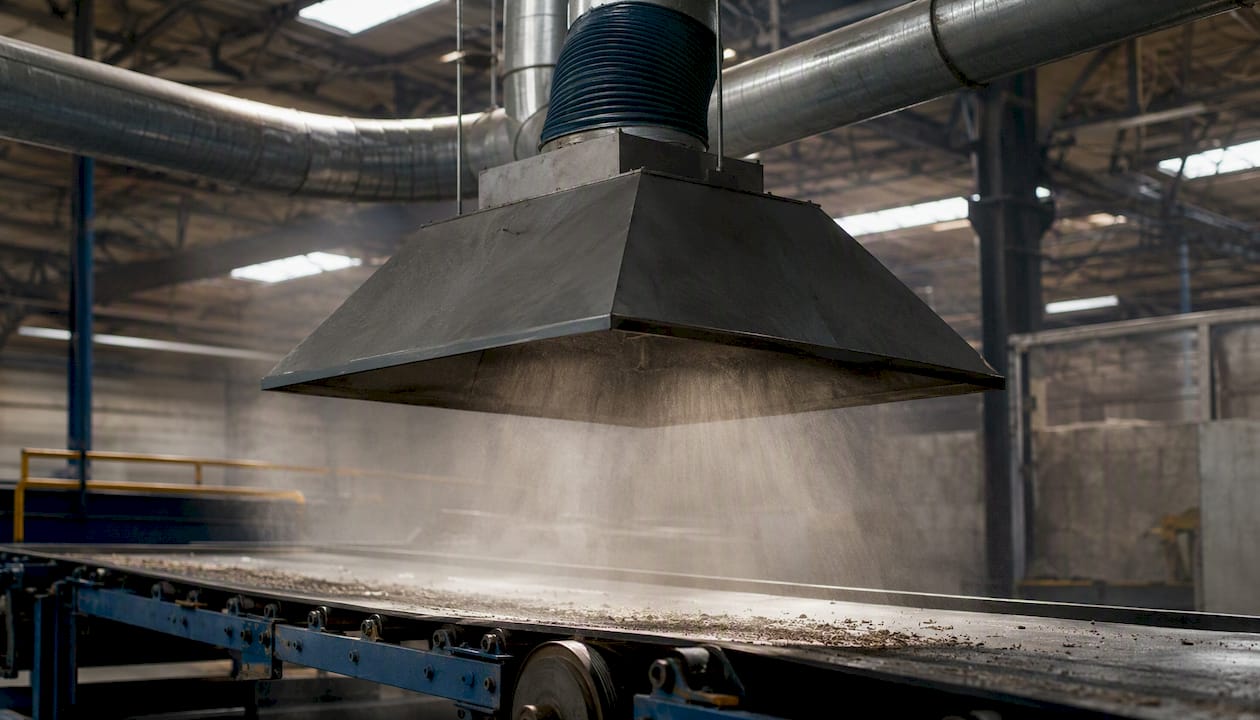
Properly designed ventilation and extraction remain the most reliable engineering measures available, because they capture dust before it ever reaches a worker’s breathing zone. The national silica guide stresses combining water suppression with local exhaust ventilation, and that principle carries across most warehouse dust sources, not just silica-heavy trades.
Match the tool to the zone:
- Local exhaust ventilation (LEV): fixed extraction hoods at cutting stations, decanting areas, or bagging lines.
- On-tool extraction: attached directly to saws, grinders, or trimming equipment for point-source capture.
- Dust collectors with HEPA or equivalent final filtration: suited to high-volume transfer points and conveyor junctions.
- Air scrubbers: portable units for high-bay zones or areas without fixed ductwork.
- Fogging and dust-suppression systems: wet methods for receiving docks handling bulk or aggregate materials.
Sealing measures matter just as much as extraction. High-speed doors and strip curtains stop outside dust and vehicle exhaust migrating in. Dock seals close the gap around trailers during loading. Floor sealing deserves particular attention: concrete that keeps producing dust despite regular cleaning usually means the sealer has failed, and no amount of extra sweeping fixes that. Resealing is the only permanent solution.
When specifying equipment, ask for the filtration class, not just the brand name, and check the maintenance schedule the supplier recommends.
Pro Tip: Verify airflow performance under peak operating load, not at startup. LEV systems tested only when the warehouse is quiet often underperform once forklifts, conveyors, and doors are all running at once.
Housekeeping and cleaning: what actually reduces airborne dust
Ban dry sweeping and compressed-air blow-downs across every dusty area. Standard push brooms suspend settled particulates straight back into the breathing zone, undoing whatever engineering controls you’ve already installed. Vacuum-first and wet-cleaning methods are the replacement, every time.
Equipment worth specifying:
- M-class or H-class HEPA vacuums for aisles, racking, and fine dust zones.
- Ride-on sweepers fitted with dust suppression for large open floors.
- Scrubber-dryers for hard floors carrying oil, grit, or product residue.
- Portable HEPA air scrubbers for zones running dusty processes continuously.
- Mobile lifts for high-level dusting above racking and on structural steel.
A realistic schedule looks like this:
- Daily aisle policing to catch spills and settled dust before it’s disturbed by traffic.
- Weekly auto-scrub of main forklift lanes and high-traffic corridors.
- Monthly high-dusting of racking, beams, and light fittings.
- Quarterly full high-level clean, adjusted upward if particulate readings trend high.
Keep a simple log for every cleaning shift: date, area, machine used, operator, and filter change. That record becomes your evidence trail if a regulator or client ever asks how dust management in warehouses is actually being run day to day. Interior warehouse cleaning schedules built around this rhythm keep both compliance and appearance on track.
When do you need air monitoring, and what should maintenance logs cover?
Monitor particulates whenever you can’t confirm exposure stays within safe limits, or when you need evidence that installed controls are actually working. Air monitoring isn’t a one-off tick-box exercise; it’s how you validate the engineering and housekeeping changes you’ve already made.
Under work health and safety law, a PCBU carries an ongoing duty to eliminate or minimise airborne contaminants, and the workplace exposure standard for respirable crystalline silica sits at 0.05 mg/m3, the same benchmark referenced earlier. Maintenance and monitoring turn that legal duty into a working routine rather than a paperwork exercise.
Build your maintenance checklist around:
- Filter-change schedules for every HEPA vacuum and dust collector on site.
- Regular LEV inspections to confirm airflow hasn’t dropped from ducting blockages or fan wear.
- Vacuum bag and filter replacement logged against usage, not just calendar date.
- Audit triggers after any process change, worker complaint, or a rising particulate reading.
Where collected dust contains hazardous residues, silica fines, heavy metals, or suspected asbestos, it must be segregated, labelled, and disposed of through licensed hazardous waste pathways. Mixing hazardous and general waste risks fines and undermines the whole compliance effort.
Rolling it out: a 90-day plan and what it costs
The roadmap is short: assess, prioritise the quick wins, deploy engineering and housekeeping changes, then verify with monitoring. Trying to do everything at once usually stalls the whole programme.
- Week 1: Run the site audit and rapid risk assessment across every dust source.
- Weeks 2 to 4: Roll out quick wins: ban dry sweeping, introduce HEPA vacuums, seal obvious gaps at doors and docks.
- Month 1 to 3: Install LEV where needed, fit dust collectors at transfer points, and lock in cleaning schedules.
- End of quarter: Run validation air monitoring to confirm the controls are actually holding exposure down.
Cost drivers vary by scale:
- LEV installation: medium to high upfront cost, low ongoing maintenance if specified correctly.
- HEPA dust collectors: medium cost, strong return through reduced downtime and cleaner product.
- Ride-on sweepers or scrubber-dryers: medium to high capital cost, but cut labour hours substantially.
- Recurring cleaning contracts: low to medium, predictable and easier to budget than reactive callouts.
- Air monitoring and lab testing: low to medium, essential for proving compliance rather than assuming it.
Tick off each phase as it’s completed and keep the audit, quick wins, and monitoring results in one file. That paper trail matters as much as the physical changes themselves.
When to call in a specialist for warehouse dust removal
Bring in a professional cleaning contractor once you suspect hazardous dusts, need high-level access equipment you don’t own, or simply lack the certified gear to do the job properly in-house. Trying to run a forklift dust cleanup or high-bay dusting job with a domestic vacuum and a ladder is how facilities end up with recurring problems instead of solved ones.
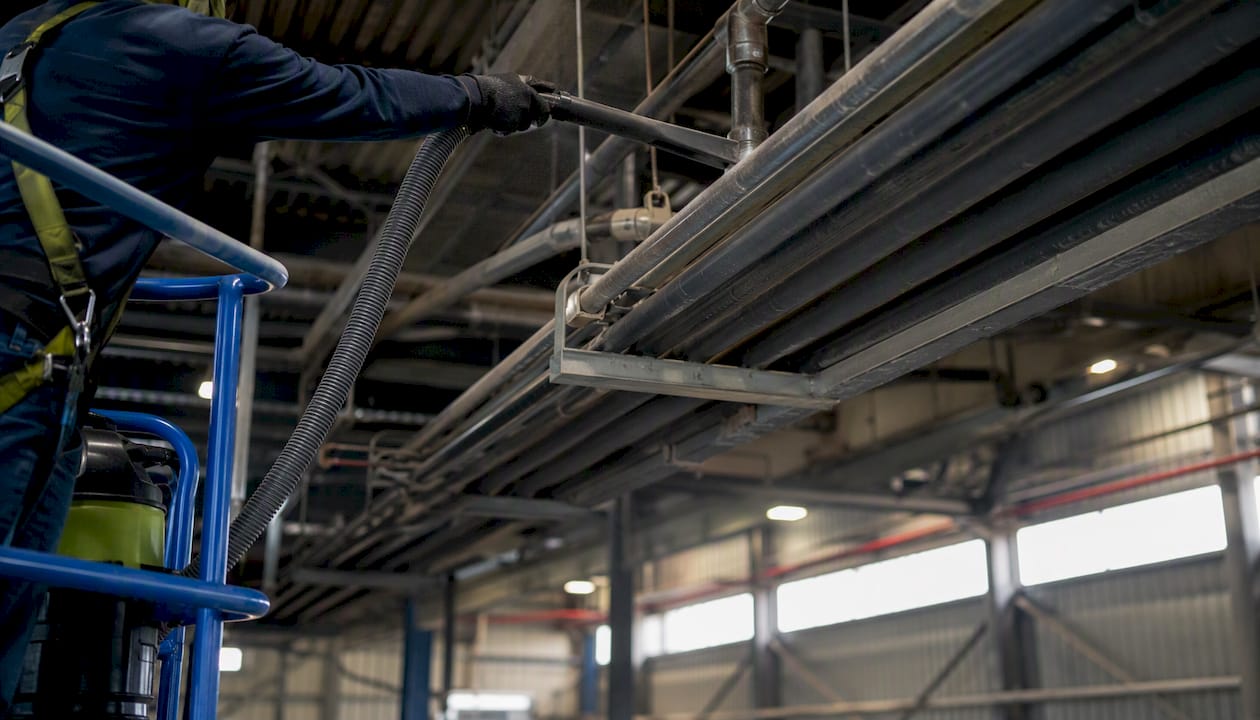
Sydney Sweep and Scrub handles the parts of warehouse dust management most in-house teams can’t cover alone: mechanical sweeping and scrubbing of forklift lanes and floors, HEPA vacuuming for fine particulates, hot-water pressure washing for ingrained residue, high-dusting with proper lift access, and waste handling that meets disposal requirements. Their carbon-neutral operations also mean facilities can fold sustainability reporting into their cleaning contract rather than treating it as a separate line item. For a straight comparison of DIY versus contracted approaches, their notes on automated cleaning’s pros and cons are worth reading before you decide.
When requesting a quote, ask three things: what vacuum and extraction classes will be used on site, how hazardous waste is segregated and disposed of, and whether they can provide a sample job schedule or references from a comparable facility. If waste segregation comes up, BinRx’s rundown of commercial dumpster cleaning providers is a useful companion resource for the disposal side of the conversation. Request a quote through Sydney Sweep and Scrub’s hard surface cleaning service to see how a scoped clean fits your site.
Frequently asked questions
What’s the single most effective way to reduce dust in a warehouse?
Combine vacuum-first housekeeping with source-level engineering controls like local exhaust ventilation. Neither alone matches what the two do together.
Is a leaf blower or compressed air ever acceptable for warehouse dust?
No. Both resuspend fine particulates into the air workers breathe, undoing any extraction or filtration already in place.
How often should high-level dusting happen?
Monthly to quarterly depending on the dust load and process risk, with frequency increased if particulate monitoring trends upward.
When does warehouse dust become a combustible dust hazard?
Once fine accumulations of certain materials build up to the point they can ignite if disturbed and suspended. Any doubt warrants a specialist hazard assessment rather than a guess.
Should we handle dust control in-house or hire a contractor?
Basic daily housekeeping can stay in-house. Bring in a specialist cleaning contractor for high-level access, suspected hazardous dusts, or when compliant waste disposal is required.
This article is general information, not a substitute for advice from a qualified doctor. Consult a qualified healthcare professional about your own circumstances before acting on anything here.
Sources
- Airborne contaminants – WHS duties for airborne contaminants | Safe Work Australia
- Silica: managing the risks | SafeWork SA
- Hazardous or combustible dusts, fumes and fibres | WorkSafe WA
- Hazardous waste information | Australian Government (online services)
Recommended
- Minimise the Danger of Dust with a Warehouse Scrub – Sydney Sweep and Scrub – Commercial Cleaning – Carpark Cleaning – Warehouse Cleaning
- The Best Practices for Warehouse Floor Maintenance – Sydney Sweep and Scrub – Commercial Cleaning – Carpark Cleaning – Warehouse Cleaning
- Regular Warehouse Cleaning Promotes Efficiency – Sydney Sweep and Scrub – Commercial Cleaning – Carpark Cleaning – Warehouse Cleaning
- Exterior Warehouse Cleaning: A Comprehensive Agenda – Sydney Sweep and Scrub – Commercial Cleaning – Carpark Cleaning – Warehouse Cleaning