
Do not let pressure-washing wastewater enter stormwater: contain it, treat it or have it removed by a licensed contractor. Businesses that discharge to drains or gutters risk fines under state environment protection laws. The safe path is a wash bay with trade waste consent, or collected water stored for licensed disposal, and a call to your local water authority whenever you are unsure.
TL;DR:
- Regular wash sites need written trade waste consent before discharging to sewer, with approved treatment, site plans, and any required flow measurement or sampling.
- For single jobs, use temporary bunds and pumps to collect wastewater, check whether a permit applies, and keep the licensed contractor’s disposal docket.
- Biodegradable or phosphate free labels do not make wastewater safe; use quick break detergents, service separators, and arrange sampling through a laboratory accredited by NATA.
- If consent conditions cannot be met, stop discharge, store the wastewater, and arrange removal by a licensed liquid waste contractor.
- Keep a drain map separating stormwater from sewer connections, alongside consent documents, sampling results, maintenance logs, and contractor disposal receipts.
Table of Contents
- Quick compliance checklist: contain, treat, dispose
- Permanent wash bays and trade waste approval: when and how to comply
- Temporary controls and small jobs: portable collection, dry cleaning and holding tanks
- Treatment devices, chemicals and maintenance: what removes pollutants and why it matters
- Disposal routes, costs and who to notify
- Site assessment, signage and recordkeeping to reduce enforcement risk
- How Sydney Sweep and Scrub can help with compliant, eco-friendly pressure washing
- FAQ
- Sources
Quick compliance checklist: contain, treat, dispose
Before you book a job or plan a permanent wash area, work through these steps on site.
- Map every drain around the wash area and mark which ones connect to stormwater versus sewer.
- Roof or bund the wash area where you can, so rain does not add volume to wastewater you need to manage.
- Choose between a permanent wash bay with trade waste consent or temporary collection and licensed disposal for one-off jobs.
- Fit approved pre-treatment before any permitted discharge to sewer, or store the water for a licensed contractor to remove.
- Keep records of sampling, maintenance and contractor receipts so you can show due diligence if asked.
None of this needs to be expensive or complicated for a single job. It does need to happen before the hose comes out, not after a complaint lands.
Permanent wash bays and trade waste approval: when and how to comply
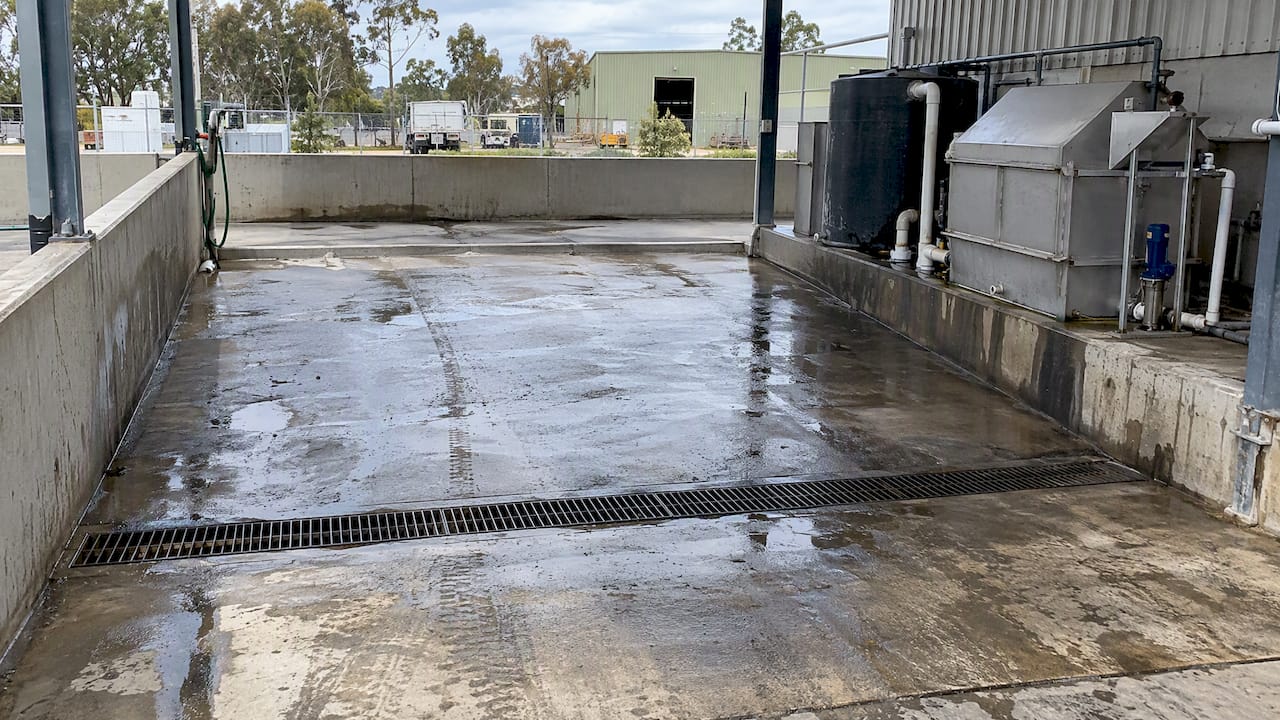
If you run a car park, warehouse forecourt or vehicle depot that gets washed regularly, a permanent wash bay is usually the better long-term answer. Water authorities require a written Consent to discharge industrial trade wastewater before contaminated washwater goes anywhere near the sewer, and that consent sets site-specific limits on volume, contaminant load and monitoring.
The application process typically follows a similar pattern across Australian water authorities:
- Submit a trade waste application through your water authority’s portal, such as Sydney Water’s Tap in® system.
- Provide a site plan showing drains, the wash area and the proposed pre-treatment device.
- Agree to monitoring conditions, which may include flow metering, sampling points and reporting intervals.
- Install the approved equipment and have it inspected before discharge begins.
Design expectations are consistent: a roof or overhang, bunding angled to exclude wind-driven rain, a collection pit, first-flush diversion and flow measurement. Accepted pre-treatment devices include vortex grit separators (VGS), class 1 petroleum separators (CPS) and hydrocyclones, each needing regular servicing and NATA-accredited laboratory testing of discharge samples.
Pro Tip: Ask your pre-treatment supplier for a servicing guarantee in writing; it becomes the evidence you hand to an inspector if your consent is ever audited.
Temporary controls and small jobs: portable collection, dry cleaning and holding tanks
A one-off pressure wash of a footpath, loading dock or small car park does not always justify a permanent wash bay. EPA South Australia’s guidance points to simpler controls that still keep you compliant.
- Set up temporary bunds, sandbags or portable interceptors around the work area or gutter to stop runoff spreading.
- Collect wastewater with a suction or bilge pump into drums or a holding tank for removal by a licensed liquid waste contractor.
- Use dry-cleaning methods, sweeping or mopping, wherever the surface and soiling allow, so no wastewater is created at all.
- Check whether a temporary trade waste permit applies to your job, and ask your contractor for disposal paperwork as proof of lawful removal.
Portable interceptors and suction pumps are common on construction sites and for short-term vehicle washing, where a permanent pit is not practical. The paperwork from your contractor matters as much as the equipment: keep the disposal docket, not just the memory of the job.
Treatment devices, chemicals and maintenance: what removes pollutants and why it matters
Getting wastewater clean enough to discharge, or safe enough to store, comes down to a handful of proven devices and sensible chemical choices. Oil-water separators (VGS or CPS units), silt arrestors and graded collection channels do the bulk of the work, stripping out hydrocarbons, grit and sediment before water reaches a pit or tank.
Chemical choice matters too. Tablelands Regional Council’s guidance recommends quick-break detergents for wash bays that discharge to sewer, and is clear that biodegradable or phosphate-free labels alone do not make wastewater safe to release. Even a detergent marketed as eco-friendly can still harm waterways if it reaches stormwater untreated.
- Fit oil-water separators and silt arrestors ahead of any sewer connection or discharge point.
- Use quick-break detergents designed to separate from water rather than emulsify contaminants.
- Arrange regular servicing and sludge removal by a licensed contractor, not an informal clean-out.
- Schedule NATA-accredited sampling as a condition of most trade waste consents, and repeat it after any heavy-load event.
Trade waste consents commonly set sampling, flow-metering and first-flush requirements as a condition of approval, which is why Sydney Water’s industrial trade wastewater guidance treats monitoring as part of the deal, not an optional extra. A maintenance schedule and a logbook of service dates turn a vague promise of compliance into something you can show an inspector.
Disposal routes, costs and who to notify
Once wastewater is contained and treated, you have three realistic disposal routes: discharge to sewer under a trade waste consent, collection by a licensed liquid waste contractor to an authorised facility, or reuse through a recycling unit that meets the acceptance limits for your site.
- Expect permit charges, quality to quantity charges and sampling or inspection fees as part of any trade waste consent.
- Budget for both the initial permit cost and ongoing monitoring, since Water Corporation’s trade waste billing structure applies these charges on a recurring basis, not just at sign-up.
- If you cannot meet your consent conditions on a given day, store the water and stop work rather than risk an illegal discharge.
- Contact your local water authority for consent applications, your council’s environmental health unit for general enquiries, and a licensed liquid waste contractor for collection quotes.
These costs are predictable once you have been through the process once. The real risk sits with businesses that skip the consent step entirely and discover the fee structure only after an infringement notice arrives.
Site assessment, signage and recordkeeping to reduce enforcement risk
Good paperwork is often what separates a warning from a fine. Start with a site drain map that clearly labels stormwater versus sewer connections, and keep a copy on hand for any inspection.
- Create and store a drain map that distinguishes stormwater drains from sewer connections.
- Signpost wash bays and brief staff with a simple “drain is just for rain” message, reinforcing EPA NSW’s core compliance principle.
- Keep logs of maintenance, sampling results, trade waste consents and contractor disposal receipts together for audits.
- Before and after each job, check that bunds, runoff routes and containment devices are intact and functioning.
A five-minute check before the first wash and after the last one is often the difference between a clean record and a costly conversation with a regulator.
How Sydney Sweep and Scrub can help with compliant, eco-friendly pressure washing
We run commercial pressure washing, hot water cleaning and wash bay capable services, built around the same compliance principles covered above. Our crews use professional pre-treatment practices, including pre-treatment dwell times suited to the job, and we operate with environmentally conscious practices, which means your site can report on sustainability outcomes as well as cleanliness.
- We handle warehouse, car park and public space cleaning with licensed waste handling procedures integrated into the job.
- We provide documentation you can file for audits, covering treatment and wastewater management.
- We offer flexible online booking and transparent pricing for one-off jobs or recurring maintenance contracts.
If you need a site assessment, a compliance-focused quote, or want to book a wash that meets trade waste expectations, get in touch through our pressure washing or carpark cleaning pages, or see our full range of commercial cleaning services.
FAQ
Is it illegal to let pressure washing wastewater go into stormwater drains?
Yes. Wastewater from pressure cleaning is treated as a prescribed water contaminant under state environment protection laws, and letting it enter roadside gutters or stormwater systems can attract significant fines. The safe approach is to contain, treat or arrange licensed collection of the water instead.
Do I need a permit to wash a car park or driveway?
A permanent wash bay that discharges to sewer needs a trade waste consent from your local water authority, with conditions on treatment and monitoring. For a one-off or small job, you may be able to use temporary collection and a licensed liquid waste contractor instead of a full permit.
What is a quick-break detergent and why does it matter?
A quick-break detergent is formulated to separate from oil and water quickly, which helps pre-treatment devices remove contaminants before discharge. Biodegradable or phosphate-free labelling does not replace this function, so the detergent type still needs to suit your treatment setup.
What happens if I can’t meet my trade waste consent conditions?
Stop discharging and store the wastewater in a sump, drum or tank rather than releasing it. From there, arrange removal by a licensed liquid waste contractor until your pre-treatment or consent conditions are sorted.
Who do I contact about pressure washing wastewater rules in my area?
Start with your local water authority for trade waste consent questions, and your council’s environmental health unit for general site queries. In Victoria, compliance guidance such as Dual Flow Services’ stormwater drainage guide can help with plumbing-specific requirements under the National Construction Code.
Sources
- Water Pressure Cleaning – TRC – Tablelands Regional Council
- The drain is just for rain | EPA NSW
- Industrial trade wastewater | Sydney Water
- Water wash guidance – EPA SA
- Trade waste billing & charges – Water Corporation