
A car park smell rarely comes from one place, and it almost never goes away with air freshener. The reliable fix has three parts: work out where the smell comes from (drains, waste, fluid spills, damp or poor airflow), remove that source with mechanical cleaning rather than perfume, then keep the surface, drains and bin areas on a schedule so it does not return. This guide walks property managers, building managers and strata committees through each part, and shows when an odour is a cleaning job and when it needs someone else.
TL;DR
- Odours have a character. Drain-like smells point to dry traps or blockages, earthy and musty smells point to damp or mould, and sharp chemical smells point to spills or stored products.
- Masking agents fail because the source stays. Scrubbing, high-pressure or hot water cleaning and clearing drains remove it.
- Wash water from a car park must not go into stormwater drains. Capture it and dispose of it properly.
- Regular sweeping, clear drains, sealed bins and sealed wall-to-floor junctions keep odours from building up again.
- If repeated cleaning fails, or you suspect exhaust or hazardous contamination, bring in a specialist instead of cleaning harder.
Table of Contents
- What usually causes a car park to smell
- How to work out where the smell is coming from
- When the problem is air, not dirt
- Clean the source, do not mask it
- Handling wash water and waste legally
- Fuel, oil and other hazardous contamination
- Stop the smell returning
- When to call a specialist
- Car park odour cleaning with Sydney Sweep and Scrub
- FAQ
- Sources
What usually causes a car park to smell
Commercial car parks collect a mix of things that rubbish bins, garages at home and open-air car parks do not combine in one place. Vehicles drip oil, fuel, coolant and brake dust onto concrete. Rain and tyres carry in soil and organic matter. Drains in the floor trap leaf litter and sediment. Bin rooms and waste areas sit close by. Ventilation is often limited because the space is below ground or enclosed.
The common sources fall into five groups:
- Drains and gullies. A drain that has dried out loses the water seal that keeps sewer air back, and a drain choked with silt and organic matter turns sour. Our guide to sweeping and scrubbing car park drains covers how blockages build up.
- Spilt waste and bin areas. Liquid from bins, food waste and general litter soak into rough concrete and attract vermin when bins are not sealed.
- Vehicle fluids. Oil, fuel and hydraulic fluid seep into porous concrete and give off a sharp, greasy smell, especially on warm days.
- Damp and mould. Leaks, condensation and slow-drying puddles let microbial growth settle on walls, ceilings and joints, which gives an earthy, musty smell.
- Poor ventilation. Stale air holds exhaust, damp and cleaning-product odours in the space for longer than they should linger.
Most persistent smells are two or three of these at once. That is why a single deodorising treatment disappoints: it addresses the smell, not the cause.
How to work out where the smell is coming from
Before anyone books a clean, spend a week collecting evidence. Odour investigators use a simple discipline: keep an odour log and relate it to ventilation, occupancy and cleaning schedules. Green Air Monitoring describes this approach as logging the odour’s character, timing and strength, tracing pathways such as risers, intakes and drainage points, then testing each hypothesis in turn.
The NSW EPA’s guidance on field odour surveys uses the same logic on a bigger scale. It describes 360-degree investigations around the area of a complaint, ruling out other sources one by one until the origin is clear. You do not need a formal survey for a car park, but you can borrow the method.
Keep a simple odour log
Walk the car park at the same times each day for a week, ideally once when it is quiet and once at peak occupancy. Note where you are, what the smell is like, how strong it is, the weather, and whether the ventilation was running. A basic table is enough:
| What you notice | Likely source | First thing to check |
|---|---|---|
| Rotten egg, sewage or drain smell, strongest near floor drains | Dry trap, blocked or silted drain | Pour water into the trap, then inspect the gully for sediment and debris |
| Earthy, musty smell on walls or ceilings, worse after rain | Damp, leaks, mould or microbial growth | Look for staining, efflorescence, dripping joints and slow-draining puddles |
| Sour, food-like smell near the waste area | Spilt waste, bin liquid, unsealed bins | Check bin lids, the floor under the bins and the wall-to-floor junction |
| Sharp chemical or solvent smell | Spills, stored products, strong cleaning agents | Look for stains, leaking containers and recent cleaning products |
| Greasy, fuel-like smell in parking bays | Vehicle fluids soaked into concrete | Check bays for oil stains and see which vehicles park there |
| Stale, heavy air worst at peak times | Ventilation not keeping up | Note when fans run and whether smell tracks vehicle numbers |
The link between smell type and cause comes from the same odour-investigation guidance: drain-like smells often point to dry traps or blocked drainage, earthy or musty odours suggest damp, mould or microbial growth, and chemical or solvent odours point to cleaning materials or stored substances.
Look at patterns, not single moments
A smell that appears only after rain points to water entry or drainage. A smell that tracks car numbers points to exhaust and ventilation. A smell that is strong on Monday mornings and fades through the week may relate to weekend waste build-up or a cleaning schedule that skips a day. These patterns are often more useful than your nose in any one moment.
When the problem is air, not dirt
Cleaning cannot fix a ventilation fault. If the smell is worst when the car park is full and eases when it empties, treat airflow as a suspect.
In Australia, the National Construction Code sets requirements here. Mechanical air-handling systems must control the circulation of objectionable odours and prevent the build-up of harmful contamination by micro-organisms, pathogens and toxins. For enclosed car parks (Class 7a), the NCC 2025 also sets limits on carbon monoxide: ventilation must keep exposure from exceeding 100 ppm at any time, 90 ppm over 15 minutes, 60 ppm over one hour and 30 ppm over eight hours.
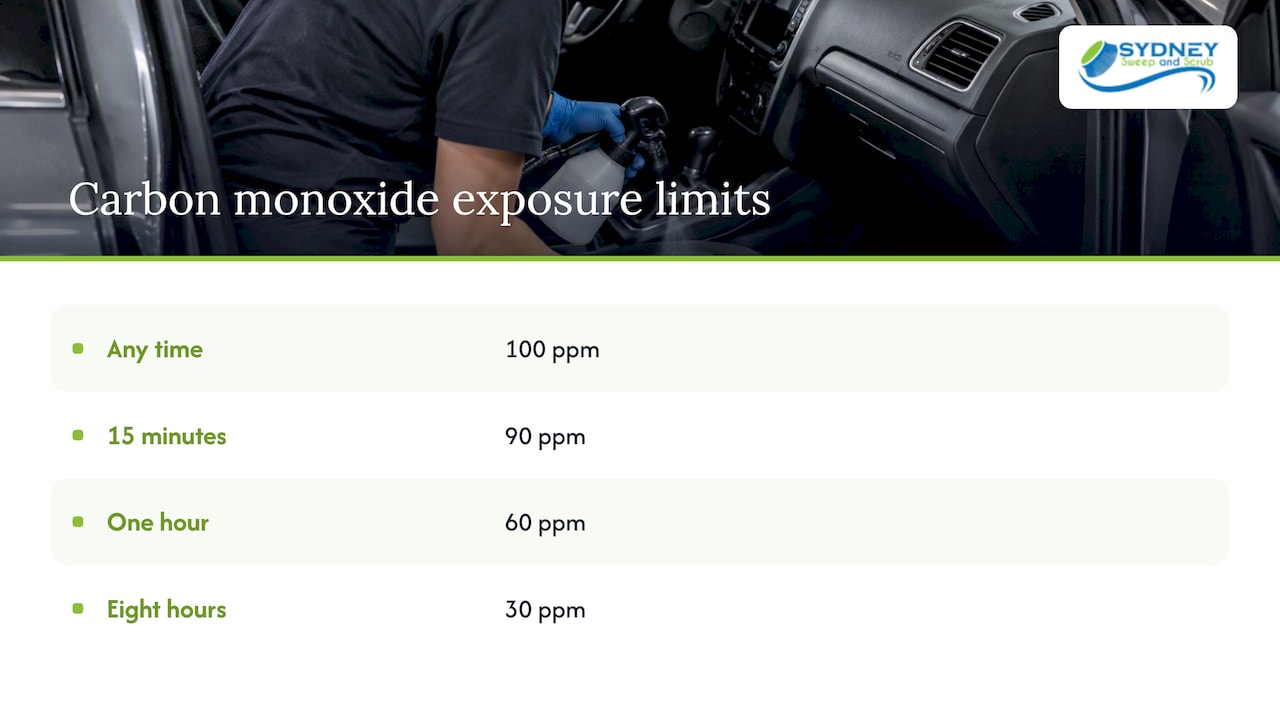
Those numbers matter because exhaust smell and carbon monoxide travel together. You cannot smell carbon monoxide, so a stale, exhaust-heavy car park is a prompt to have the ventilation and monitoring reviewed by a qualified person, not to clean harder. If your building uses sensors or alarms, carbon monoxide detector integration is one example of the electrical work that sits alongside ventilation checks. Ventilation design, fan servicing and detector systems are for licensed mechanical and electrical trades, and your building certifier or services engineer is the right first call.
Clean the source, do not mask it
Air fresheners, scented mists and deodorising fogs cover odours for hours or days. If a drain is silted, a bay is soaked in oil or a wall is growing mould, the smell is back as soon as the perfume fades. Worse, a mix of fragrance and the underlying smell is often more unpleasant than either alone.
Removal works in this order.
1. Remove loose material first
Sweeping comes before any water. Fine dust, leaf litter, cigarette butts and spilt food are the base layer that holds moisture and feeds smells. Mechanical sweeping with dust capture removes this layer quickly across a large footprint, and leaves a clean surface for scrubbing. See our page on car park sweeping for how this works on site.
2. Pre-treat oil and grease
Oil stains and drip zones need a degreaser to break the bond with the concrete before they are washed. Where practical, the Western Australian Government’s guidance for mobile cleaning favours high-pressure jetting, mechanical scrubbing or steam cleaning over chemical solvents. The same guidance recommends quick-break degreasing compounds or biodegradable, phosphate-free detergents when high-pressure jetting or scrubbing is used, so contaminants can be separated from the wash water afterwards.
3. Scrub or pressure wash
Machine scrubbing lifts contamination from the texture of concrete in a way a mop or broom cannot, and it is the main reason a professional clean outlasts a quick rinse. Read more on the benefits of a professional machine scrub. For oil, grime and bin areas, hot water pressure cleaning cuts grease that cold water leaves behind, which we explain in pressure washing with hot water. Walls, columns and the edges where floor meets wall hold odour too, and pressure washing walls and edges deals with the areas a floor machine cannot reach.
4. Clear and flush the drains
Drains are where many smells hide. Remove silt and debris, then refill dry traps so the water seal returns. If a drain smells again within days, the problem may be deeper pipework or a trap that keeps drying out, which is a plumber’s job rather than a cleaner’s.
5. Recover the wash water
This step is non-negotiable. See the next section.
Handling wash water and waste legally
The water that leaves a dirty car park is not clean. It carries oil, sediment, detergent and grime. Rules differ by state, but the principle is consistent across Australia: it must not go to the stormwater system.
The Western Australian guidance says liquid waste must not enter stormwater drains. Wash-down liquids should be captured in weatherproof containers, treated by settling sediment or separating oil, or stored in closed chemical-resistant containers, and then disposed of at a site approved by the local government. Sludge goes to an approved recycling or disposal site. It also advises containing run-off with spill mats and using temporary plugs or membranes in grated gullies to recover wash-down water.
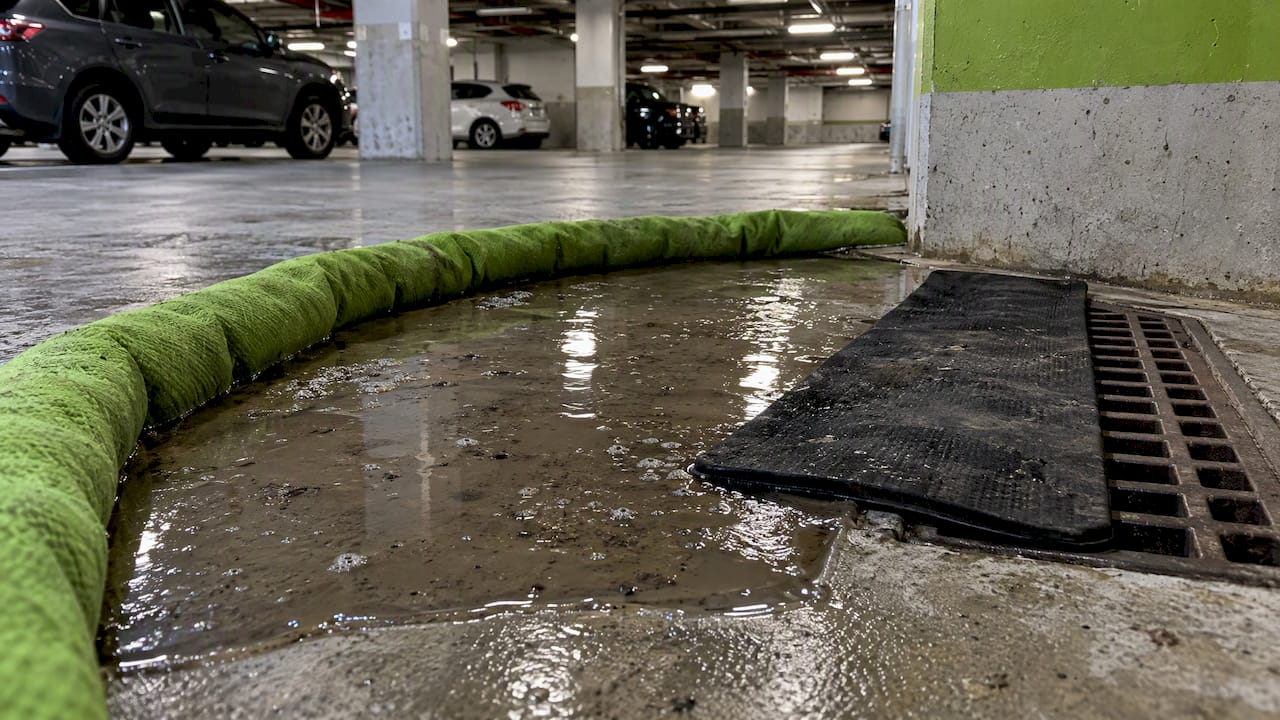
EPA Victoria makes the same point from the trade-waste side: stormwater contaminated by oils and grease residues counts as trade wastewater, which cannot be discharged to stormwater drains and must be diverted or treated. It also recommends that site operators keep a drainage map showing activity areas, drains and waste storage, so the site can be isolated in an emergency. For a car park manager, that map is a useful document to have anyway, because it tells any contractor where water goes.
In NSW, check the requirements with the NSW EPA and your local council or water utility before any large wash, and ask any contractor how they capture and dispose of wash water. Our own guide to protecting drains during oil clean-up explains the containment-first approach.
Fuel, oil and other hazardous contamination
A small drip stain is routine. A pooled spill, a strong fuel smell or an unknown substance is different, and the response changes.
- Contain first. The WA guidance recommends impervious spill mats or fluid-capture basins to contain run-off, identifying and containing spills, and carrying a spill kit suited to the wastes and chemicals in use.
- Keep it out of the drains. Block gullies before anyone starts washing, not after.
- Do not wash and hope. Spilt fuel or an unknown liquid needs the right absorbent and disposal, not a pressure washer that spreads it.
For spills that property managers face regularly, our four immediate oil spill response steps give a practical sequence.
If contamination involves chemicals or hazardous waste, the situation is beyond routine cleaning. The NSW EPA advises businesses affected by chemical or hazardous waste contamination to seek advice from a qualified occupational hygienist who can run a site-specific risk assessment and set the safety measures needed. Treat a strong, unexplained chemical smell the same way: close the area if people feel unwell and get an assessment before cleaning starts.
Stop the smell returning
A deep clean resets the car park. A schedule keeps it that way. The NSW EPA’s better practice guidelines for commercial and industrial waste management recommend sealing wall-to-floor junctions and keeping waste in sealed containers, which stops dirt and spilt waste building up and avoids attracting vermin. The same guidance links regular mechanical sweeping with fine dust capture, and drains kept clear of obstructions, to less build-up of contaminants and less degradation of surfaces.
A workable prevention routine for a typical commercial or strata car park looks like this:
| Task | Why it matters | Suggested rhythm |
|---|---|---|
| Mechanical sweep of floors and ramps | Removes dust, litter and organic matter that hold moisture | Weekly to monthly, depending on traffic |
| Bin room and waste area wash | Stops waste liquid and residue soaking into concrete | Monthly, or more often in busy buildings |
| Drain and gully inspection and clean | Prevents silt and dry traps | Quarterly, and after heavy rain |
| Machine scrub of bays and aisles | Lifts oil, grime and tyre residue | Every six to twelve months |
| Wall and edge wash | Removes odour-holding grime | Annually, or at the scrub |
| Oil stain spot treatment | Catches fluid before it soaks in | As reported |
| Ventilation check | Keeps air moving and exhaust down | Per your maintenance contract |
The rhythms above are our practical starting points, not regulatory requirements. Adjust them to your traffic, the age of the surface and what the odour log shows. A car park under a medical centre or supermarket loads differently from a small residential block.
When to call a specialist
Cleaning is the right answer for dirt, spills and drains. It is the wrong answer when:
- You have cleaned properly more than once and the smell returns. The US EPA’s indoor air quality guidance says to bring in outside help when repeated efforts fail, when specialised skills or instruments are needed, or when the problem suggests a serious health issue.
- People report headaches, nausea or breathing problems. Ask the building services engineer to check ventilation and carbon monoxide, and treat staff or resident complaints seriously.
- The smell is like sewage and persists after drains are cleaned. A plumber should inspect traps, pipework and any sump or pump.
- There is visible mould across large areas or ongoing water entry. A building or waterproofing specialist should deal with the leak first. Cleaning mould that returns with the next rain is wasted money.
- There is an unknown chemical or fuel release. Call the right authority and an occupational hygienist before washing anything.
A good cleaning contractor will tell you when the cause is not theirs. That honesty saves you more than another round of washing.
Car park odour cleaning with Sydney Sweep and Scrub
We are a family-owned Sydney business that cleans car parks, warehouses and public spaces using mechanical sweeping, scrubbing and pressure washing, including hot water cleaning. For odour jobs, that means we remove the layer of dirt and contamination that holds the smell, rather than covering it up. We also offer line marking after the clean, and automated robotic cleaning for ongoing maintenance in larger sites.
If you manage a building, strata scheme or commercial car park, see our car park cleaning service and request a quote. Tell us where the smell is, when it is worst, and whether drains or bins are involved. That information from your odour log helps us scope the job accurately. For regular upkeep, we can set up a recurring maintenance schedule.
FAQ
Why does my car park smell musty?
A musty or earthy smell usually points to damp, leaks, slow-drying puddles or mould and microbial growth on walls and ceilings. Find where moisture is entering and fix it first. Then clean the affected surfaces, because washing alone will not stop a smell that comes from an ongoing leak.
Can fumes from a car park get into the building above?
Yes, they can if ventilation is poor or pathways such as risers, stairwells and lift shafts connect the spaces. Exhaust includes carbon monoxide, which you cannot smell, so persistent exhaust odour is a reason to have ventilation and monitoring checked by a qualified person. Cleaning will not remove it.
How do I get rid of an oil or fuel smell in a car park?
Contain the spill, keep it away from drains, and treat the stain with a suitable degreaser before scrubbing or hot water pressure cleaning. Capture the wash water and dispose of it properly. Large spills or unknown substances need specialist advice before any washing starts.
How often should a car park be cleaned to prevent odours?
It depends on traffic, waste handling and drainage. As a starting point, sweep regularly, wash bin areas monthly, check drains quarterly and machine scrub every six to twelve months, then adjust based on what your odour log shows.
Does air freshener work in a car park?
It masks a smell briefly, but the source stays in place. Removing the source through sweeping, scrubbing, drain cleaning and sealing waste areas is what gives a lasting result.
Sources
- Odour Investigation, Green Air Monitoring
- Guide to conducting field odour surveys, NSW EPA
- Part F6 Light and ventilation, NCC 2022, ABCB
- Part F6 Light and ventilation, NCC 2025
- Mobile mechanical servicing and cleaning, Government of Western Australia
- EPA Victoria publication 1810.1
- North St Marys fire, NSW EPA
- Better Practice Guidelines for Waste Management, NSW EPA
- Diagnosing IAQ Problems, US EPA