
If your site has grease, oil, heavy grime or hygiene‑sensitive surfaces, hire a qualified contractor for hot water pressure washing rather than relying on cold water or manual scrubbing. Hot water breaks down fats and oils faster, cuts labour time, and meets the hygiene standards that food‑adjacent and high‑traffic sites need. Industry testing found hot water reduced cleaning times by an average of 40%, with up to four times the efficiency on greasy residues. Correct methods and equipment also matter for safety: Worksafe Queensland flags cleaning method and residue control as central to slip prevention.
Before you engage anyone, ask for:
- Current public liability and worker’s compensation certificates
- A written site‑specific safe work method statement (SWMS)
- The unit’s maximum temperature and pressure range
- Their wastewater containment and disposal process
Pro Tip: Get quotes from providers who offer online booking or a fast site visit, like Sydney Sweep and Scrub — a same‑week quote usually beats a cheaper contractor who can’t start for a month.
Key Takeaways
| Point | Details |
|---|---|
| Match method to contamination | Use hot water for grease, oil and heavy grime; cold water suits general dust and dirt. |
| Verify credentials first | Insurance, SWMS and technician training certificates should be sighted before booking. |
| Budget by contamination type | Surface area, contamination level and wastewater recovery needs drive most of the cost. |
| Insist on itemised quotes | Compare labour, machine hours, consumables and wastewater handling line by line. |
| Choose a proven local provider | Sydney Sweep and Scrub offers insured, SWMS‑backed hot water cleaning with containment and online quoting. |
Table of Contents
- When is hot water pressure washing the right choice?
- What does a professional hot water pressure washing service include?
- How often should you schedule hot water cleans, and what drives the cost?
- Questions to ask contractors and red flags to avoid
- How do you prepare for the day, and what happens on site?
- How does the service manage wastewater, chemicals and slip risk?
- Sydney Sweep and Scrub: how our hot water pressure washing service meets these needs
- Sources
- FAQ
When is hot water pressure washing the right choice?
Grease traps, loading docks, warehouse floors with forklift oil stains, car parks with tyre marks and fuel residue, and external areas near food prep zones are the classic cases where hot water earns its keep. Cold water shifts loose dirt and dust well enough, but it struggles against baked‑on grease and set‑in oil, which is exactly where heat does the work cold water can’t.
The efficiency numbers back this up. Commercial guidance from Kärcher puts typical time savings at around 35% versus cold water, alongside lower detergent use and the ability to run at lower working pressure while still getting a cleaner result. Less pressure means less risk of damaging line markings, expansion joints or ageing asphalt, which matters if you’re maintaining the surface long term rather than just cleaning it once.
Common commercial use cases include:
- Car parks and loading docks with oil and tyre residue
- Warehouse floors around forklift refuelling and maintenance bays
- Grease traps and bin store areas
- External surfaces adjoining food preparation zones
- Heavy plant and equipment yards.
Pro Tip: Hot water alone loosens and lifts grease and protein residue effectively, but it isn’t a standalone disinfectant. If the area handles food waste or public foot traffic, ask your contractor whether a sanitising step should follow the wash, not replace it.
What does a professional hot water pressure washing service include?
A competent provider starts with a site risk assessment before any water touches the ground. That assessment feeds into a written SWMS covering access, pedestrian separation, chemical handling and equipment operation, plus a scope document that says exactly what’s being cleaned, what’s excluded, and what condition the surface was in beforehand (photos included).
Equipment specifications matter more than most quotes let on. Hot water units run through a boiler or burner system to reach working temperature, and the right operator knows which temperature and pressure combination suits concrete versus painted line‑marking versus sealed coatings, because the wrong setting can damage a surface just as easily as it cleans it.
Expect these core elements in any professional job:
- A site‑specific risk assessment and written SWMS
- Trained operators who can explain the unit’s temperature and pressure range
- Wastewater containment or recovery, not free discharge to stormwater
- Approved, low‑impact detergents where chemical assistance is needed
- Before and after photos for your records
- Public liability and worker’s compensation cover, sighted before the job starts
A written quote should also spell out:
- Full scope and any exclusions
- Pre‑existing damage notes
- Estimated timeline
- Safety and traffic controls
- Whether a follow‑up inspection is included
How often should you schedule hot water cleans, and what drives the cost?
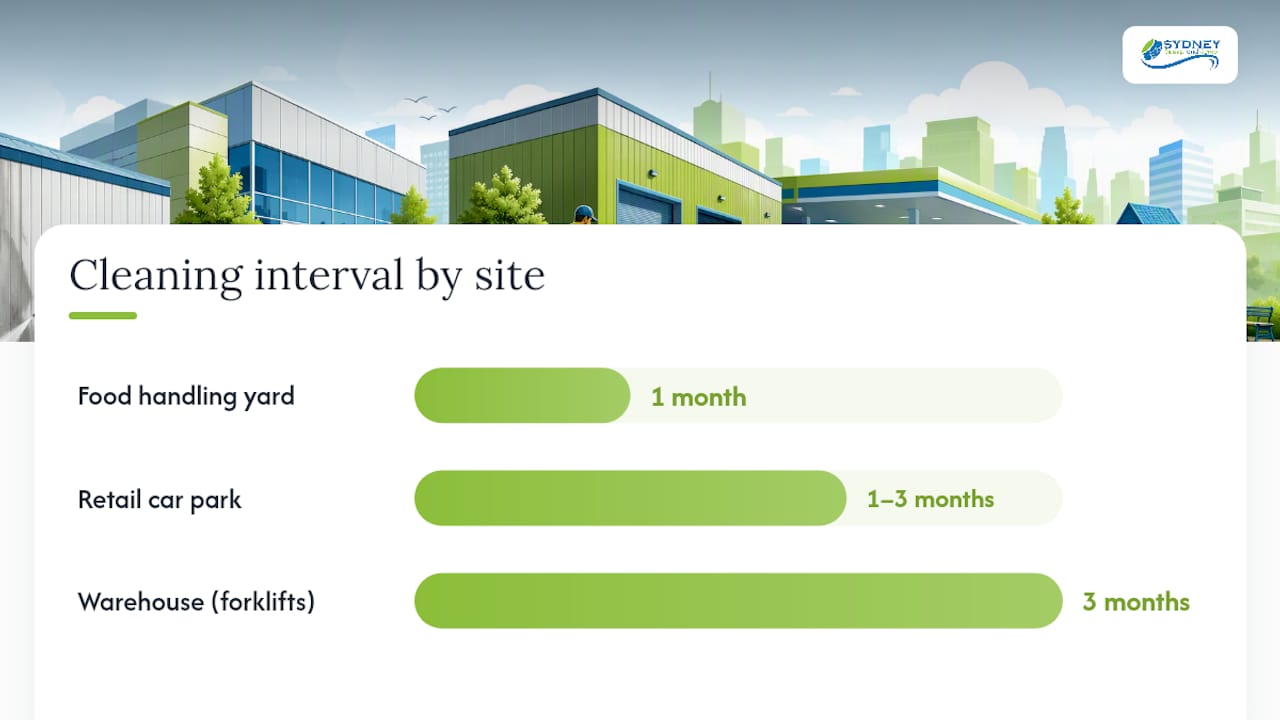
Frequency depends on how fast contamination builds up. A high‑traffic retail car park often needs a hot water clean every one to three months to manage tyre marks and oil drips. A food handling yard or grease trap area may need monthly attention, sometimes more if there’s a spill. Warehouses running forklifts on diesel or LPG tend to need quarterly cleans, with ad‑hoc callouts for spill response in between.
Cost is driven by more than square metreage. The main variables are:
- Total surface area and access complexity (tight loading bays cost more per square metre than open car parks)
- Type and volume of contamination, since grease and oil take longer to lift than surface dust
- Whether wastewater recovery is required, which adds equipment and disposal time
- Required temperature and pressure settings for the surface type
- Machine run time, since hot water systems use more energy per hour than cold units but often finish the job faster overall
Add‑ons that commonly appear as separate line items include chemical pre‑treatment for stubborn stains, sealed coating reapplication, traffic management for busy sites, after‑hours scheduling, and follow‑up sanitisation.
Ask every contractor for line‑item pricing, not a flat all‑in figure. Labour, machine hours, consumables and wastewater handling should all be visible, so you’re comparing like with like across bids.
Questions to ask contractors and red flags to avoid
Score every quote against this checklist:
- Can they provide current proof of public liability and worker’s compensation insurance?
- Do they supply a site‑specific SWMS and risk assessment, not a generic template?
- Can technicians show training certification for hot water equipment operation?
- Will they state the unit’s maximum temperature and PSI, and match it to your surface type?
- Do they have references or case studies from similar commercial sites?
- Is workmanship covered by any warranty or remediation guarantee?
Red flags that should make you look elsewhere:
- No mention of a SWMS or risk assessment when you ask
- A vague scope with no itemised pricing breakdown
- Temperature or pressure claims that sound too aggressive for the surface described
- Reluctance to explain how wastewater is contained or disposed of
- A flat “all‑in” price with no labour, machine or consumables breakdown
Verify references by asking for a recent job on a comparable site, not just a testimonial quote, and request timestamped before‑and‑after photos rather than stock images. On contract terms, insist on clear payment milestones, a formal scope sign‑off, and a written remediation clause if the outcome doesn’t match what was quoted.
How do you prepare for the day, and what happens on site?
Before the crew arrives, clear pedestrian routes, shift loose stock or vehicles, flag any hazards (uneven surfaces, exposed wiring, sensitive line markings), notify tenants of the access window, and confirm any permits the site needs.
On the day, the contractor sets up containment, runs a safety briefing, protects sensitive surfaces, and tests a small patch before committing to the full area. Cleaning proceeds zone by zone, with wastewater collected as they go.
- Arrival and containment setup
- Risk briefing and surface test patch
- Cleaning passes across agreed zones
- Wastewater collection and rinse
- Drying time and final walkthrough
- Handover with before/after photos and sign‑off
A mid‑size warehouse floor or car park section typically runs from a half‑day to a full day, depending on contamination level and access.
How does the service manage wastewater, chemicals and slip risk?
Responsible providers contain or recover wastewater on site rather than letting it run into stormwater drains, and dispose of it through approved trade waste channels. Hot water’s grease‑cutting power also means less detergent and water get used overall, which cuts chemical runoff risk at the same time.
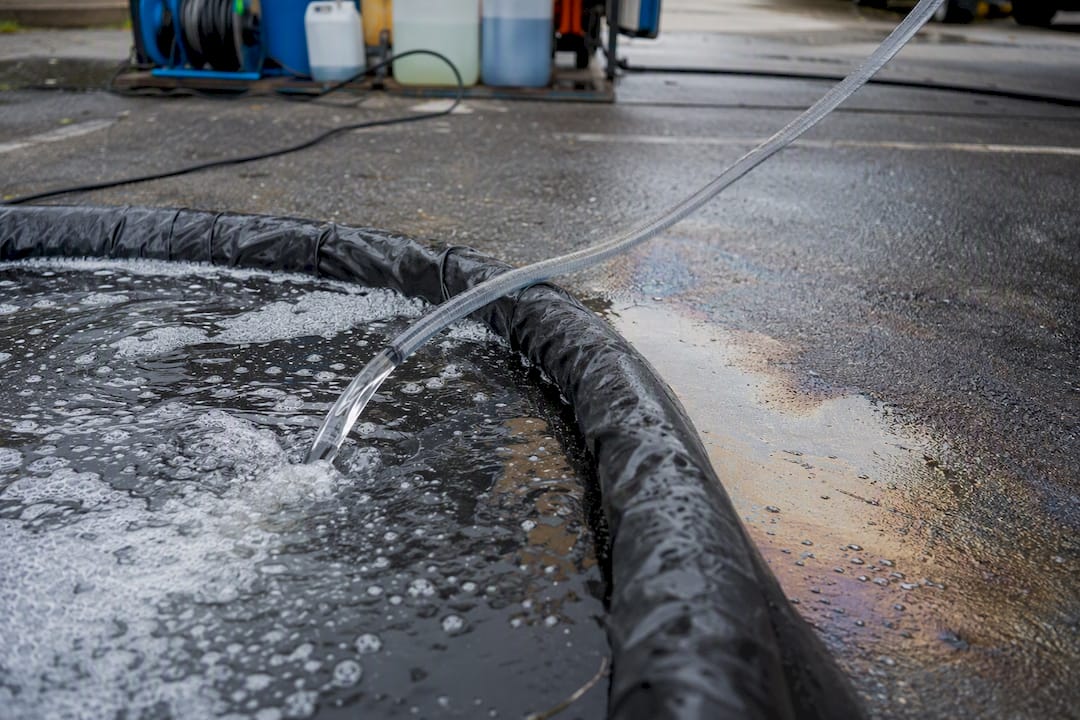
Slip risk doesn’t end when the water stops running. Worksafe Queensland points to correct detergent concentration, adequate dwell time and proper drying management as the difference between a hygienic floor and a hazardous one. That’s why competent contractors set up temporary exclusion zones or traffic controls, so nobody walks a still‑drying surface.
Environmental controls to expect include:
- Wastewater containment and approved disposal
- Reduced detergent and water use through heat rather than chemical volume
- Correct dwell time and drying management to control slip risk
- Traffic or pedestrian exclusion during and immediately after cleaning
Pro Tip: For enclosed warehouses or sites with limited ventilation, ask whether the contractor runs electric boilers or low‑emission fuel units. It reduces exhaust buildup indoors and often fits better with a site’s own sustainability targets.
Sydney Sweep and Scrub: how our hot water pressure washing service meets these needs
You’ve seen what a competent hot water pressure washing job requires: a real risk assessment, trained operators, the right equipment specs, and wastewater that doesn’t just run off into the nearest drain. That’s the standard Sydney Sweep and Scrub builds every job around, backed by public liability and worker’s compensation cover, a written SWMS for every site, and before‑and‑after photos so you can see exactly what changed.
Our technicians run industrial hot water units matched to your surface, whether that’s a car park, warehouse floor or loading dock, and we contain wastewater on site using eco‑minded consumables rather than harsh chemicals. Every job starts with a clear written scope, and booking one doesn’t mean chasing a callback for a week.
If you’re comparing this against a cold water pressure wash for a lighter‑duty area, our team can advise which fits your site during the quote. First‑time clients can also take 30% off their first hot or cold pressure wash, which makes trialling the service on one site a low‑risk way to test it before rolling it into a recurring maintenance schedule via our hard surface cleaning program. Request a site visit or book online to get a written quote this week.
Sources
- Cleaning — Worksafe Queensland
- The Power of Hot Water Cleaning — Nilfisk (PDF)
- Advantages of hot water pressure washers — Kärcher (US)
FAQ
Is hot water pressure washing better than cold water for every commercial site?
No. Hot water excels on grease, oil and protein residue, but general dust and light dirt often clean up fine with cold water at lower cost. A comparison of both methods can help you decide per site.
Can you pressure wash in the rain?
Light rain usually doesn’t stop a job, since the surface gets wet either way, but heavy rain interferes with wastewater containment and can dilute detergents before they’ve had proper dwell time. Most contractors reschedule around genuinely wet weather rather than working through it.
How long does a typical hot water pressure washing job take?
A mid‑size car park or warehouse section usually runs from half a day to a full day, including setup, cleaning passes, wastewater collection and drying time before handover.
What temperature and pressure range do commercial hot water units use?
Ranges vary by surface and machine, which is why a competent operator adjusts settings to the material being cleaned rather than running one setting for every job. Ask your contractor to state their unit’s specifications before booking.
Does hot water pressure washing disinfect surfaces?
It loosens and removes grease, oil and organic residue effectively, and can lower bacteria counts as part of a cleaning process, but it isn’t a standalone disinfectant. Hygiene‑sensitive sites may still need a separate sanitising step.