
Commercial building pressure washing is a planned job, not a quick spray. The operator matches pressure, nozzle and water temperature to each surface, protects the site and the public, and captures the wash water. Done properly, it lifts dirt, mould, oil and grime from facades, carparks, loading docks and warehouse aprons without damaging what you own. Sydney Sweep and Scrub is a family-owned Sydney business that delivers pressure washing for property managers, strata companies, warehouse operators and councils, so this guide sets out what a well-run job looks like.
TL;DR
- Pressure is chosen per surface. Hardened concrete tolerates more than painted render, old brick or heritage stone, so one setting never suits a whole building.
- A proper job starts with an inspection, a test patch and protection of nearby items, and ends with rinsing, drying and a check of the result.
- Wash water carries dirt, oil and chemicals. Plan how it is contained and removed before any washing starts.
- Safe Work Australia’s model regulations are not law by themselves, so your state or territory WHS rules apply to the work on your site.
- For Sydney carparks, warehouses, facades and end-of-lease cleans, we handle the work as one booked job.
Table of Contents
- What pressure washing removes and where it is used
- Choosing the method and pressure for each surface
- How a commercial job is planned and carried out
- Safety and the public
- Wash water, waste and stormwater
- What affects the cost
- How often to clean
- Booking it with us
- FAQ
- Sources
What pressure washing removes and where it is used
Pressure washing uses a jet of water, sometimes heated, to lift surface soiling. On commercial property that typically means:
- Facades and cladding: traffic film, mould, algae, bird droppings and general weathering.
- Carparks and driveways: tyre marks, oil drips, gum and dust built up on concrete.
- Warehouse floors, docks and aprons: grease, forklift marks and ingrained grime.
- Footpaths, forecourts and entrances: stains, spills and food waste that make a site look neglected and become slip hazards.
Hot water is suited to oily and greasy soiling, while cold water handles general dirt and mould. We offer both, along with hot water pressure cleaning and cold water pressure washing, so the method follows the soil rather than the other way round.
Choosing the method and pressure for each surface
National competency standards for pressure washing say the operator assesses the surface type and condition, the soil, the task and the hazards before choosing equipment. That assessment is in the national pressure washing unit CPPCLO3020, and it applies to commercial and residential sites alike.
Concrete: carparks, warehouses and docks
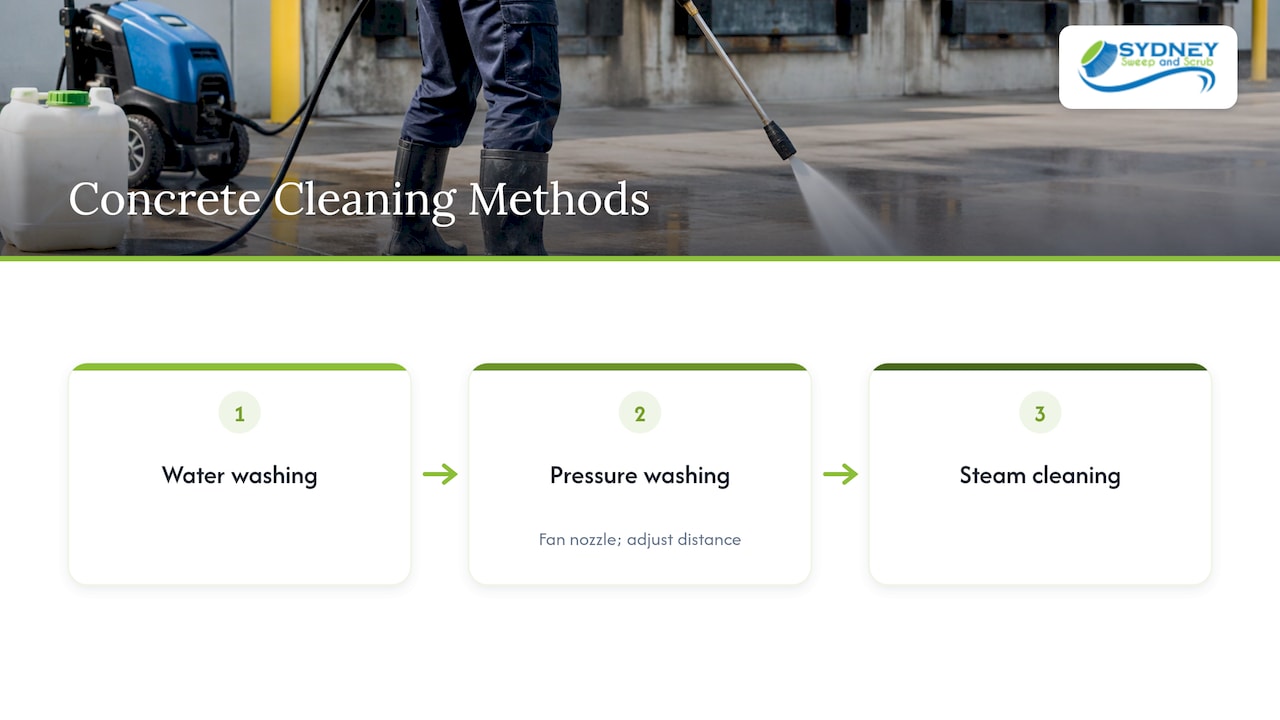
Cement Concrete & Aggregates Australia lists water washing, pressure washing and steam cleaning in order of increasing intensity, and its guidance covers hardened concrete only, not concrete under seven days old. It also notes that fan nozzles are the most common choice for general concrete cleaning, with narrow concentrated jets seldom used, and that nozzle distance is adjusted so the surface is cleaned without being damaged. A wider fan at a greater distance also covers more area per pass, which matters when labour is the main cost.
For concrete floors and slabs, see our page on concrete pressure cleaning.
Brick, stone and older facades
Softer masonry is where pressure goes wrong. The Western Australian heritage guide on stone cleaning advises using the gentlest method compatible with the material and limiting cleaning to the minimum necessary. It warns that excessive pressure or water volume, poor sealing or poor drainage can force water into a building, and says pressure on historic stone should ideally stay below 200 psi. Heritage Victoria adds that incorrect cleaning can cause irreversible damage, and that the method should balance cost against the risk to the material.
The same preservation-first thinking is explained in this guide to cleaning brick without damaging it. Most commercial buildings are not heritage listed, but the lesson holds: lower pressure and the right nozzle protect mortar joints, paint and sealants.
If you manage a street-front building and want the exterior refreshed, our overview of façade pressure washing and the page on whole building pressure washing in Sydney show what is involved.
How a commercial job is planned and carried out
The national unit and the concrete and masonry guides describe a consistent routine. Here is how it runs, and where it tends to go wrong.
- Inspect the site. Identify existing damage such as cracked render, failed sealant, loose mortar and lifting paint. Skipping this means a pre-existing fault gets blamed on the wash. Our crews work through the surface and equipment checks the national unit sets out.
- Test a small area. Heritage Victoria recommends a representative 1 to 2 square metre test area beside an uncleaned comparison patch. On delicate surfaces this is the cheapest insurance there is.
- Prepare the site. Clear loose debris first, as the CCAA data sheet advises, and plan where wash water will go. Install signs and barricades, and protect items from spray, as the national unit requires. In a carpark this also means moving vehicles and closing bays in stages.
- Pre-spray and wash. Heavily soiled areas are pre-sprayed, then washed to the equipment instructions, working systematically from an edge or corner so you do not leave tide marks or push dirt over finished areas.
- Treat stubborn spots by hand, rinse and dry. Oil, gum and stains may need extra attention before a final rinse. Surfaces are left to dry before anyone walks or drives on them.
- Inspect the result. Check against the test patch and the pre-clean notes, and record anything that needs follow-up.
We plan this as one job, with the equipment, crew and site controls arranged before we arrive. For carparks, that can be combined with carpark cleaning and line marking, so sweeping, scrubbing and washing finish in the same visit.
Safety and the public
The national unit lists the hazards on a pressure washing job: chemical exposure, dust, electrical risks, noise, manual handling, slips and falls, poor ventilation, confined spaces and fatigue. Water also conducts electricity, and Heritage Victoria notes that acids, alkalis and solvents can injure or be flammable, so chemical products should have accessible safety data sheets.
A few points matter most to a building manager:
- Your legal duty. Safe Work Australia’s model regulations, consolidated at 5 December 2025, are model laws with no legal effect themselves. The WHS law of your own state or territory applies, so for a Sydney site that means NSW. If you want certainty about your obligations as a person conducting a business or undertaking, confirm them with your WHS adviser or SafeWork NSW.
- Chemical records. The model regulations require a current hazardous chemical register with up-to-date safety data sheets that workers handling those chemicals can readily reach.
- People and property nearby. The WA guide calls for protecting vegetation and adjoining building elements from chemicals, dust, residue and overspray, and for notifying occupants in advance. Tenants, shoppers and neighbours should know when and where washing happens.
- Operator protection. Our page on pressure washing PPE for Australian operators lists the gear involved.
Wash water, waste and stormwater
Wash water is not just water. It carries oil, detergent, sediment and paint flakes, and it must not run into the stormwater drain. The WA guidance calls for containing and removing wastewater and disposing of toxic waste correctly, and the national unit flags environmental contaminants as a hazard.
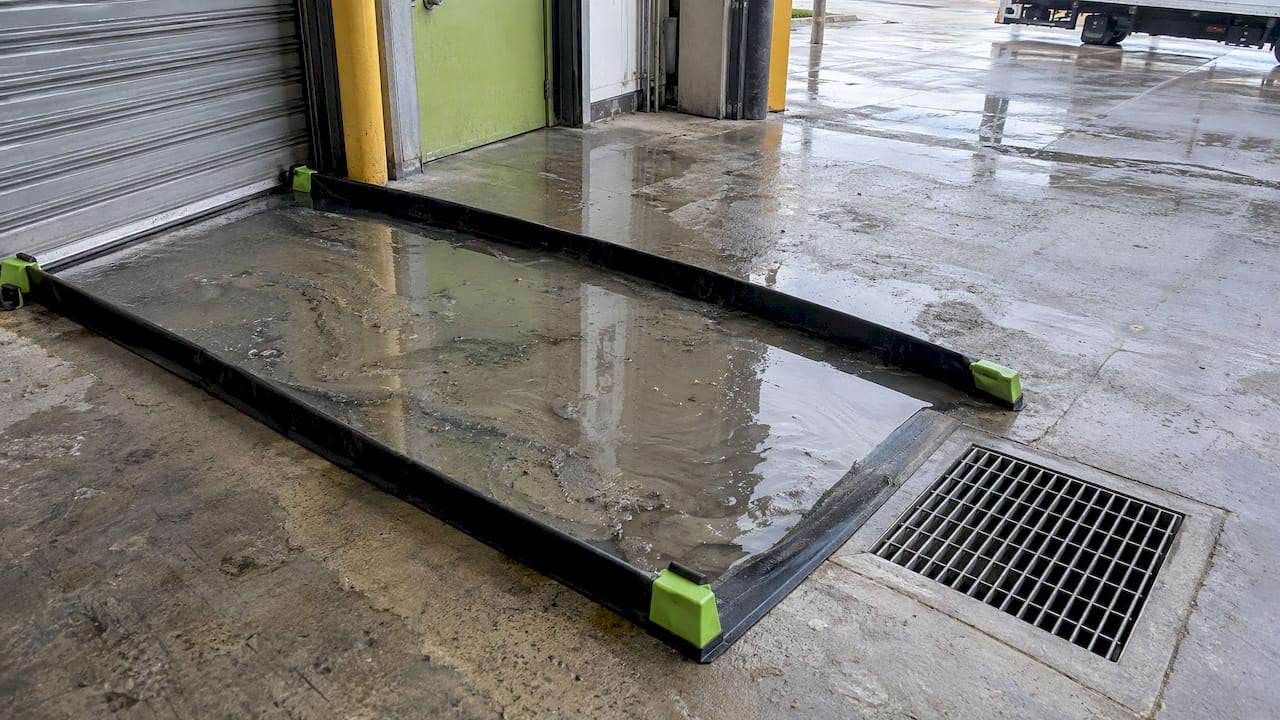
This is the part of the job most often left vague in quotes, so ask what happens to the water. We have written separate guides on the five wastewater checks for Australian businesses, trade waste rules for Sydney sites and waste recovery from pressure washing. If your washing touches a public footpath, see how contained pressure washing on a Sydney footpath works.
What affects the cost
We do not publish a fixed price, because the scope drives it. The main factors are:
- Area and access. More square metres cost more, and a facade needing access equipment takes longer than a flat apron.
- Soil type. Light dust washes quickly. Oil, graffiti or built-up algae need hot water, treatment or a second pass.
- Surface sensitivity. Delicate surfaces need lower pressure and more time, as the masonry guidance above makes clear.
- Water capture. Containing and removing wastewater adds equipment and labour, and it is part of doing the job responsibly.
- Timing and traffic. Work staged around trading hours or tenants takes careful scheduling.
Tell us the surfaces, the area and the access, and we can scope it. Requests are made through the online quote and booking.
How often to clean
There is no single national schedule. Frequency follows traffic and exposure: a busy carpark or a loading dock under trucks needs washing far more often than a quiet office facade. Many owners pair regular mechanical sweeping, which keeps dust and debris down between washes, with periodic pressure washing, and some large sites take an optional recurring maintenance contract. Warehouse tenants should also plan a clean before handover, which our end of lease commercial cleaning service covers, so the floor and apron are returned in the condition the lease asks for.
Booking it with us
We are a Sydney family business offering pressure washing alongside sweeping, scrubbing, rubbish removal, hot water cleaning and robotic cleaning, using industrial-grade and eco-friendly equipment, with optional waste offset initiatives for clients who want to take part in sustainability efforts. One provider across the whole site means one scope, one schedule and one point of contact. For warehouses see warehouse cleaning, and for offices and mixed-use buildings see commercial cleaning.
FAQ
Can pressure washing damage a commercial building?
Yes, if pressure, nozzle or distance is wrong for the surface. Heritage guidance warns that excess pressure and water can force water into a building. Choosing the gentlest effective method and testing a small area first prevents it.
Is pressure washing the same as pressure cleaning?
In Australia the two terms are used interchangeably for cleaning with a high-pressure water jet. The method can be cold or hot water, with or without detergents, depending on the soil.
Does the wash water have to be collected?
It should be contained and removed rather than allowed to enter the stormwater system, because it carries oil, sediment and chemicals. The rules for your site depend on your state and council, so confirm the requirements for your location when planning the job.
Can you clean a warehouse floor before the lease ends?
Yes. Hot water pressure cleaning and scrubbing suit oily and ingrained warehouse floors, and the clean can be scheduled before handover. Contact us with the floor area and the lease requirements for a quote.
Sources
- National Training Register: CPPCLO3020 Pressure wash and clean
- CCAA: Cleaning Concrete data sheet
- WA Department of Planning, Lands and Heritage: Cleaning stone masonry
- Heritage Victoria: Cleaning masonry
- Safe Work Australia: Model WHS Regulations, 5 December 2025