
A working warehouse cleaning checklist is a zone-by-zone schedule that names a frequency and an owner for every task, not a vague list of chores. Get three things right immediately: keep aisles and egress routes clear, respond to spill the moment they happen, and require a signature confirming the work was actually done. Everything else in this guide, the SOP, the safety fields, the templates, exists to support those three habits with paperwork that stands up if SafeWork ever comes knocking.
TL;DR:
- High-risk zones such as loading docks and high-bay areas require daily cleaning and inspection to prevent buildup of dust, grime, or spills.
- Use clear, consistent procedures with equipment logs, photos, timestamps, and responsible personnel to ensure cleaning accountability and compliance.
- Regularly update the checklist based on specific site risks like combustible dust or food handling to match cleaning frequency with hazard severity.
- Professional cleaning is necessary when internal efforts cannot effectively remove persistent dust, oil stains, or reach high-inaccessible areas safely.
- Field sign-offs should include documented evidence and issue follow-up actions, with scheduled task rotations minimizing operational disruption.
Table of Contents
- What zones should a warehouse cleaning checklist cover?
- How do you run a cleaning task safely from start to finish?
- What safety and WHS documentation does the checklist need?
- What equipment and chemistry belong on the checklist?
- Daily, weekly and monthly checklist templates you can copy
- What should every checklist entry record for audit purposes?
- How do professional crews run checklists in the field?
- When is it time to bring in a professional crew?
- Sources
What zones should a warehouse cleaning checklist cover?
Every site is different, but six zones show up on almost every functional warehouse cleaning checklist, and each carries its own risk profile.
- Floors and main aisles: sweep debris, mop or scrub spills, check for oil residue and worn line-marking.
- High-bay and racking: dust top beams, inspect for damaged uprights, clear stock ledges of loose packaging.
- Loading docks: sweep dock plates, hose down apron areas, clear pallet wrap and strapping offcuts.
- Restrooms and break rooms: sanitise surfaces, restock soap and paper, empty bins before overflow.
- Forklift and pedestrian crossings: clear sightlines, wipe down floor markings, check for tripping hazards.
- Specialty deep-clean zones: cool rooms, chemical storage bays, or dust-heavy production lines.
Food, pharmaceutical, and combustible-dust environments need tighter frequencies across nearly all six zones. A dry-goods warehouse might scrub floors weekly; a facility handling powders or perishables often needs daily attention in the same spots. The interior warehouse cleaning agenda breaks these zone tasks down further if you’re building a checklist from scratch.
How do you run a cleaning task safely from start to finish?
A consistent sequence turns cleaning into something you can audit, not just something that happened. Use this order every time:
- Prepare: gather the right equipment, pull the relevant Safety Data Sheet, and put on required PPE.
- Isolate: cordon off the work area, redirect foot and forklift traffic, and post wet-floor signage.
- Remove debris: clear loose material before any wet work starts, so you’re not scrubbing mud into the floor.
- Clean: match the method to the surface and contaminant, then allow proper drying or ventilation time.
- Manage waste and inspect: dispose of waste correctly, check equipment for faults, and log any issues found.
- Sign off: record who did the work, when, and confirm it against the checklist item.
Pro Tip: Run this SOP as a laminated card clipped to the cleaning trolley. Crews follow steps they can see, not steps buried in a folder in the office.
What safety and WHS documentation does the checklist need?
Under the Work Health and Safety Act 2011 (Cth), a person conducting a business or undertaking must identify hazards specific to their site and put proportionate controls in place, then be able to show they did it. A cleaning checklist is one of the clearest pieces of evidence an inspector will ask for.
Build these items directly into the checklist: immediate spill response with a named responder, wet-floor signage deployed before mopping starts, aisle policing during peak forklift movement, unobstructed emergency egress at every shift change, and specific controls around forklift charging and travel zones.
Dust needs its own line items. Use HEPA vacuums for fine dust and never use compressed air to clear it, because disturbed combustible dust can create an explosion risk in the wrong environment. Keep dedicated fields for SDS location, spill-kit stock levels, and consumable restocking, which the Safe Work Australia model code treats as a core part of facilities management, right down to an Appendix B checklist you can adapt.
Every entry should carry a photo, a timestamp, and the name of the person responsible. That combination is what separates a checklist from a diary entry.
What equipment and chemistry belong on the checklist?
The right gear does most of the compliance work for you. List these categories as fields on the checklist so nobody guesses what to grab:
- Auto-scrubbers for daily and weekly floor cleaning across large open areas.
- HEPA vacuums for dust, especially near racking and high-bay areas.
- Pressure washers for docks, aprons, and heavily soiled concrete.
- Scissor lifts or platforms for high-dusting beams and light fittings.
- Consumables: absorbents, spill kits, signage, PPE, and restroom stock.
Chemistry matters as much as machinery. WorkSafe Queensland warns that the wrong degreaser or a heavy polish buildup can quietly reduce a floor’s slip resistance over time. Always check the SDS before swapping products, and never assume a “stronger” chemical is a safer one.
Daily, weekly and monthly checklist templates you can copy
Frequency should follow risk, not habit. A dry warehouse with light foot traffic can stretch some tasks; a food-grade or high-throughput site can’t.
Daily: aisle policing, spill response, restroom and break room checks, bin emptying, dock plate sweep.
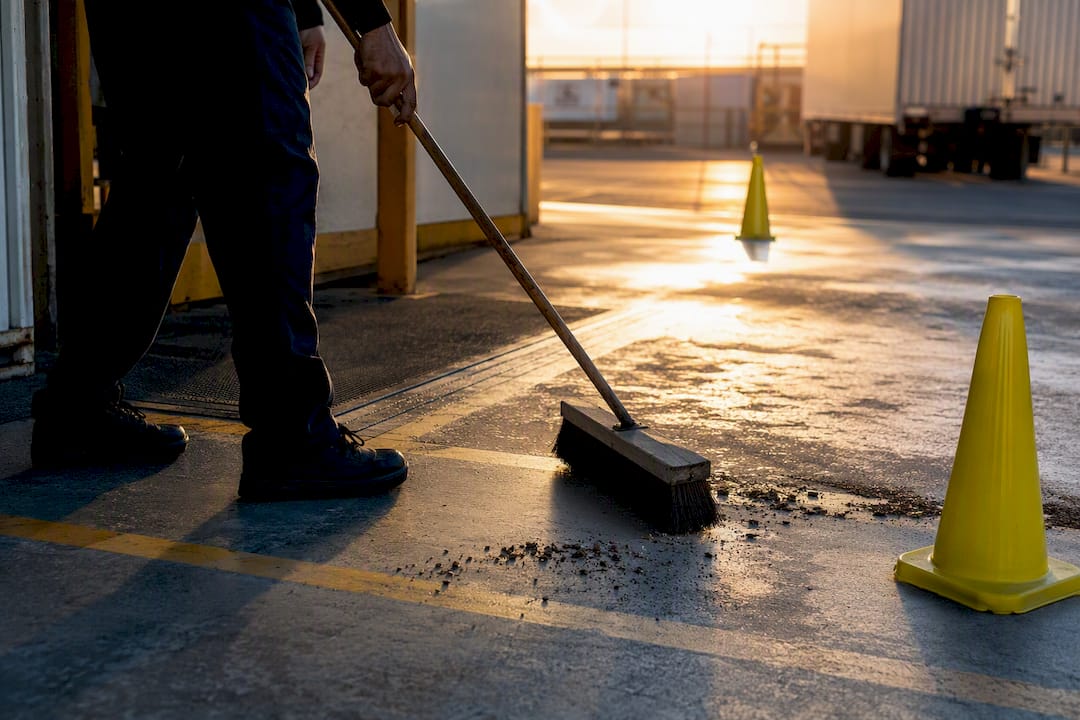
Weekly: full floor scrub, loading dock wash-down, accessible racking wipe-down, line-marking check.
Monthly or quarterly: high-dust removal via lift access, HVAC filter checks, floor sealant inspection, deep degreasing of high-traffic zones.
Adjust upward for combustible dust, food handling, or pharmaceutical storage. Regular attention pays off operationally too: sites that stick to a routine cleaning schedule tend to see fewer unplanned stoppages from equipment fouling or blocked walkways.
What should every checklist entry record for audit purposes?
An entry without detail is just a tick. Capture these fields every time:
- Date and time the task was performed.
- Zone and specific task completed.
- Method and equipment used.
- Name of the person responsible.
- Any issues found and the corrective action taken.
- Sign-off from a supervisor.
Digital logs beat paper for searchability and photo attachment, though paper still works for small sites if it’s filed consistently. Whichever format you choose, link cleaning records to incident reports when something goes wrong. A spill logged three days before a slip incident is the difference between a defensible safety record and a gap an inspector will ask about directly.
How do professional crews run checklists in the field?
Sweepandscrub structures its warehouse work around rotating zones rather than cleaning the whole site in one pass, which keeps aisles open for operations while still hitting every area on schedule. Machine scrubs get slotted into the weekly cycle around a client’s shift patterns, not squeezed in wherever there’s a gap.
Sign-off in the field usually looks like this: the crew completes the task, a supervisor checks it against the checklist, and photo evidence gets attached before the job is marked closed. Any issue found, a damaged rack, a persistent leak, gets flagged for follow-up rather than left for next visit.
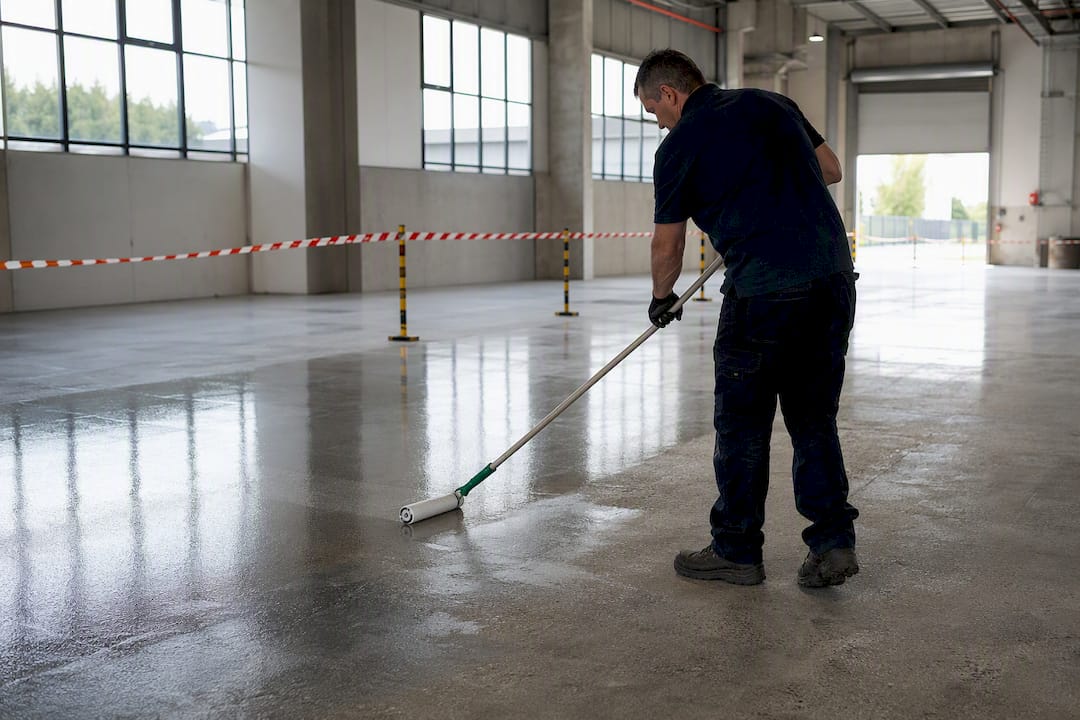
A few field habits worth borrowing: seal floors to cut down on dust generation between scrubs, position spill kits at fixed points near high-risk zones rather than one central store, and schedule heavier work around low-traffic shift windows, which lines up with WorkSafe Queensland’s guidance on minimising exposure during cleaning. Pairing a facility’s own preventative maintenance checklist with the cleaning schedule also helps catch equipment issues before they become cleaning problems.
When is it time to bring in a professional crew?
Persistent dust that keeps returning within days, repeated slip incidents in the same spot, high-bay areas your team simply can’t reach safely, or oil and grime that basic mopping won’t shift, these are the signals your in-house checklist has hit its ceiling.
A professional visit from Sweepandscrub starts with a pre-clean risk check of the site, uses commercial-grade auto-scrubbers and pressure washing equipment your team likely doesn’t own, and finishes with documentation built to sit alongside your own WHS records. That’s the practical edge over stretching internal staff across a job that needs specialised gear: you get the deep clean and the paperwork in one visit.
For dock aprons, oil-stained concrete, or grime that’s built up over months, hot water pressure washing handles what a mop and bucket can’t touch. If your high-bay areas or main floor need a proper machine scrub worked into your existing schedule, you can request a quote or site assessment and get a plan that slots around your shifts rather than disrupting them.
Sources
- Work Health and Safety Act 2011 (Cth)
- Model code of practice — Managing the work environment and facilities (Safe Work Australia, Nov 2024)
- Slips, trips and falls — cleaning (WorkSafe Queensland)