
Oxalic acid is the most reliable treatment for tannin stains on porous concrete. Mix it, wet the surface, dwell for 10 to 20 minutes, scrub with a stiff broom and rinse thoroughly. Use bleach or a baking soda paste for lighter, more recent marks. Always test a small patch first, wear gloves and eye protection, and call a professional if the stain covers a large area or keeps coming back.
TL;DR:
- Oxalic acid is the most effective chemical for removing tannin stains from porous concrete, breaking down tannins embedded in the surface pores.
- Applying oxalic acid requires thorough site preparation, including wetting the area, covering metal fixtures, and letting the solution dwell for 10 to 20 minutes before scrubbing and rinsing.
- Faint or recent tannin stains can often be removed with a paste of warm water and baking soda, avoiding the need for harsh chemicals.
- Pre-washing timber and sealing decks before installation can prevent tannin from leaching into concrete, especially when using high-extracting woods like Merbau.
- If multiple treatments fail or stains are widespread, professional cleaning with tailored chemical mixes and controlled pressure washing is recommended to avoid permanent surface damage.
Table of Contents
- Fast checklist for tannin stains on concrete
- How to treat tannin stains with an oxalic acid wash
- When to use bleach, baking soda or commercial tannin removers instead
- Stop tannin bleed before it starts
- Protect people, plants and surfaces during treatment
- When DIY stops working: calling in a specialist
- How Sydney Sweep and Scrub gets stubborn stains out for good
- Sources
Fast checklist for tannin stains on concrete
Before you buy a single product, work out what you’re actually dealing with. Tannin marks are usually brown, feathery-edged and sit directly under or downhill from timber decking, mulch beds or overhanging trees. Rust stains, by contrast, tend to be more orange and localised around metal fixings, while mould or mildew shows as darker, sometimes greenish patches with a fuzzy texture rather than a clean bleed pattern.
Once you’ve confirmed it’s tannin, work through this order:
- Check how faint or set-in the stain is, and how porous the concrete looks.
- For faint, fresh marks, try warm water and a baking soda paste first.
- For typical brown tannin bleed, mix an oxalic acid solution.
- For lighter organic surface marks (leaf litter, sap), sodium hypochlorite (pool shock or bleach) can work.
- Test any chemical on a hidden corner before treating the full area.
- Wet nearby garden beds and cover metal fittings before you start.
- Block or divert drains so runoff doesn’t wash straight into stormwater.
- If two or three attempts haven’t shifted it, stop and get a professional opinion.
How to treat tannin stains with an oxalic acid wash
Oxalic acid is the workhorse for this job, and trade guidance consistently points to it as the first serious treatment once a hose and detergent have failed. It reacts with the tannin compounds that have leached out of timber and bound into the pores of the concrete, breaking them down enough to lift with scrubbing and water. Concrete’s porosity is exactly why these stains are so stubborn in the first place. Tannins don’t just sit on the surface, they work their way in, which is why plain pressure washing often isn’t enough on its own.
Here’s the process, start to finish:
- Prep the site. Sweep away loose debris, wet down any nearby garden beds or lawn edges, and cover metal fittings such as door hinges, light fixtures or drain grates to stop the acid corroding them.
- Mix your solution. A commonly cited ratio is 120 g of oxalic acid crystals dissolved in 4 litres of warm water, roughly a 1:33 mix. For smaller, targeted spots, about 20 g per litre works well. Always follow the specific product’s label, since concentrations vary between brands.
- Wet the concrete first, then apply the oxalic acid solution evenly across the stained area with a garden sprayer or watering can.
- Let it dwell. Trade sources recommend keeping the surface wet for 10 to 20 minutes, giving the acid time to break down the tannin bond.
- Scrub with a stiff bristle broom, working in sections so nothing dries out before you get to it.
- Rinse thoroughly with plenty of clean water, or a controlled, low-pressure wash. Heavy pressure at this stage can push acid deeper into the pores rather than flushing it out.
- Assess and repeat. Stubborn or older stains often need a second or third treatment. Let the surface dry fully between attempts so you can judge progress accurately.
- Check for etching once the concrete is dry. Slight dulling or a rough patch means the acid sat too long or was too concentrated.
- Hold off on sealing until the surface is completely clean and dry. Sealing over an active bleed just traps the stain under a clear coat.
Pro Tip: Work in the cool of the morning or late afternoon. Oxalic acid dries out fast on hot concrete, and a solution that evaporates before its dwell time is up won’t do much beyond leaving a white powdery residue.
A staged approach, testing a patch, washing, rinsing, checking results, and repeating only as needed, keeps you from over-treating one small area while the rest of the driveway still looks patchy.
When to use bleach, baking soda or commercial tannin removers instead
Not every stain needs the strongest chemical in the shed. For faint or genuinely fresh marks, a paste of warm water and baking soda scrubbed in and rinsed off is low-risk and often enough.
- Sodium hypochlorite (household bleach or pool shock) works well on lighter, organic surface stains from leaf litter or sap, but it demands the same plant, metal and drain protection as oxalic acid, plus careful rinsing so chlorinated runoff doesn’t hit garden beds.
- Warm water and baking soda suits recent, faint marks and won’t harm the concrete surface if you get the ratio wrong.
- Commercial tannin removers and deck cleaners can lift staining from both the timber and the paving beneath it. Follow the label and patch-test first, since formulations vary widely.
- Avoid stacking strong acids with aggressive scrubbing. Over-treating with harsh chemicals and a wire brush etches concrete faster than it removes the stain.
Stop tannin bleed before it starts
The cheapest fix is the one you never need. Most tannin staining on concrete traces back to timber decking, sleepers or garden edging that hasn’t been properly prepared before installation.
- Pre-wash or pre-flush high-extractive timbers, Merbau especially, before laying them, to strip surface tannins that would otherwise wash straight onto the concrete below.
- Seal cut ends and keep deck coatings maintained, but never seal over a stain that’s still actively bleeding, since it will keep discolouring under the coating.
- Design drainage away from light-coloured concrete, and install a physical barrier or gravel strip where mulch beds sit uphill of a driveway or path.
- Choose a lower-extractive timber species where staining is a real concern, and budget for periodic maintenance regardless of species.
Pre-washing timber boards before they go down is one of the most effective single steps you can take, and it costs almost nothing compared with re-treating a stained driveway later.
Pro Tip: If you’re installing a new Merbau deck, ask your supplier whether the boards have already been kiln-dried and pre-washed. It’s a five-minute question that can save you a season of brown runoff.
Protect people, plants and surfaces during treatment
Oxalic acid powder and concentrated bleach are both things you want to keep off your skin and out of your lungs. Wear gloves, eye protection and a mask when mixing or applying either, and work in an open area rather than an enclosed courtyard.
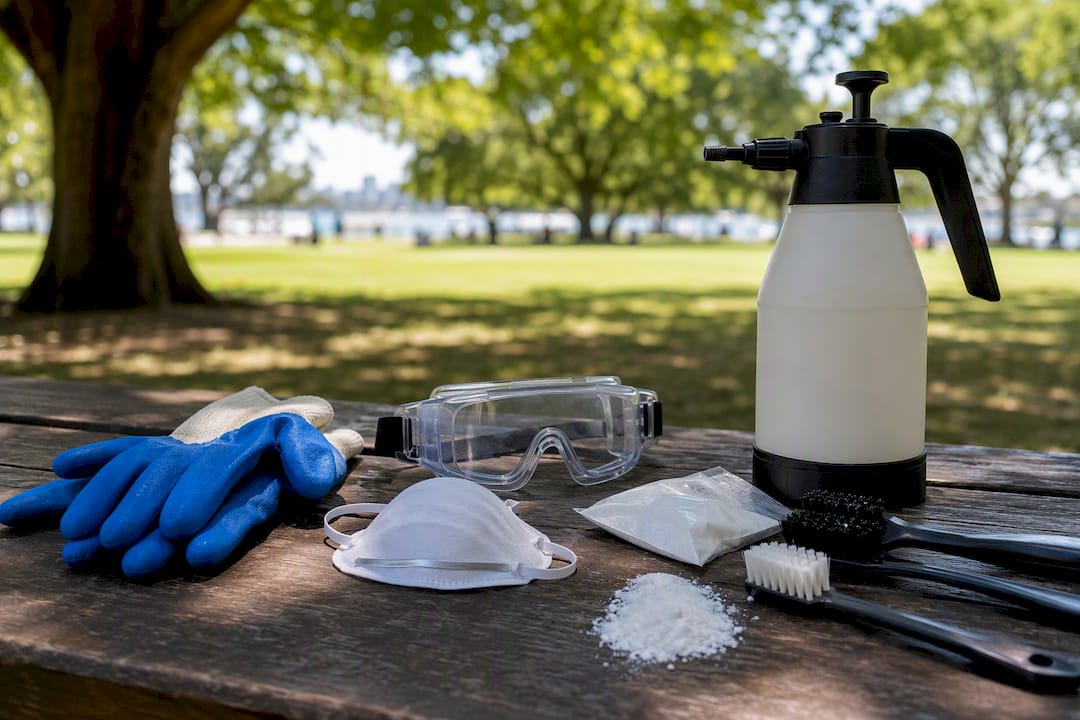
Wet down garden beds before you start and keep runoff away from stormwater drains, since both chemicals can harm plants and waterways in concentration; for tips on safe rinsing practices and chemical neutralisation, see our restoration blog. Pressure washers need a light touch too. Domestic units set too high, or held too close, can etch or pit certain concrete finishes, especially older or unsealed slabs, so check your machine’s settings before you start blasting. Follow the product label for disposal or neutralising leftover solution rather than tipping it down the nearest drain.
When DIY stops working: calling in a specialist
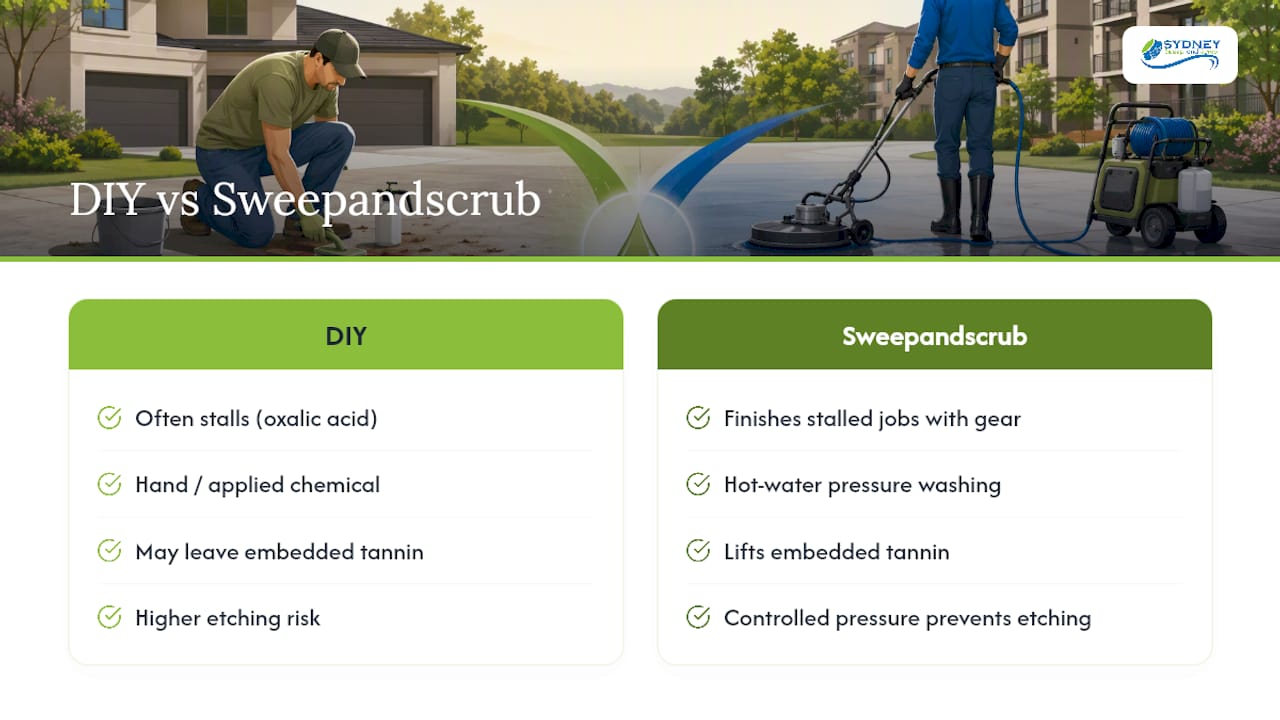
If you’ve run two or three oxalic acid treatments and the stain is still visible, or you’re looking at a whole car park or courtyard rather than a single patch, it’s time to bring in a specialist. Incorrect DIY approaches, wrong chemical strength or overly aggressive pressure washing, can etch concrete permanently, which usually costs more to fix than the original stain.
Professionals typically use tailored chemical mixes matched to the concrete’s age and finish, controlled hot-water or steam cleaning, and pressure settings calibrated to the surface rather than a one-size-fits-all nozzle. Before booking anyone, ask:
- What chemicals and mix ratios will they use on your specific surface?
- How do they protect nearby plants, garden beds and metal fittings?
- Are they insured, and do they guarantee the result?
- Can they seal the concrete once it’s fully clean and dry?
How Sydney Sweep and Scrub gets stubborn stains out for good
Where DIY oxalic acid treatments stall, Sweepandscrub steps in with the equipment and chemical know-how to finish the job properly. We handle hard-surface cleaning, hot-water pressure washing and post-construction clean-ups across driveways, car parks and courtyards, using controlled pressure settings that lift embedded tannin without etching the slab underneath. Our operations run carbon-neutral, so a stained driveway gets fixed without extra environmental cost.
If you’re managing a strata property, a warehouse forecourt or a commercial car park with widespread staining, book an inspection through our hard surface cleaning page and get a straightforward quote before any work starts.
Sources
For product-specific mixing rates, always check the label on your chosen oxalic acid or tannin remover. Trade references worth bookmarking include Mortlock’s guide to timber leaching, Bowens on preventing tannin bleed onsite, and DeckSeal’s breakdown of timber species and bleed duration.
- How to prevent and minimise timber leaching and tannin bleed | Mortlock
- How to Prevent Tannin Bleed Onsite | Bowens