
5S floor cleaning is the third step of the 5S system, Shine, applied to your floors: you clean the surface, and you use the clean to inspect it for leaks, damage and wear. For a warehouse or carpark in Sydney, that means a set cleaning schedule on a clear floor, done with equipment sized for the area. It also means a deeper reset at the end of the year or at the end of a lease. Our mechanical sweeping, scrubbing and pressure washing crews do this work for property managers, warehouse occupiers and strata managers, so your own team can stay on the 5S steps only you can do.
TL;DR
- 5S has five steps: Sort, Set in Order, Shine, Standardise and Sustain. Floor cleaning is the Shine step, and it only works once the floor is clear and the walkways are marked.
- Shine is cleaning and inspection together. A clean floor shows leaks, cracks and wear that a dirty one hides.
- Safe Work Australia’s Model Code expects floors to be kept clean and spills cleaned up immediately. The frequency depends on the work, the number of workers and the shifts.
- A shutdown or end-of-year clean works best as a planned job with a floor-by-floor scope, booked before the site empties.
- A make-good clean at lease end is easiest to pass when you work from the ingoing condition report and leave time to fix anything flagged before handback.
Table of Contents
- What 5S means for a floor
- Why Shine is more than cleaning
- What Australian rules expect of your floors
- Building a Shine routine that holds
- Planning a shutdown or end-of-year clean
- Warehouse end-of-lease and make-good cleaning
- Carparks and shared spaces
- Where we fit in your 5S programme
- FAQ
- Sources
What 5S means for a floor
The US EPA describes 5S as a lean method with five pillars, taken from Japanese terms: Sort, Set in Order, Shine, Standardise and Sustain. It is typically the first lean method an organisation adopts, because it tidies a workplace as it already stands.
On a warehouse or carpark floor, the five steps look like this:
- Sort. Remove what does not belong: broken pallets, dead stock, offcuts, loose equipment. Doubtful items get a red tag and a decision date.
- Set in Order. Give each item a labelled place and mark walkways and storage locations. The EPA lists painting floors, labelling storage locations and outlining work areas among the usual strategies. Line marking is part of this step.
- Shine. Clean the floor and equipment, and inspect as you go.
- Standardise. Write down the checklist, the reference photos and the cleaning schedule so the result does not depend on one person.
- Sustain. Training, audits and leadership attention keep the habit going.
This breakdown follows HSM University’s housekeeping lesson, which also makes the point that housekeeping is a continuous process and not a one-off clean-up.
Why Shine is more than cleaning
The same EPA page explains that the Shine step is thorough cleaning with daily follow-up, so workers can notice leaks, vibrations and misalignments before they cause equipment failure. A University of Tennessee 5S guide gives a simple example: an oil leak is easier to see when it drips on a clean floor.
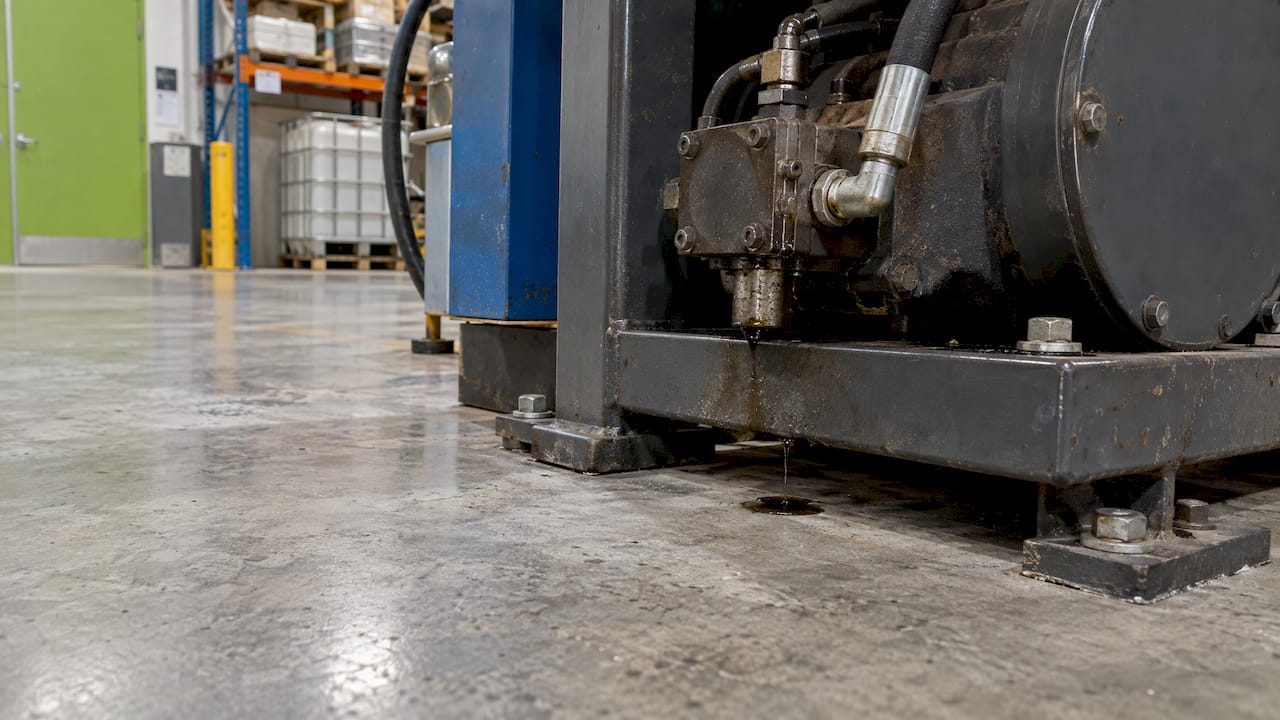
The UK Health and Safety Executive’s 5S case study reports fewer slip and trip hazards after pedestrian routes were marked and walkway contamination was reduced at its source. It also reports that cleaner plant helped identify maintenance problems earlier, which cut production downtime.
Singapore’s workplace housekeeping guidelines say an inspection is always done before an area or machine is cleaned. They add that dusty floors are a slipping hazard and that combustible dust can cause flash fires or dust explosions. For a warehouse, that makes fine dust on the floor a safety item as well as a tidiness item.
What Australian rules expect of your floors
Safe Work Australia’s Model Code of Practice on managing the work environment and facilities (December 2025 update) says workplaces must be kept clean, safe and in good working order. It says how often you clean depends on the type of work, the likelihood of contamination, the number of workers including shift work, and the type of facility. It also says spills should be cleaned up immediately, walkways kept clear, materials neatly stored and waste removed regularly. It treats engaging professional cleaners as an acceptable way to handle general cleaning.
In NSW, the state’s code of practice adds that floors must be inspected regularly to eliminate or minimise slip and trip hazards, such as trailing cables, uneven or broken surfaces, loose covers and loose mats. It also says cleaning methods must account for slip risk, because some cleaning agents can make a floor more slippery. Matching the method and detergent to the floor is a good reason to put the work in the hands of a crew with the right machines. Our guide to slip resistance and professional cleaning covers this in more detail.
Building a Shine routine that holds
A routine has three parts: what gets cleaned, how often, and who checks it.
Match the method to the floor
- Sweeping removes dust, grit and debris before they are ground into the surface or carried around by forklifts. Mechanical sweeping covers large floor areas quickly.
- Scrubbing lifts the film of oil, tyre marks and dried spills that sweeping leaves behind. We scrub with machines on warehouse floors; see how a routine machine scrub for your warehouse is scheduled.
- Pressure washing suits loading docks, bin areas, external hardstand and carpark levels. Hot water is available for greasy or oily surfaces, and our pages on hot water pressure washing and cold water pressure washing explain when each is used.
- Automated robotic cleaning is available for carparks and warehouses where a regular, repeatable pass is wanted. See automated robotic cleaning.
Set the frequency by the work
The Safe Work Australia factors above are the right starting point: what is on the floor, how many people walk it and how many shifts run. A pick-and-pack warehouse with forklifts and several shifts needs a different rhythm from a storage-only shed. Our page on how often to clean warehouse floors walks through the thinking, and a three-stage floor cleaning schedule shows how daily, weekly and periodic tasks fit together. For large facilities we offer optional recurring maintenance contracts, which turn the Standardise step into a booked schedule.
Keep spills out of the schedule
Spills cannot wait for the next scheduled clean. The Model Code says to clean them up immediately, so your team needs a response routine and the right kit at hand. Our spill response playbook for warehouse managers sets one out.
Inspect while you clean, and write it down
The Shine step covers both cleaning and inspection, so build the inspection into the sheet. A simple sign-off for each zone works well:
| Check | What to look for | Record |
|---|---|---|
| Floor surface | Cracks, broken edges, loose covers, pooled liquid | Photo and zone name |
| Walkways and markings | Faded lines, blocked routes, items outside their marked place | Photo and action |
| Leaks | Oil or fluid under racking, forklifts and machinery | Photo and who was told |
| Dust build-up | Fine dust on beams, racking bases and floor edges | Done or not done |
| Waste | Bins, pallets and offcuts removed | Done or not done |
Reference photos of what “clean” looks like are part of the Standardise step in the HSM University lesson. They also make it quick for a supervisor to check a finished clean against the standard.
Planning a shutdown or end-of-year clean
A shutdown is the one time the floor is empty, so it is where the deepest Shine happens. It is also the point where the Sort step pays off, because a floor cleared of stock and equipment can be swept, scrubbed and inspected end to end. A workable plan looks like this:
- Set the scope by zone. List the areas: racking aisles, dock, hardstand, carpark, amenities, external paths. Note which need sweeping, scrubbing, pressure washing or rubbish removal.
- Sort first. Clear pallets, offcuts and abandoned stock before the crew arrives. Rubbish removal can be part of the same booking.
- Walk the floor and mark the defects. Note cracks, stains and faded markings, so you can decide on repairs while the area is empty. The inspection comes before the clean, as the Singapore guidelines say.
- Clean in sequence. Work from high to low and from the back of the building to the exit, with external areas last so that nothing gets tracked back in.
- Re-mark. Once the floor is dry, refresh walkway and storage-bay lines. We do line marking alongside carpark and floor cleaning.
- Photograph and sign off. Record each zone, then file the photos as the starting point for next year’s comparison.
Book early. Cleaning crews are in demand at the end of the year, and a booked slot lets you plan the rest of the shutdown around it. Our online booking system and quote requests are set up for this kind of job.
Warehouse end-of-lease and make-good cleaning
A make-good clean is 5S Shine with a deadline and a landlord looking at the result. It is one part of the wider make-good obligations in your lease, so read the clause first. Cleaning, repairs and removal of fit-out are usually separate items, and your lease sets out which apply to you.
Start from the baseline
The ingoing condition report, ideally with dated photos from the start of the tenancy, is what the landlord will compare the premises against. If your lease has one, build your checklist from it. If there is none, photograph the premises thoroughly before you start and check your lease for the required handback standard.
A warehouse make-good cleaning checklist
- Floor: sweep and machine scrub the whole slab, including under racking footprints, along walls and at dock edges. Treat oil and tyre marks with hot water cleaning where needed.
- Markings and fixings: note temporary line marking, anchor bolt holes and fixings that your lease may require you to remove or make good.
- Hardstand, loading dock and external areas: pressure wash, clear drains and remove waste.
- Rubbish and stock: every pallet, offcut and item of stock removed.
- Amenities and offices: kitchens, bathrooms, floors, windows, skirting boards, door frames and switches cleaned.
- Walls, doors and roller doors: wiped down, with marks and damage noted.
- Carpark and yard: swept, with oil stains treated.
- Photos: a dated set for each zone after the clean.
Timing
Finish the clean a few days before the handback date, not on the day. That leaves time to rectify anything flagged at the pre-handback inspection, and carpet and other wet-cleaned areas need time to dry. Our end of lease commercial cleaning service is built for occupiers handing back a warehouse, and you can raise the lease clauses with us when you request a quote so the scope matches them.
Carparks and shared spaces
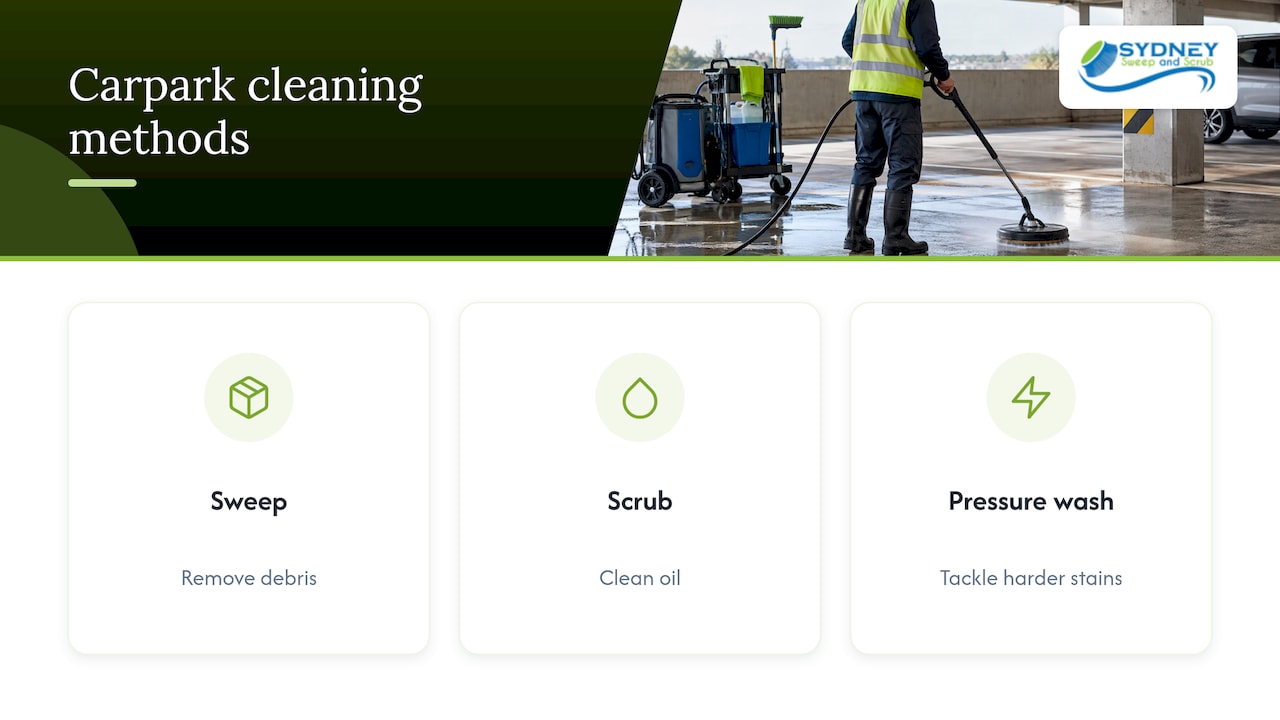
The same logic applies to carparks, where oil drips, dust and litter build up, and to common areas that many people use. Building and strata managers can use the same Shine, inspect and record routine, with sweeping for debris, scrubbing for oil and pressure washing for the harder stains. See our pages on carpark cleaning and car park sweeping, and on common area cleaning.
Where we fit in your 5S programme
Sydney Sweep and Scrub is a family-owned business that does mechanical cleaning and pressure washing across Sydney. For a 5S programme, that covers the Shine step at the scale of a warehouse, carpark or public space: sweeping, scrubbing, hot water pressure cleaning, rubbish removal and robotic cleaning, with line marking for the Set in Order step. Your team keeps the daily habits and we handle the machine work. See warehouse cleaning for a regular programme, or request a quote through the site.
FAQ
What is 5S floor cleaning?
It is the Shine step of the 5S system applied to floors. You clean the surface on a set schedule and use the clean to inspect for leaks, damage and wear. It works best after Sort and Set in Order have cleared the floor and marked walkways, and it is held in place by Standardise and Sustain.
How often should a warehouse floor be cleaned?
Safe Work Australia’s Model Code says it depends on the type of work, the chance of contamination, the number of workers including shift work, and the type of facility. Spills are cleaned up immediately. A busy multi-shift site normally needs a tighter schedule than a low-traffic storage shed, and a recurring contract can fix the schedule.
Do 5S floor markings need to follow a particular standard in Australia?
The 5S system itself does not set colours, and the colours that US sites use come from overseas guidance. In Australia, check your site’s own rules, the relevant standards for your markings and your WHS obligations, and keep the colour scheme consistent across the site. Our guide to line marking colours explains common meanings.
What should be on a warehouse make-good cleaning checklist?
Start with the ingoing condition report and your lease. Then cover the floor slab, dock and hardstand, rubbish and stock removal, amenities and offices, walls and doors, and a photo record of each zone. Finish a few days before handback so any flagged items can be fixed.
When should a shutdown clean be booked?
As early as you know the shutdown dates, because the end of the year is busy. A booked slot lets you plan the sort, repair and re-marking around it.
Sources
- Lean Thinking and Methods: 5S, US EPA
- Housekeeping programs, 5S and inspections, HSM University
- Managing the work environment and facilities, Safe Work Australia, December 2025
- Code of Practice: Managing the work environment and facilities, SafeWork NSW
- Japanese 5S management system, UK HSE
- Workplace Safety and Health Guidelines on housekeeping, Singapore
- 5S Workplace Organization Resource Guide, University of Tennessee CIS