
In Australia, slip resistance falls under AS 4586 (new materials) and AS 4663 (existing surfaces), with SA HB 197/198 and the National Construction Code guiding how they apply. Every location carries a different minimum rating, expressed as a P, R or A/B/C value. Identify the required rating for each area on your site, then book testing or a maintenance review before an incident forces the issue.
TL;DR:
- The minimum slip resistance ratings vary by location, with higher standards required for steeper ramps, contaminated surfaces, and high-traffic areas like kitchens and parking ramps.
- Testing existing surfaces requires in situ assessments using AS 4663, while new materials must pass AS 4586 before installation, with certification and condition considerations.
- Maintaining slip resistance involves regular cleaning with appropriate methods, reapplication of topical treatments, and keeping detailed records of inspections and cleaning schedules.
- Contractors should specify exact test methods, obtain current certification, and include maintenance requirements in contracts to prevent disputes and ensure ongoing safety.
- Routine, risk-based retesting is recommended after installation, contamination events, and periodically, with professional cleaning to control surface contaminants that can reduce grip over time.
Table of Contents
- Understanding slip resistance standards in Australia
- How the P, R and A/B/C rating systems actually work
- Which locations need which minimum rating
- Writing a specification that actually holds up
- Commissioning tests and running an audit program
- Keeping the rating you paid for
- How professional cleaning services help keep your floors within spec
- Where to check the primary standards
- Sources
- FAQ
Understanding slip resistance standards in Australia
Two Standards Australia documents do the heavy lifting. AS 4586—2013 classifies new pedestrian surface materials before they’re installed, using the wet pendulum, oil-wet ramp and barefoot test systems to assign a rating. It’s the document manufacturers and suppliers test against, and the one you should be quoting in any procurement spec.
AS 4663—2013 covers the opposite problem: surfaces already down and in service. It sets out how to test existing floors in situ, which matters because installation, wear, cleaning products and years of foot traffic can all shift a floor’s grip away from its original rating.
Sitting alongside both are two handbooks:
- SA HB 197 and SA HB 198:2014 translate the raw test classifications into practical guidance, telling designers and building practitioners which rating suits which location.
- HB 198’s Table 3A and Table 3B map locations to recommended classifications, Table 3A drawing on NCC deemed to satisfy provisions and Table 3B covering situations the NCC doesn’t directly address.
The NCC doesn’t reinvent slip resistance testing. It leans on these existing classifications for specific building elements, which is why HB 198 has become the reference document insurers and expert witnesses reach for when a slip claim goes to court, according to a summary of the handbooks’ legal standing.
How the P, R and A/B/C rating systems actually work
Three test methods produce three different rating scales, and mixing them up is one of the most common specification errors on a building project.
The wet pendulum test swings a rubber slider across a wetted surface and measures the friction. Results run from P0 (essentially no grip when wet) to P5 (excellent wet grip), and this is the test most closely tied to real-world barefoot and shod pedestrian risk because it replicates how people actually walk.
The oil-wet inclining platform puts a person in standard footwear on an oiled ramp and tilts it until they lose footing, generating an R rating from R9 up to R13. Some specifications also cite a volumetric (V) displacement value alongside the R rating for surfaces with more texture.
Barefoot ramp testing (A, B or C) applies specifically to areas people walk on without shoes, such as pool surrounds and shower floors, where a different foot-to-surface interaction changes the risk profile.
- Wet pendulum: P0 to P5, the go-to for general pedestrian areas
- Oil-wet ramp: R9 to R13, common for kitchens, ramps and industrial floors
- Barefoot ramp: A, B, C, reserved for pools, showers and change areas
None of these numbers are permanent. A risk-management model code from Safe Work Australia makes the point plainly: a surface that passed its rating in a lab can still be dangerous in service if contamination, wear or the wrong cleaning regime change the surface condition.
Which locations need which minimum rating
Table 3A and Table 3B in HB 198 give property managers a practical shortcut. You don’t need to commission a fresh risk assessment for every square metre. You need to know which category your surface falls into and check it against the recommended minimum.
| Location | Typical minimum rating | Notes |
|---|---|---|
| Internal stair treads (dry use) | P3 or R10 | Higher wet-use rating required if exposed to spills |
| Internal stair treads (wet use) | P4 or R10 | Applies to entries, food courts, wet-weather traffic paths |
| Ramps up to 1:14 gradient | P4 or R10 | Matches general external pedestrian paths |
| Ramps steeper than 1:14 | P5 or R12 | Steeper gradients demand higher grip |
| Pool surrounds and wet barefoot areas | Class B or C | Barefoot rating, not P, R or A |
| Commercial kitchens and loading docks | R12 | Oil and grease exposure lifts the minimum |
| Car park drive aisles and ramps | P4/R10 minimum | Higher again where trolley or oil contamination is frequent |
These figures come from HB 198’s representative classification tables, and they’re minimums, not targets. Any ramp steeper than 1:14, any area that sees regular trolley or forklift traffic, and any surface exposed to cooking oil or hydraulic fluid should be specified above the baseline, not at it; for enhanced safety and operational control, consider integrating access control automation systems to restrict access to high-risk wet areas.
Writing a specification that actually holds up
A slip rating clause that just says “compliant with AS 4586” is close to useless. It doesn’t say which test method, which classification, or under what surface condition. Tighten it with four moves.
- Name the exact test and minimum class. Write “wet pendulum P4 minimum when tested wet” rather than a vague reference to the standard.
- Demand current certificates. Ask the manufacturer or an independent lab for test documentation and check the sample condition it was tested under, new, aged, or as-installed.
- Build in an installation acceptance check. Don’t assume the installed surface matches the sample tested months earlier under lab conditions.
- Lock in a maintenance regime in the contract. Require the supplier’s cleaning guidance and expected wear life, then hold the cleaning contractor to it.
Skipping step four is where most disputes start. A floor can be installed perfectly and still fail an audit eighteen months later because nobody specified how it should be cleaned.
Commissioning tests and running an audit program
Deciding between a full lab test and an in-field pendulum check comes down to whether you’re validating a new material or checking a surface already in service. New installs generally get tested against AS 4586 before or during procurement. Existing floors get checked against AS 4663 using portable pendulum equipment on site, which avoids the disruption of removing samples.
- Choose an accredited tester. Look for labs and consultants using calibrated wet pendulum or ramp equipment and issuing reports that state the test method, classification achieved and surface condition at the time of test.
- Set your inspection cadence around risk, not the calendar. A sensible baseline follows SafeWork NSW’s practical guidance: test post-install, immediately after any major contamination event, and again annually or biannually depending on traffic and exposure.
- Read the “as tested” condition carefully. A report showing a pass on a clean, dry sample doesn’t guarantee the same result once oil, dust or a film-forming cleaning product gets into the mix, and that gap is where remediation decisions get made.
Keeping the rating you paid for
Choosing the right material only wins half the battle. Textured tiles, profiled vinyl and quarry tiles all trade off grip against cleanability. The more aggressive the surface texture, the better the wet grip and the harder it is to keep clean, and that trade off should be part of the original material decision, not an afterthought once the floor’s already down.
Topical treatments (grit additives, chemical etching, non-slip tape) can lift a tired surface’s rating, but they wear and need reapplication on a cycle, not a “set and forget” basis.
Cleaning is where most ratings are quietly lost. WorkSafe Queensland’s guidance is specific on this: some detergents leave a film that reduces grip even on a compliant surface, and mechanical scrubbing generally clears heavy contaminants more reliably than a mop-and-bucket routine. Oily contaminants in particular need fast, thorough removal, not a light wipe.
- Match material texture to the wet/dry use profile of the area, not just its appearance
- Treat topical grip treatments as consumables with a reapplication schedule
- Avoid film-forming detergents on any surface where wet grip matters
- Log inspections and incidents so a pattern of near-misses triggers re-testing before an injury does
Pro Tip: Keep a simple spreadsheet linking each zone’s required rating (from your HB 198 table check) to its last clean date and last test date. When an incident report lands on your desk, you want that answer in thirty seconds, not thirty minutes.
How professional cleaning services help keep your floors within spec
Getting a compliant rating on paper is one thing. Keeping it in service, through months of forklift traffic, spilt oil and general grime, is where most buildings actually fall down. Professional cleaning services can run mechanical sweeping, scrubbing and hot water pressure washing across warehouses, car parks and public spaces, targeting the contaminants that quietly erode a floor’s grip between test dates.
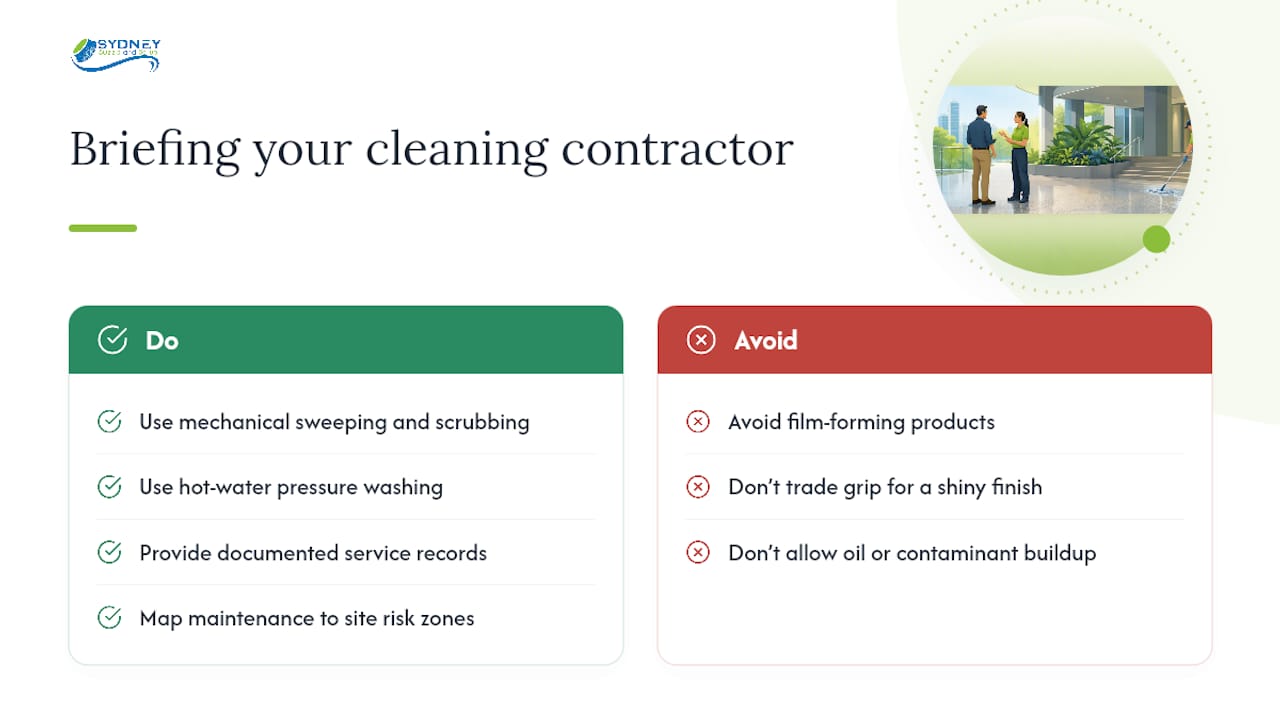
When you’re briefing a cleaning contractor, ask for a cleaning schedule that avoids film-forming products, documented service records you can attach to your audit file, and eco-friendly methods that don’t trade grip for a shinier finish. Sweepandscrub’s hard surface cleaning services are built around exactly that, with carpark and warehouse programs designed to keep contaminants off before they compromise a rating. If your loading dock or drive aisle has oil buildup, our guide on removing grease and oil in warehouses covers the specific mechanics. Request a quote through Sweepandscrub’s hard surface cleaning page and get a maintenance plan mapped to your site’s actual risk zones.
Where to check the primary standards
For anything contractual, work from the primary documents rather than a summary. Purchase or review AS 4586 directly through the Standards Australia catalogue, and get HB 198’s location tables from the official handbook listing. For workplace obligations, Safe Work Australia’s slips, trips and falls guidance and your relevant state WorkSafe site round out the picture.
Sources
- SA HB 198:2014 handbook – Standards catalogue
- Floor and ground surfaces | WorkSafe Queensland
- Guide to preventing slips, trips and falls at work | SafeWork NSW
FAQ
What is a good slip resistance value?
It depends entirely on the location and test method. A dry internal stair might be fine at P3, while a wet-use ramp steeper than 1:14 typically needs P5 or R12, so “good” only makes sense against HB 198’s location tables.
Is P3 a good slip rating?
P3 is adequate for lower-risk, generally dry internal areas but falls short of the P4/P5 minimums recommended for wet-use stairs, external ramps and food service zones. Check the specific location table in HB 198 before treating P3 as sufficient.
What is AS1428 in Australian standards?
AS 1428 covers design for access and mobility, including ramp gradients, handrails and continuous accessible paths, and it works alongside slip resistance requirements rather than replacing them. A compliant ramp to this standard still needs the correct P or R rating from AS 4586 for its gradient and use.
What is AS3700 in Australia standards?
The masonry structures standard covers the design and construction of brick and block work. It doesn’t set slip resistance requirements, though masonry paving materials used in trafficable areas still need to meet AS 4586 classifications separately.
How often should slip resistance be retested?
A risk-based cadence works best: test immediately after installation, again after any major contamination event, and then annually or biannually depending on traffic and contamination exposure, following the approach set out in SafeWork NSW’s prevention guide.