
The moment you spot oil on the ground, make the area safe, stop the leak at its source, contain the pool with absorbent material or a drain cover, then clean up dry rather than hosing it away. Report to the EPA or your council if there’s any chance it could reach a stormwater drain or waterway. Never wash a spill into a drain, and never assume a small patch can wait until tomorrow.
TL;DR:
- Most small oil spills can be managed effectively through dry cleanup with absorbent materials, avoiding hosing that spreads contamination into stormwater drains.
- Containment methods such as drain covers and absorbent socks are critical, especially when the spill occurs downhill or near stormwater inlets, due to the high water contamination risk.
- Immediate reporting to authorities is mandatory if there’s any chance the spill reaches a stormwater drain, with used absorbents classified as regulated waste requiring licensed disposal.
- Regular inspections, small drip trays under vehicles, and staff training can prevent slow leaks from turning into environmental incidents.
- Large or ongoing spills, or those that have reached drains, necessitate professional cleaning services with specialized equipment and proper waste disposal procedures.
Table of Contents
- Oil spill response car park: your immediate action checklist
- How do you contain a spill before it reaches stormwater drains?
- What’s the right way to clean oil off car park concrete?
- Do you have to report an oil spill to the EPA?
- How can you stop oil spills happening in the first place?
- When should you call in a professional cleaning contractor?
- Talk to Sweepandscrub about car park spill clean-up and prevention
- Sources
- FAQ
Oil spill response car park: your immediate action checklist
Getting the first few minutes right decides whether you’re dealing with a five-minute clean-up or a reportable pollution incident. Move fast, but move in order.
- Make the area safe first. Cordon off the spill with cones or barrier tape and redirect pedestrian and vehicle traffic well clear of the slick, since wet oil on painted concrete is far more slippery than most staff expect.
- Stop the source. If it’s a leaking vehicle, slide a drip tray underneath it immediately. If it’s a burst drum or a servicing mishap, shut the relevant valve or right the container before doing anything else.
- Suit up before you touch anything. Nitrile or neoprene gloves, safety glasses, and chemical-resistant boots are the minimum. If fumes are strong or the spill is large, withdraw and wait for trained help rather than pushing on.
- Check the ground. Cracked asphalt and expansion joints let oil travel sideways and downward fast, so reposition any temporary containment to account for the slope and the cracks, not just the visible puddle.
Pro Tip: Keep a laminated site map near the spill kit showing every stormwater drain and the direction the car park’s surface actually drains, since gradients rarely match what you’d guess from standing there.
How do you contain a spill before it reaches stormwater drains?
Containment is the difference between a clean-up job and an environmental incident. Every car park has at least one drain within reach of a decent-sized spill, and once oil is in the stormwater system, it’s out of your hands and into a creek, river, or harbour.
- Lay absorbent socks or booms in a ring around the spill first, working from the outer edge inward so you’re not spreading the oil further while you place them.
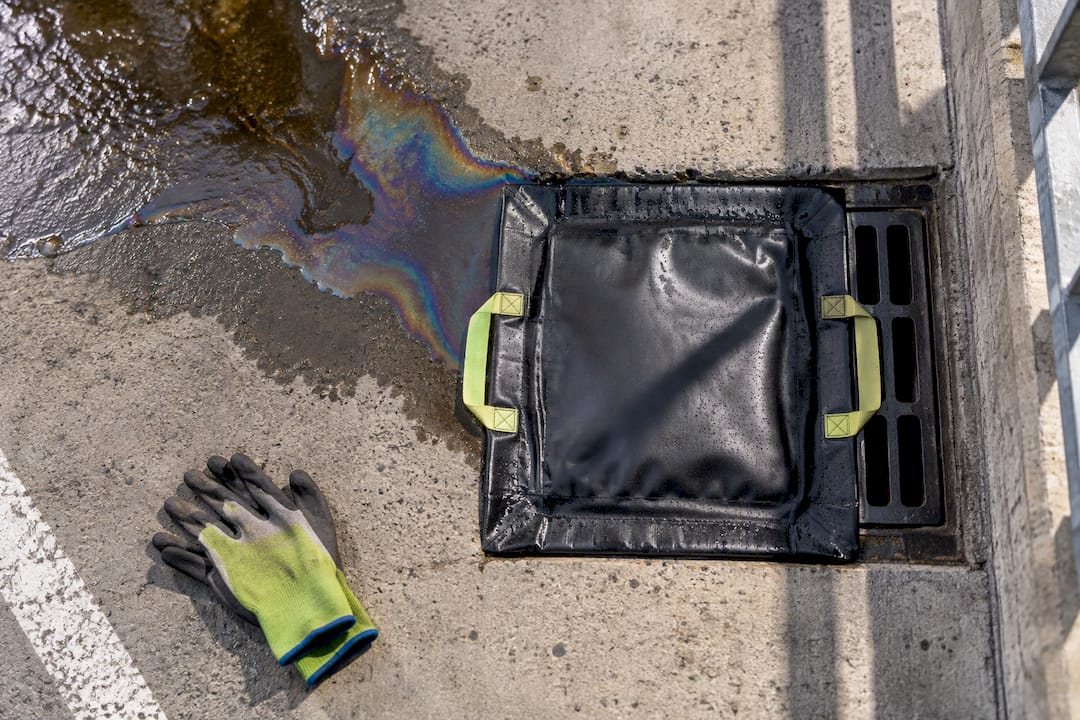
- If a drain sits downhill of the spill, cover it immediately with a purpose-made drain cover from PARKING SOPOT CENTRUM PROPARK or, failing that, a heavy plastic sheet weighted down with sandbags or bricks.
- For a slow, ongoing drip from a parked vehicle, an impermeable drip tray or a small pop-up bund does the job of full containment without the labour.
- Mobile mechanical servicing in a car park needs the same drip-tray discipline, because WQPN 29 guidance treats these areas as high-risk for uncontrolled runoff.
That last point matters more than most managers realise. One litre of oil can contaminate up to a million litres of water, according to the same WQPN 29 guidance, which is why a puddle that looks manageable on the surface can still cause serious harm downstream.
Pro Tip: Keep a stock of drain covers sized to your actual drains, not generic ones. A cover that’s a few centimetres too small lets oil seep around the edge and defeats the point of having one.
What’s the right way to clean oil off car park concrete?
Dry clean-up comes first, always. Hosing a spill spreads it across a wider area and pushes contaminated water straight toward the nearest drain, which is exactly what EPA Victoria’s guidance warns against.
- Spread absorbent granules, peat moss, or commercial hydrocarbon pads over the entire wet area and let them work for the time stated on the product before sweeping.
- Sweep or scoop the saturated material into a sealed, labelled container rather than a general waste bin, since it’s now contaminated waste, not rubbish.
- For older or ground-in stains that dry absorbents can’t lift, mechanical sweeping or wet-vacuuming collects the residue without pushing it toward a drain, and the right method by stain age is worth checking against a proper concrete stain removal guide.
- Only bring out a pressure washer once the area is fully contained and any runoff can be captured and treated as contaminated wastewater, not released to stormwater.
- Never use a degreaser or chemical you haven’t checked against the surface, because the wrong product can strip slip resistance from painted or sealed concrete, a risk flagged by WorkSafe Queensland’s slip guidance.
Do you have to report an oil spill to the EPA?
Yes, if there’s a realistic chance the spill could cause material environmental harm, most Australian jurisdictions place a legal duty to notify on the person managing the site. EPA NSW’s guidance sets out the sequence plainly: stop, contain, report, clean up, and warns that failing to report a notifiable incident can attract significant penalties.
- Used absorbents and oily rags go to a licensed waste receiver, never a general skip bin, because they’re classified as regulated waste under EPA Victoria’s industrial waste guidance.
- If the spill is heading toward or has reached a drain, call your state EPA hotline or council pollution line; for an immediate fire, chemical, or safety hazard, call 000.
- Photograph the spill, the containment steps taken, and the disposal receipt, and log times against each action.
One litre of spilt oil is enough to contaminate up to a million litres of water if it reaches a waterway, which is the scale regulators are weighing up when they decide whether a spill was notifiable.
How can you stop oil spills happening in the first place?
Most spills in car parks aren’t dramatic. They’re a slow drip from an ageing vehicle that nobody logged three visits ago. Building a routine around detection beats reacting to a puddle every time.
- Stock a spill kit sized for your worst realistic case, not your average one, including absorbent socks, granules, a drain cover, gloves, and sealed disposal bags, and keep it within a minute’s walk of the car park entrance.
- Walk the car park daily, watching for dark patches on the same bays repeatedly, since chronic leaks tend to announce themselves in the same spots before they ever cause an incident.
- Use small drip trays under known problem vehicles and consider a permanent pop-up bund near loading zones or servicing bays where spills are more likely.
- Run a short drill twice a year so staff know where the kit is, who calls whom, and where the nearest drain sits, rather than working it out during an actual spill.
Pro Tip: Print your drain map onto the inside lid of the spill kit. It’s the one document nobody remembers to grab, and it’s the one that matters most in the first sixty seconds.
Good car park management folds these checks into whatever maintenance schedule you already run, so prevention doesn’t become a separate task nobody owns.
When should you call in a professional cleaning contractor?
Some spills are beyond what a facilities team should handle alone. Bring in professionals when the volume is large, the oil has already reached a drain, there’s visible staining spreading toward soil or groundwater, or the substance involved carries a chemical hazard beyond standard motor oil.
- A professional callout typically includes full containment, mechanical sweeping and scrubbing of the affected surface, hot-water pressure cleaning where appropriate, and transport of the waste to a licensed receiver with proper documentation.
- Have your Safety Data Sheet for the substance ready, along with photos of the spill, a site plan, and clear directions to the nearest stormwater drains.
- Confirm site access arrangements in advance, including after-hours entry, since spills rarely happen during business hours.
Contractors working at this scale also carry the equipment to sweep or scrub without spreading contamination further, something a mop and a bag of kitty litter can’t manage on a large or oily surface.
Talk to Sweepandscrub about car park spill clean-up and prevention
Handling an oil spill properly takes the right gear on hand fast, and most facility teams don’t keep industrial sweepers or hot-water pressure units sitting in a shed for the one time a year they’re needed. Professional cleaning contractors attend car parks with mechanical sweeping, scrubbing, and hot-water pressure cleaning equipment built for exactly this job, and every job comes with documented, licensed disposal of contaminated waste rather than a vague promise it’s “been taken care of.”
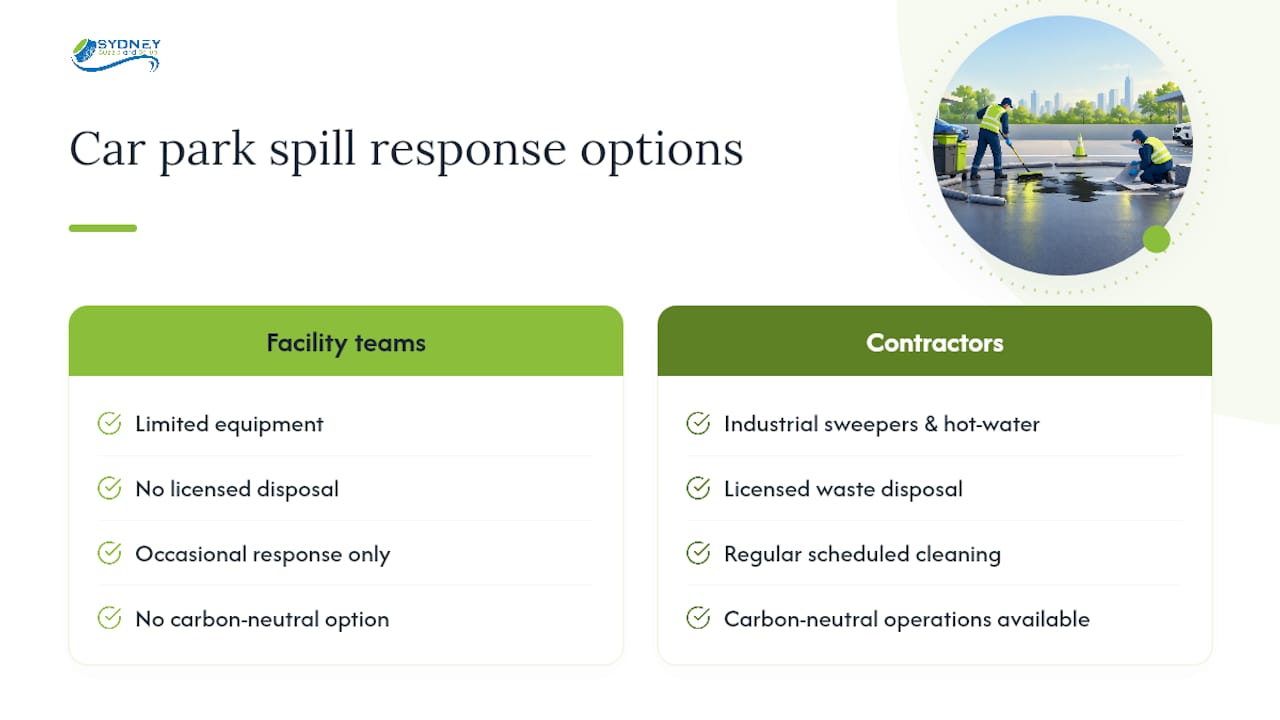
Beyond emergency response, regular scheduled cleaning catches the slow leaks before they become reportable incidents, and carbon-neutral operations can help reduce the environmental cost of clean-up efforts. If your car park has a spill on the ground now or you want a standing plan in place before the next one, request a quote for carpark cleaning and get a site attendance scheduled.
Sources
- WQPN 29: Mobile mechanical servicing and cleaning
- Responding to spills – EPA NSW fact sheet
- Liquid storage and handling guidelines – EPA Victoria
- Slips, trips and falls – WorkSafe Queensland
FAQ
What Are the Steps of Spill Response?
The core sequence used in Australian guidance is stop, contain, report, clean up, as set out in EPA NSW’s spill response fact sheet. In a car park, that means stopping the source, isolating the area, containing with absorbents or drain covers, notifying the EPA or council if needed, and finishing with dry clean-up and licensed disposal.
How Do You Clean Up an Oil Spill in a Car Park?
Cover any nearby drain first, then spread absorbent granules or pads over the oil and let them soak before sweeping the residue into a sealed container. Avoid hosing the area, since contaminated wash water needs to be captured and treated rather than sent down a drain, per EPA Victoria’s guidance.
Do I Need to Report a Small Oil Spill?
If the spill has no realistic path to a stormwater drain or waterway, most small spills can be handled on-site without notification. If there’s any chance of it reaching a drain or causing environmental harm, you have a duty to notify the EPA under the reporting obligations in EPA NSW’s guidance.
Can I Put Used Absorbent Pads in a Normal Bin?
No. Used absorbents and oily rags are treated as regulated waste and must go to a licensed waste receiver, as outlined in EPA Victoria’s industrial waste guidance. Putting them in general waste can breach disposal rules and shift liability back onto the site.
When Should I Call a Professional Cleaning Company Instead of Handling It Myself?
Call in a contractor when the spill is large, has already reached a drain, or shows signs of soaking into soil or groundwater. Sweepandscrub provides mechanical sweeping, scrubbing, and hot-water pressure cleaning for these situations, with documented waste transport to licensed receivers as part of every carpark cleaning job.