
Stop the acid now: mix a thick baking soda paste, apply it to the wet spill, contain any runoff, and put on nitrile gloves and goggles before you go near it. Once the fizzing stops and the surface is neutral, treat the leftover orange stain with an oxalic-based cleaner or a commercial chelator. If the concrete is pitted or crumbling underneath, that’s a repair job, not a cleaning one, so call a professional.
TL;DR:
- Neutralising fresh battery acid spills requires a thick baking soda paste applied until fizzing stops, followed by pH testing and careful disposal to prevent spreading caustic residues.
- Leftover rust stains from iron salts embedded in concrete can only be removed through repeated chelator treatments or oxalic acid cleaners, not neutralization alone.
- Structural damage from acid etching or pitting demands material removal, thorough neutralization, and professional patching to ensure long-term stability.
- Safety rules mandate full protective gear, containment, and hazardous waste disposal, with documentation crucial for insurance and safety audits.
- Professional services typically follow a specific order of containment, neutralization, chelation, rinsing, and patching, especially for large or stubborn damage.
Table of Contents
- How to neutralise a fresh battery acid spill
- Why does an orange stain remain after neutralisation?
- When is battery acid damage a repair job, not a cleaning job?
- What safety and disposal rules apply to battery acid cleanup?
- Which cleaners and tools actually work on battery acid?
- How do professionals handle battery acid damage on site?
- Get professional help for stubborn or large-area damage
- Sources
- FAQ
How to neutralise a fresh battery acid spill
Concrete sits at a pH of roughly 12 to 13, and sulfuric battery acid can penetrate its pores within about 60 seconds of contact. That’s not a lot of time to think, so move straight to containment and neutralisation rather than hunting for the “right” cleaner first.
Gear up first. Chemical-resistant nitrile gloves, splash goggles, and long sleeves are the minimum. If the acid has already dried into a powdery residue, add a respirator, because that dust is corrosive if inhaled.
Then work through this sequence:
- Block nearby stormwater drains and cover exposed soil or garden beds close to the spill.
- If the acid is still liquid and pooling, sprinkle an absorbent such as kitty litter or vermiculite to soak it up before you neutralise.
- Apply a thick paste of sodium bicarbonate (baking soda) directly onto the wet area. For larger spills, agricultural lime works as a bulk alternative.
- Watch for fizzing. That reaction is the acid being neutralised, and you need to keep adding paste until the fizzing genuinely stops, not just slows down.
- Check the pH with litmus paper, or simply confirm there’s no more bubbling, before you move to rinsing or repair.
- Scoop the neutralised sludge into a sealed bag rather than hosing it straight down a drain.
Pro Tip: Never hose the spill down with water before you’ve neutralised it. Diluting the acid with water doesn’t stop the reaction, it just spreads it further into the concrete’s pores and makes the eventual stain bigger. Vinegar, cola, or any other acidic “hack” you’ll find online does the same thing in reverse, adding acid to acid only worsens the damage. — baking soda is the neutraliser that actually works, and there’s no substitute for it in this step.
Why does an orange stain remain after neutralisation?
Neutralising the acid stops the burn, but it doesn’t touch the rust-coloured mark left behind. That colour comes from iron salts the acid pulled out of the battery casing and deposited into the concrete surface, and neutralisation has no effect on those salts once they’re embedded.
Getting them out takes a different kind of chemistry:
- Repeated applications of baking soda paste will lighten light staining over several days, though it’s slow going on anything set in.
- Oxalic acid powder, sold in cleaners like Bar Keepers Friend, works faster: make a paste, let it sit for the dwell time on the label, then scrub with a stiff nylon brush.
- Commercial concrete rust removers, F9 BARC-style products among them, use chelators that chemically bind to the iron salts and convert them into a water-soluble form that rinses away instead of sitting in the pores.
- Rinse with low pressure only. High-pressure washing before the chemistry has done its job can drive residue deeper into the slab instead of lifting it out.
Set your expectations accordingly. Some stains lift in one pass; others need two or three rounds of chelator treatment, and a handful will leave a faint shadow no amount of scrubbing will shift, at which point resurfacing is the only cosmetic fix left. For related iron staining that isn’t acid-related, our guide to rust stain removal from concrete covers the same chelator logic in more detail.
When is battery acid damage a repair job, not a cleaning job?
There’s a real difference between a stain and structural damage, and it’s worth checking before you spend a weekend scrubbing something a patch kit would fix in an hour.
Run your fingernail or a screwdriver tip across the affected area. If the surface feels chalky, crumbles, or you can scratch out loose material, the acid has etched into the slab rather than just staining it. A light chisel test at the edge of the damage will tell you how deep it goes; sound concrete resists, degraded concrete flakes away.
For genuine etching or pitting:
- Remove all compromised material back to solid concrete, then vacuum the area thoroughly.
- Confirm the surface is fully neutral first. Skipping this step is the single biggest reason patch repairs fail to bond, because any lingering acid keeps reacting under the new material.
- Patch with an epoxy or polymer-modified mortar suited to exterior slabs, then reseal once cured.
- Book a professional for anything beyond a small patch, particularly in fleet yards, loading docks, or any area with structural load, where grinding and resealing the whole bay is often the safer long-term call.
Prevention is cheaper than any of this. Sealed coatings, dedicated battery containment trays, and a routine inspection schedule catch small leaks before they become slab replacements, and a properly sealed and prepared surface holds up far better against any future spill.
What safety and disposal rules apply to battery acid cleanup?
Battery acid residue stays hazardous even after the visible reaction stops, and dried residue creates an inhalation risk that’s easy to underestimate.
- Wear gloves and goggles throughout, and add a respirator whenever you’re disturbing dry, dusty residue.
- Keep the spill contained away from stormwater drains and garden beds until it’s fully neutralised.
- Bag neutralised sludge and dispose of it through your local hazardous-waste collection rather than general rubbish.
- Photograph the stain before and after treatment, and log the date and method used. That record matters for insurance claims and workplace safety audits alike.
Which cleaners and tools actually work on battery acid?
You don’t need a chemistry degree to stock the right kit, but the label matters more than the brand.
- Sodium bicarbonate, absorbent granules, a stiff nylon brush, and a low-pressure garden sprayer cover most fresh, small spills.
- Oxalic acid based cleaners like Bar Keepers Friend handle light to moderate residual staining; always spot-test on an inconspicuous patch first.
- Commercial chelators or concrete rust removers (F9 BARC-style) are worth sourcing for anything beyond a light stain. Check the label specifies “concrete rust remover” or “iron stain remover” rather than a general-purpose degreaser.
- For large areas, renting a low-pressure sprayer or booking a professional soft-wash beats hiring a high-PSI unit that isn’t built for chemical-treated surfaces.
Pro Tip: Always dilute and spot-test any oxalic or chelator product on a small hidden patch before treating the full stain. Different concrete mixes react differently, and some sealed or coloured surfaces can lighten unevenly if you go in at full strength. Choosing a non-acid formula in the first place, as outlined in this guide to acid versus non-acid cleaners, avoids that risk altogether.
How do professionals handle battery acid damage on site?
A trained crew doesn’t start scrubbing on arrival. The first job is assessment: confirm the spill is contained, check for structural etching, and photograph the area for the client’s records before touching a single tool.
From there the sequence is consistent:
- Neutralise the residue fully, using commercial neutraliser or a baking soda paste depending on spill size.
- Apply a chelator to lift embedded iron salts.
- Rinse with a low-pressure soft-wash rather than a high-PSI blast.
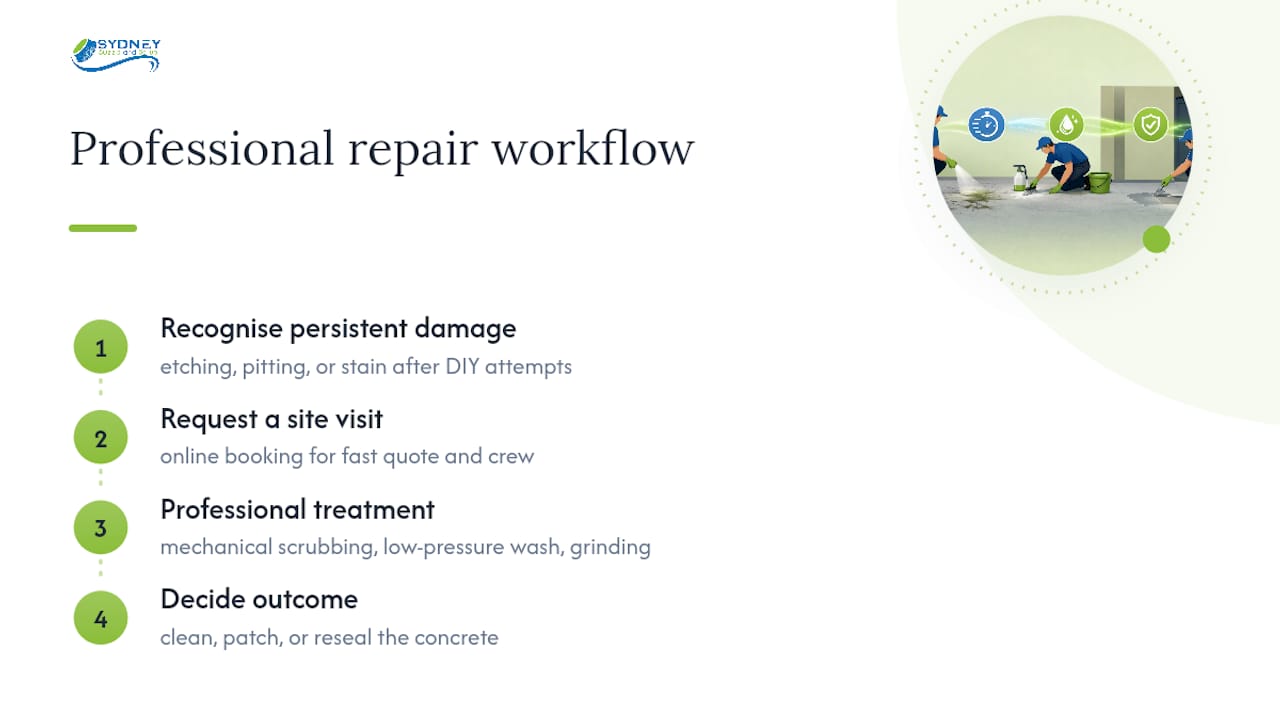
- Grind and patch any etched sections once everything is confirmed neutral.
Cost and timing depend on the area, the depth of the damage, and access to drains or containment points, and a proper professional workflow follows this exact order to avoid redoing work.
Get professional help for stubborn or large-area damage
Repeated scrubbing sessions on a warehouse floor or car park bay cost more in labour hours than most managers expect, and a botched patch job over unneutralised acid just means paying for the repair twice. Professional cleaning services include mechanical scrubbing, low-pressure pressure washing, and concrete grinding using eco-friendly equipment designed to handle chemical residue without adding contamination to the site.
If a spill has left etching, pitting, or a stain that’s survived multiple DIY attempts, a site visit settles the question fast: clean it, patch it, or reseal it. You can check pressure washing options or book a quote directly through carpark cleaning services for car parks, loading bays, and warehouse floors, with online booking that gets a crew on site without a drawn-out quoting process.
Sources
Further reading on concrete chemistry and repair standards: concrete degradation mechanisms, plus the restoration and product guides linked throughout this article.
- Rapidrepair
- Removing Battery Acid Stains From Concrete: A Simple Guide | ShunTool
- Battery Stains on Concrete: 10 Facts for Contractors
FAQ
What actually removes battery acid stains from concrete?
Neutralise first with a baking soda paste, then treat the leftover orange stain with an oxalic acid cleaner or a commercial chelator such as an F9 BARC-style concrete rust remover. Household fixes like vinegar or cola are acidic themselves and tend to make the problem worse rather than better.
Does WD-40 neutralise battery acid?
No. WD-40 is a lubricant and moisture displacer, not a neutraliser, and it does nothing to stop the acid reaction or lift iron staining. Stick with baking soda for neutralising and an oxalic-based cleaner or chelator for the stain itself.
Can battery acid stains be removed from clothing?
Rinse the fabric under cold water immediately, then soak it in a baking soda and water solution to neutralise the acid before washing as normal. Acid-damaged fabric often develops holes over the following days even after the stain looks gone, so treat any contact as a garment casualty until proven otherwise.
Does Coca-Cola remove battery corrosion?
Not reliably, and it can work against you. Cola is acidic, so pouring it onto an active spill adds more acid to the mix instead of neutralising it; baking soda paste followed by an oxalic or chelator treatment remains the safer, tested approach.