
For most commercial pavements, professional hot-steam or heated pH-neutral gum-removal systems deliver the fastest, least damaging results. DIY freeze-and-scrape works fine for isolated fresh deposits. Once gum has hardened into porous concrete, block paving, or natural stone, substrate protection becomes the deciding factor, and it’s worth requesting a quote before the deposit spreads.
TL;DR:
- Professional heated pH-neutral systems at 90 to 95°C effectively remove hardened gum from porous surfaces without damaging joints or allowing erosion.
- DIY freeze-and-scrape works only on fresh deposits; aged gum on natural stone or unsealed concrete requires professional intervention to prevent ghosting or surface damage.
- High-footfall areas benefit from regular monthly cleanings, while low-traffic footpaths can usually be cleaned annually to prevent deposits from hardening.
- Costs depend on deposit density, total area, and accessibility, with area-based pricing for clusters and per-deposit fees for scattered spots; scheduling regular maintenance is more economical.
- Prevention measures like placing disposal bins, signage, and scheduled cleaning reduce gum buildup and long-term cleaning costs significantly.
Table of Contents
- What are the best professional gum removal methods for pavement?
- Quick fixes for small or fresh gum spots
- When should you call in a professional contractor?
- What does gum removal cost and how long does it take?
- How do you prevent gum building up on pavement?
- How Sydney Sweep and Scrub can help with pavement gum removal
- Sources
- FAQ
What are the best professional gum removal methods for pavement?
Commercial gum removal splits into a few distinct approaches, and picking the wrong one damages the surface you’re trying to save.
Hot steam and hot-water pressure systems soften the gum’s polymer structure until it lifts away from the surface rather than smearing further into it. This method also delivers a sanitisation benefit worth mentioning to any facility manager worried about hygiene near food courts or transport hubs. Chewed gum harbours bacterial and organic residue for weeks after it’s been spat out, so high-temperature treatment does double duty on aesthetics and cleanliness.
Specialised gum-removal machines and heated pH-neutral solutions take a gentler path. These systems run chemistry at controlled temperatures, often in the range of 90 to 95°C, breaking the gum’s bonds without the brute force of straight high-pressure water blasting through jointing sand. That distinction matters most on block paving and porous natural stone, where aggressive pressure erodes joints and leaves gaps that let weeds and water in.
The choice usually comes down to surface and age:
- Fresh deposits on sealed concrete or porcelain: hot-water pressure alone often suffices.
- Aged deposits on block paving or natural stone: heated pH-neutral systems with extraction protect the substrate.
- High-footfall entrances and food precincts: steam-based systems paired with mechanical extraction handle volume without soaking the area.
None of these methods guarantee a perfectly uniform result on the first pass. Older gum stains pigment into porous stone, and that’s a separate problem addressed further down. Large sites with scattered deposits across a wide area typically need a follow-up whole-surface clean to even out the finish, not just spot treatment.
Quick fixes for small or fresh gum spots
Maintenance teams don’t need to wait for a contractor every time someone drops gum near a bin. For small, recent deposits, a few safe steps handle it between scheduled visits.
- Freeze and scrape. Apply an aerosol freezing agent or ice pack directly to the gum for 30 to 60 seconds, then lift it with a plastic scraper. This works best on gum that’s still soft and hasn’t ground into the surface texture.
- Localised hot-steam with an extraction head. A handheld steam unit with vacuum extraction lifts small, isolated deposits without soaking surrounding pavement. Keep the nozzle moving; dwelling too long on natural stone or coloured concrete risks discolouration.
- Solvent as a last resort. Test any solvent on a hidden patch first, wear gloves, and dispose of residue according to local waste rules rather than hosing it into a stormwater drain.
Pro Tip: Keep a small kit of freezing spray, a plastic scraper, and disposable gloves in every ground crew vehicle. Isolated spots handled within a day rarely need professional intervention at all.
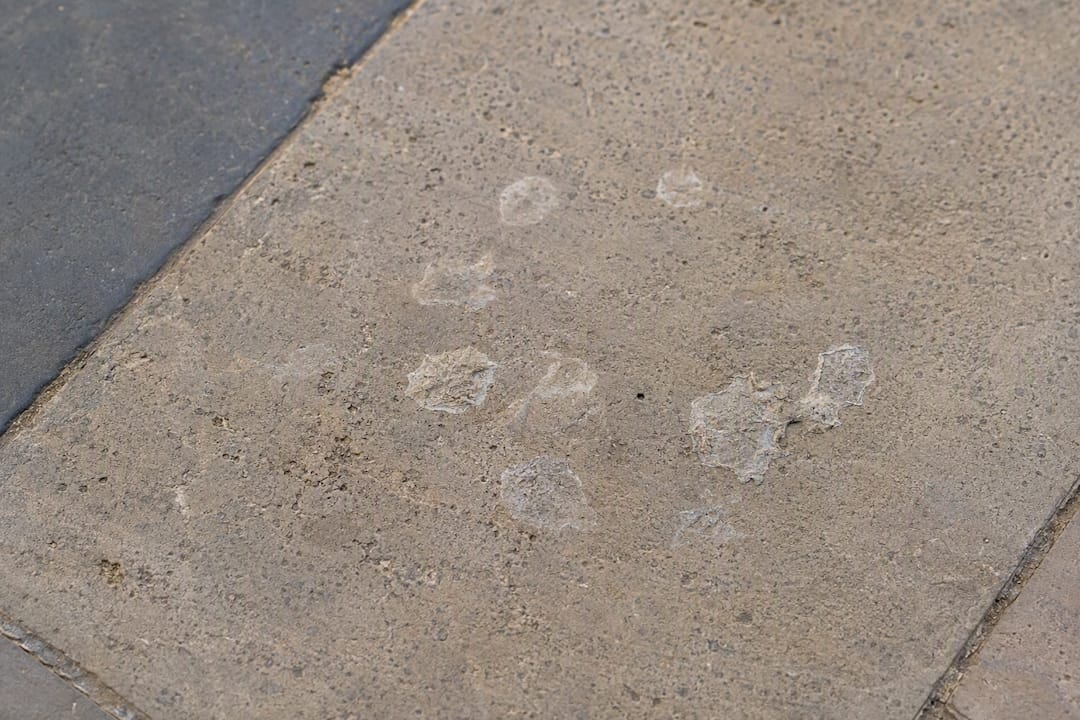
If a deposit has clearly aged past several weeks, sits on a heritage or natural stone surface, or covers more than a few isolated spots, stop and escalate. That’s the point where DIY methods start creating more problems than they solve, as traditional scraping and solvent techniques tend to leave ghosting behind on porous materials.
When should you call in a professional contractor?
Three triggers usually mean the job belongs with a specialist rather than the in-house crew: deposit age (anything sitting for weeks or months has bonded harder into the surface), area size (scattered deposits across a car park or plaza aren’t worth chasing individually), and surface porosity (block paving, sandstone, and unsealed concrete all risk damage from the wrong method).
When you’re drafting a tender or comparing quotes, ask suppliers to specify:
- Temperature and pressure ranges used, and whether the chemistry is pH-neutral
- How they protect jointing sand and porous substrates during extraction
- Waste capture and disposal method, particularly for runoff near drains
- Current insurances and safety credentials for public and traffic-adjacent sites
Quotes vary depending on whether a supplier prices by deposit count or by total area, so ask which unit of measure applies before comparing numbers side by side. Mobilisation costs for a single callout can outweigh the actual cleaning time on small jobs, which is where a standing maintenance arrangement often pays off. Sydney Sweep and Scrub’s guide on pressure washing with hot water breaks down the technical settings worth asking a supplier about directly.
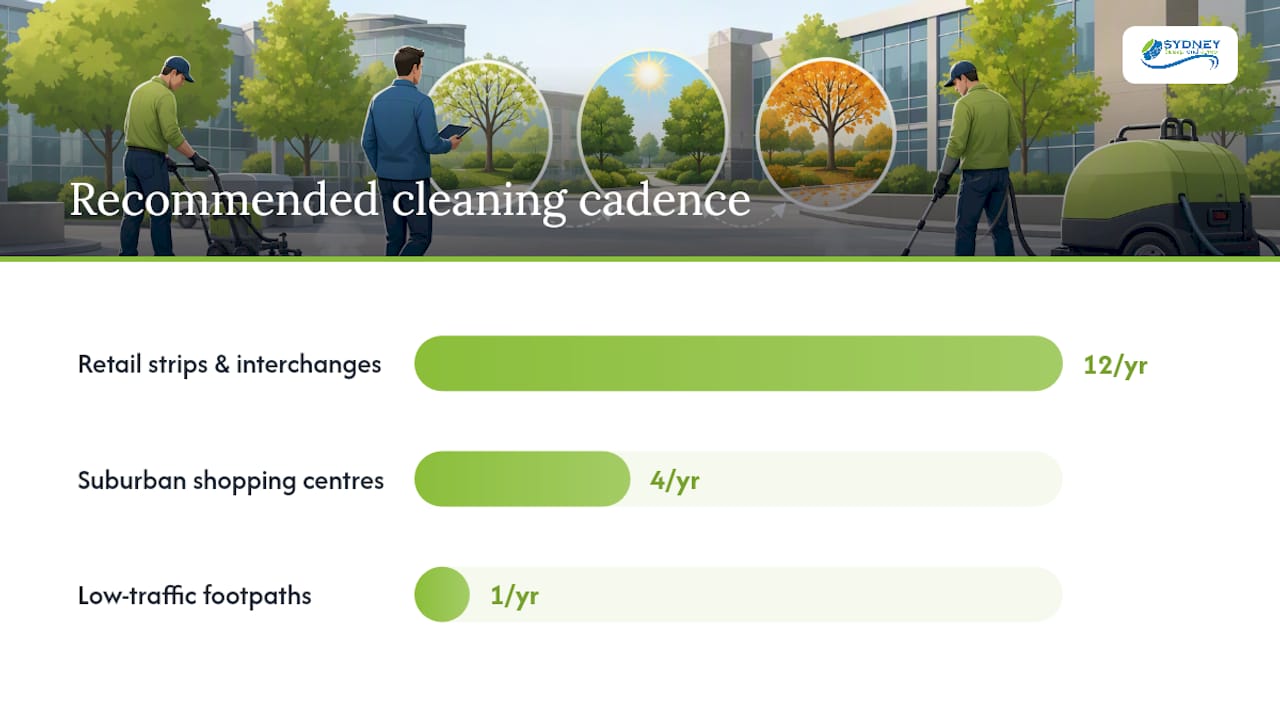
As a rough cadence guide: high-footfall retail strips and transport interchanges benefit from monthly visits, suburban shopping centres can usually stretch to quarterly, and low-traffic footpaths might only need an annual deep clean.
What does gum removal cost and how long does it take?
Three factors drive most quotes: total area, gum density (deposits per square metre), and site accessibility. A car park with vehicle access costs less to service than a pedestrian mall requiring after-hours work or manual equipment carry-in.
Suppliers typically price jobs one of two ways:
- Per-deposit pricing for scattered, low-density spots across a large area
- Area-based pricing for dense clusters, such as bus stops or food court forecourts, where treating the whole zone is faster than counting individual spots
Chewing gum functions as a persistent plastic pollutant on pavements. The longer it sits, the harder and more expensive it becomes to remove.
That single fact should shape your budgeting more than anything else. A scheduled quarterly clean costs less over a year than reactive emergency callouts, because deposits harden and multiply between visits. Factor in ghosting too: removing the gum itself doesn’t always lift the dark residue stain underneath, so budget for an occasional area-wide clean to restore a uniform look rather than a patchwork of clean spots against dull surrounds.
How do you prevent gum building up on pavement?
Reducing how much gum lands on your pavement in the first place saves more money than any removal method. A few operational changes make a measurable difference over a year.
- Place bins and gum-specific disposal points near entrances, bus stops, and smoking areas where gum accumulation is heaviest.
- Use signage at hotspots reminding people to bin gum rather than drop it, particularly outside retail and transport precincts.
- Set a scheduled cleaning cadence matched to footfall, rather than waiting for visible buildup to trigger a callout.
- Map hotspot locations and review results after each service visit. Practical experience from high-traffic public space case studies shows that combining prevention with a monitoring map cuts both visual pollution and long-term cleaning spend.
- Choose water-efficient, pH-neutral equipment where possible, and ask about carbon-neutral service options if sustainability reporting matters to your organisation.
How Sydney Sweep and Scrub can help with pavement gum removal
A specialist cleaning service handles hard-surface cleaning across car parks, forecourts, and public walkways using hot-water pressure equipment and eco-friendly chemistry designed to protect jointing sand and porous stone rather than blast through it. Where an in-house crew has already run through the freeze-and-scrape basics without success, or where deposit density and site accessibility make it a job for proper equipment, a contracted visit clears the backlog properly the first time.
For sites with recurring foot traffic, a standing maintenance arrangement tends to work out cheaper than repeated one-off callouts, since it avoids the mobilisation cost of an emergency visit every time deposits build up. Check out hard-surface cleaning services to see current capabilities, or request a quote directly for your site’s gum removal needs.
Sources
Procurement teams validating a supplier’s technical claims can cross-check them against a few authoritative references. The Port of Portsmouth’s research on gum as plastic pollution explains why deposit age drives cleanup cost. The study on bacterial residue in discarded gum backs the hygiene argument for high-temperature methods. For technical process detail, the commercial gum removal guide from Aquatec and the comparison of traditional methods versus modern techniques both help validate what a supplier should be offering before you sign off on a contract.
- Microbial composition and persistence in discarded chewed gum (scientific study)
- Chewing gum is plastic pollution, not a litter problem
- The ultimate guide to commercial chewing gum removal
- Removing chewing gum from concrete: traditional methods vs cutting-edge laser cleaning
FAQ
How do you get gum out of pavement?
Soften it first with hot steam, hot-water pressure, or a freezing agent, then lift it away rather than scraping while it’s still pliable, as demonstrated in pressure washing techniques. For aged or widespread deposits, a professional heated pH-neutral system protects the substrate better than DIY scraping or solvents.
What is the best tool to remove gum from concrete?
For small, fresh spots, a handheld steam unit with an extraction head or a freezing spray and plastic scraper works well. For larger commercial areas, specialised gum-removal machines using heated pH-neutral chemistry deliver the best results without eroding jointing sand.
How do you remove old, hardened gum from concrete?
Old gum has usually bonded into the surface texture, so traditional scraping and solvents often leave ghosting behind. Professional hot-steam extraction handles hardened deposits more reliably and reduces the risk of a visible stain afterwards.
How do you get rid of gum on a footpath without damaging the surface?
Match the method to the surface: hot-water pressure suits sealed concrete, while heated pH-neutral systems with extraction suit block paving and natural stone where joint erosion is a concern. Sydney Sweep and Scrub’s hard-surface cleaning service is built around exactly this kind of substrate-safe approach for footpaths and public walkways.