
The best way to remove algae from concrete is a chemical pre-treatment to kill the spores, followed by a pressure wash to lift the dead residue. If pressure washing risks damaging the surface, such as sealed pavers, coloured concrete, or older aggregate, a soft-wash and manual scrub achieves a similar result with less force.
Skipping the chemical step and going straight to the pressure washer often just knocks algae flat rather than killing it, and it grows back faster than you’d expect. Before starting any concrete algae cleaner job:
- Wear gloves, eye protection, and a mask when handling concentrate.
- Wet down or cover nearby plants and garden beds.
- Block or divert stormwater drains to manage runoff.
- Test any product on a small, hidden patch first.
TL;DR:
- Applying a chemical algaecide and allowing it to dwell for several minutes ensures dead algae spores are broken down before pressure washing, reducing regrowth.
- Soft-wash mixes like oxygen bleach, vinegar solutions, or commercial algaecides are suitable for delicate surfaces where pressure washing may cause damage.
- Controlling runoff by blocking drains and protecting nearby plants is vital to prevent environmental harm and contamination during cleaning.
- Improving surface drainage, increasing sunlight exposure, and sealing porous concrete help prevent algae recurrence in shaded or poorly drained areas.
- For large or high-risk sites, professional services with hot-water pressure washing and wastewater management are more effective than DIY treatments.
Table of Contents
- How to remove algae from concrete with chemical pre-treatment and pressure washing
- What if pressure washing isn’t right for your surface?
- Safety and environmental precautions you can’t skip
- Preventing algae growth on concrete before it starts
- When it’s time to bring in a professional
- Sweepandscrub: the direct option for larger or higher-risk jobs
- Key Takeaways
- Sources
How to remove algae from concrete with chemical pre-treatment and pressure washing
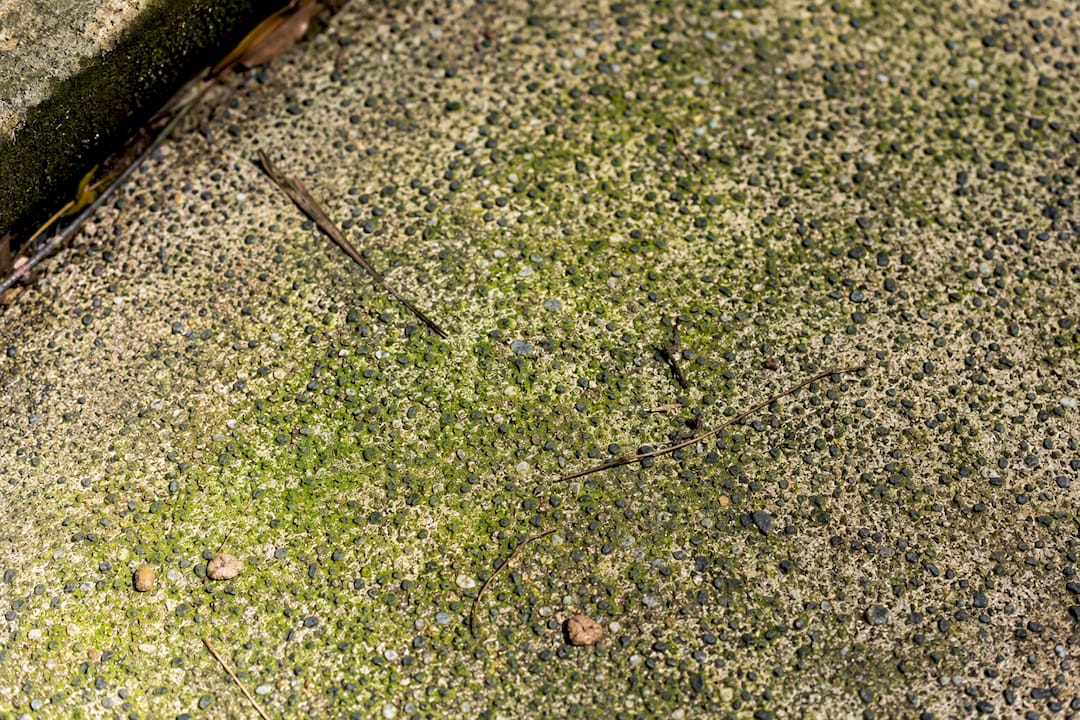
Chemistry and mechanical force solve two different problems. Pressure alone strips the visible green film off concrete but often leaves algae spores embedded in the surface pores, which is why the patch reappears within weeks. A chemical pre-treatment combined with pressure washing kills the organism first, so what you’re rinsing away afterwards is dead material rather than a living colony ready to regrow.
Here’s the sequence that gets the best result on driveways, footpaths, and car park bays:
- Sweep the area to clear loose debris, leaves, and grit before applying anything.
- Mix your algaecide. Chemron’s guidance for its Algae Died B product suggests a small amount of concentrate per several litres of water for light algae coverage. Heavier, longstanding growth usually needs a stronger concentrate or a second application a few days later.
- Apply evenly with a pump sprayer or watering can, working from the edges inward so you don’t miss patches.
- Let it dwell. Trade guidance points to roughly a short dwell time of several minutes, sufficient to allow the chemical to penetrate and break down algae and mould effectively as the sweet spot, long enough for the chemical to break down cell structure without drying out on hot concrete.
- Pressure wash the treated area using a 25 to 40 degree nozzle held 20 to 30 centimetres from the surface, or a surface-cleaner attachment for large flat areas. Bunnings’ own driveway cleaning guidance follows the same order: sweep, apply cleaner, pressure wash, rinse.
- Rinse thoroughly and inspect once dry. Green shadowing that persists usually means a repeat treatment is needed rather than more pressure.
Never use a 0 degree nozzle on concrete. It’s a pinpoint jet that can etch grooves into softer or older slabs, and holding the wand too close does the same damage even with a wider fan.
Pro Tip: Do the pressure-wash pass in the late afternoon when the treated area isn’t in direct sun. Chemical dwell time shortens dramatically on concrete that’s already hot to touch, and you’ll get a patchier kill.
What if pressure washing isn’t right for your surface?
Sealed pavers, painted concrete, exposed aggregate, and some coloured finishes can lift, dull, or pit under pressure. For these, a soft-wash approach gets the algae off without the mechanical risk.
Three mixes work well for slippery algae removal without a pressure washer:
- Oxygen bleach (sodium percarbonate) dissolved in warm water. Gentler than chlorine bleach and won’t bleach out coloured concrete as readily.
- White vinegar and a splash of dish detergent, useful for light, fresh growth on smaller areas like garden paths.
- A commercial soft-wash algaecide, which is formulated to cling to vertical or textured surfaces during the dwell period.
Sweep the area first, apply the mix with a pump sprayer, then work it in gently with a stiff outdoor broom or scrubbing brush. Let it dwell, then rinse with a garden hose or the lowest pressure setting you have.
Textured or aggregate concrete traps algae down in the pores, so budget for a longer dwell time and expect to repeat the treatment once or twice before it’s fully clear. Skip anything acid-based here. Muriatic or hydrochloric acid mixes strip algae fast but etch concrete and, if the runoff isn’t contained, can burn garden beds and kill fish in nearby waterways.
Safety and environmental precautions you can’t skip
Concrete algae cleaner products, even the mild ones, are still chemicals working on a hazard you’re standing next to. Gloves and eye protection stop splashback from the sprayer or the pressure washer’s fan pattern. A mask matters most with powder-based oxygen bleach, since the dust irritates airways before it’s even mixed.
Runoff control is the part most DIY jobs skip:
- Block nearby stormwater drains with sandbags or drain mats before you start.
- Cover or hose down garden beds and lawn edges that sit in the runoff path.
- Never let concentrate or first-rinse water run directly into a waterway.
Surface damage is avoidable with the right technique: keep the nozzle moving, hold the recommended 20 to 30 centimetre distance, and test an inconspicuous corner before treating the whole area.
Pro Tip: Keep a photo log of treated areas and dates. If a slip-and-fall claim ever comes up, dated evidence that you addressed a known hazard promptly is worth far more than a verbal assurance you “got to it eventually”.
Preventing algae growth on concrete before it starts
Algae needs moisture, so every prevention strategy starts with finding where water sits too long. Look for pooling after rain, low spots where the slab has settled, blocked stormwater grates, and shaded zones under trees or awnings where the sun never gets a chance to dry the surface out.
Once you’ve mapped the moisture sources, work through this checklist:
- Fix drainage where water pools; even a slight regrade or an added drainage channel stops most regrowth.
- Increase sunlight exposure by trimming overhanging branches and hedges along north-facing walls and paths.
- Sweep regularly to clear leaf litter and organic debris before it breaks down and feeds new growth.
- Apply a penetrating sealer on porous or aggregate concrete once it’s fully clean and dry.
- Set an inspection cadence: monthly for shaded, high-moisture zones; quarterly for general car parks and footpaths; annually for well-drained, sun-exposed areas.
Check ramps, joints, cracks, and anywhere concrete meets garden beds first. That’s where algae growth prevention on concrete tends to fail earliest, because those spots hold moisture longest and get missed in a quick visual sweep.
When it’s time to bring in a professional
DIY treatment works well for a single driveway or a small footpath. It stops making sense once you’re looking at a multi-level car park, a stadium concourse, or any public-access area where a slip hazard carries real liability exposure.
Hire a professional when:
- The affected area is large enough that manual dwell-and-scrub cycles would take days.
- Regrowth keeps returning despite repeat DIY treatments.
- The site is high-traffic public space where a slip incident is a real risk.
- Wastewater capture or neutralisation is required under local regulations.
- The surface is textured, sealed, or otherwise sensitive to standard equipment.
Commercial operators bring hot-water pressure washing, dedicated surface-cleaner attachments, soft-wash systems for sensitive finishes, and proper wastewater capture, tools that go well beyond what a hire-shop pressure washer offers. For technical background on why professional-grade chemistry outperforms consumer products, this breakdown of professional cleaning chemistry is worth a read.
Sydney Sweep and Scrub is family-owned and runs carbon-neutral operations across Sydney’s commercial and industrial sites, which means the runoff and safety management readers have just spent this article learning to do manually is handled as standard on every job.
Sweepandscrub: the direct option for larger or higher-risk jobs
If you’ve read this far because a car park, warehouse forecourt, or public footpath under your management has gone green and slippery, doing the chemical pre-treatment and pressure wash yourself is genuinely doable for one bay or a short stretch of path. It stops being practical once you’re covering thousands of square metres, managing wastewater capture properly, or working around public foot traffic that can’t be closed off for a full day.
Sweepandscrub handles exactly that gap. Our hard surface cleaning service pairs hot-water pressure washing with proper wastewater management, so the algae, spores, and runoff are dealt with in one visit rather than a weekend of repeat treatments. For sites that keep regrowing algae in the same shaded corners, our routine cleaning contracts for public spaces put that maintenance cadence on autopilot instead of relying on someone remembering to check it quarterly. Get a quote through our online booking system and see what a single clean costs for your site.
Key Takeaways
Killing algae spores with a chemical pre-treatment before pressure washing removes the growth and slows regrowth, which pressure alone cannot reliably do.
| Point | Details |
|---|---|
| Chemical first, pressure second | Apply an algaecide, let it dwell a short dwell time of several minutes, sufficient to allow the chemical to penetrate and break down algae and mould effectively, then pressure wash to remove dead residue and spores. |
| Match the method to the surface | Use soft-wash mixes on sealed, painted, or textured concrete where pressure washing risks damage. |
| Control runoff every time | Block drains, protect garden beds, and never let concentrate reach stormwater or waterways untreated. |
| Fix the moisture source | Improve drainage, increase sun exposure, and seal porous concrete to stop algae returning. |
| Call a professional for scale | Sweepandscrub’s hot-water pressure washing and routine cleaning contracts suit large, public, or repeat-regrowth sites. |
Handy links to product guidance and trade how-to pages
For dilution rates and application steps, check the manufacturer’s own Algae Died B guidance, the trade how-to on removing algae and mould, and Bunnings’ driveway cleaning steps. Always read the product label for PPE and disposal instructions before mixing anything.
Sources
- How to Remove Algae: Effective Methods for Concrete and Tiles
- How to Remove Green Algae and Mould from Concrete Surfaces
- How to clean a concrete driveway in the tropics
- Will a pressure washer remove algae from concrete?
Recommended
- Post-Event Cleaning: Concrete Surfaces – Sydney Sweep and Scrub – Commercial Cleaning – Carpark Cleaning – Warehouse Cleaning
- Cleaning Your Concrete Before Line Marking – Sydney Sweep and Scrub – Commercial Cleaning – Carpark Cleaning – Warehouse Cleaning
- Post-Construction Concrete Cleaning – Sydney Sweep and Scrub – Commercial Cleaning – Carpark Cleaning – Warehouse Cleaning
- Tips on Cleaning Your Concrete Event Space – Sydney Sweep and Scrub – Commercial Cleaning – Carpark Cleaning – Warehouse Cleaning